






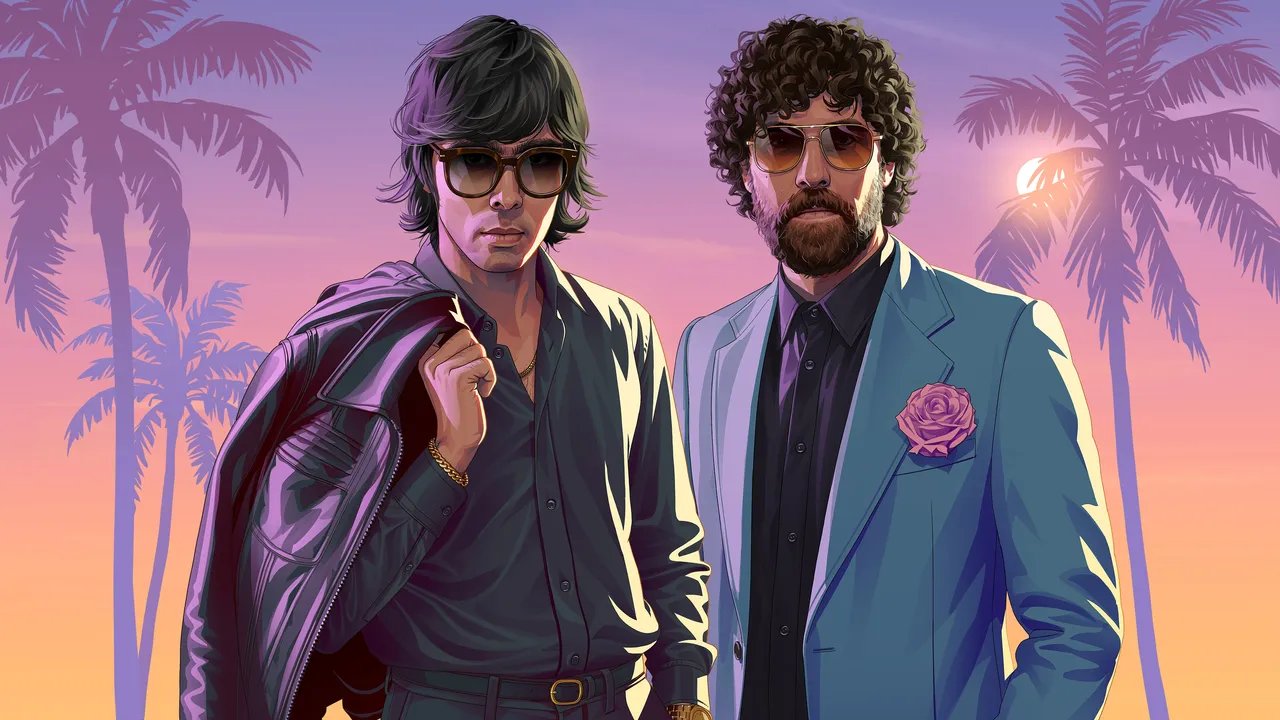
The Evolution of Interactive Soundscapes in Grand Theft Auto VI
The role of music in open-world gaming has shifted from a background accompaniment to a foundational pillar of environmental immersion. Rockstar Games has officially confirmed that the French electronic duo Justice is spearheading the original score for the highly anticipated Grand Theft Auto VI. This announcement marks a significant departure from the collaborative approach taken in previous installments, signaling a more unified auditory vision for the upcoming release. Justice, comprised of Gaspard Augé and Xavier de Rosnay, brings a distinct sonic identity to the project, fresh off the critical and commercial success of their 2024 album, Hyperdrama.
By entrusting the core score to a single act, Rockstar is prioritizing a cohesive narrative flow that responds dynamically to the player’s actions in the game’s sprawling fictional setting. The technical implementation of this score requires a complex synthesis of ambient layering and high-energy tracks designed to shift seamlessly based on gameplay states, such as high-speed pursuits, exploration, or narrative-heavy cinematics. This architectural approach to sound design ensures that the music remains responsive, effectively enhancing the stakes of the digital environment.
The Convergence of Global Musical Talent
The soundtrack for Grand Theft Auto VI is not merely a collection of licensed tracks; it is a meticulously curated auditory landscape featuring high-profile collaborations. The newly released track, Flower in a Hurricane, serves as a testament to the game’s ambition, featuring a notable assembly of talent including Tame Impala, SZA, and King Gizzard & the Lizard Wizard. This composition represents the technical capability of modern gaming engines to weave together diverse artistic styles into a singular, cohesive experience.
The integration of these artists highlights a strategic shift toward hyper-collaboration. By blending the psychedelic textures of Tame Impala and King Gizzard & the Lizard Wizard with the vocal precision of SZA, the developers are creating a sound that reflects the eclectic nature of the modern metropolitan experience. These musical contributions are designed to populate the game’s expansive radio system, providing players with a wide spectrum of genres while maintaining a consistent quality standard across the entire 34-track library.
Technical Advancements in Radio Integration
A hallmark of the Grand Theft Auto series has always been its robust in-game radio system, which functions as a portable, curated music service within the virtual world. For the sixth entry, Rockstar Games has refined this technology to include highly specialized radio stations hosted by high-profile personalities. The lineup includes names such as Bad Bunny on Cocoteo FM, Robyn on Flash FM, and Lana Del Rey on Back Country Radio.
From a technical standpoint, the radio implementation involves advanced audio buffering and real-time mixing to ensure that transition between tracks and DJ commentary feels natural. The developers utilize procedural audio triggers to ensure that specific tracks play during optimal gameplay scenarios, further bridging the gap between the player’s actions and the game’s simulated reality. This level of granular control over the soundscape is essential for maintaining the pacing of a sandbox game, where the player exerts control over the duration of their journeys and the nature of their activities.
Strategic Content Rollouts and Digital Infrastructure
Rockstar Games has opted for a tiered release strategy for the game’s soundtrack, distributing songs in a measured manner leading up to the official launch on November 19. This “slow-roll” strategy serves both as a marketing tool and a stress-test for the digital infrastructure that will deliver the game’s audio assets. By releasing tracks from artists like Travis Scott, Yung Lean, and Cardi B ahead of time, the studio ensures that the player base remains engaged while managing the massive file sizes associated with high-fidelity, lossless audio files.
This methodology also reflects the broader trend of “live service” thinking within offline-heavy games. By treating the soundtrack as a serialized update, Rockstar is building anticipation and providing early exposure to the unique sonic palette of the game. The technical preparation required to manage these releases, coupled with the final integration of the full score, represents a significant undertaking in data management and audio streaming optimization.
The Impact of Specialized Scoring on Player Immersion
The shift toward a singular, signature score by Justice—following the 2013 collaborative efforts involving DJ Shadow and Tangerine Dream—suggests a desire for a more deliberate, thematic influence on the player. Original scores offer a degree of synchronization with gameplay that licensed music cannot always achieve. When the score is written specifically for the game’s physics, weather systems, and intensity curves, it creates a tactile feedback loop for the player.
This investment in custom audio production signifies that Grand Theft Auto VI is not just attempting to replicate real-world radio stations, but is instead aiming to provide a bespoke interactive experience where the music is an active participant in the narrative. As technology continues to allow for more nuanced audio rendering, the work by Justice and their collaborators sets a new benchmark for how electronic music can define the identity of interactive media. By focusing on the interplay between sophisticated sound design and user-driven gameplay, Rockstar continues to push the boundaries of how audio can influence the perception of space and action in a digital world.
Disclaimer: This content is auto-generated for informational purposes only.
Source: Read Original News