








Nepali Officials Point to Ice Fall as Likely Catalyst for Massive Himalayan Flood
By Navin Singh Khadka
Environment Correspondent, BBC World Service
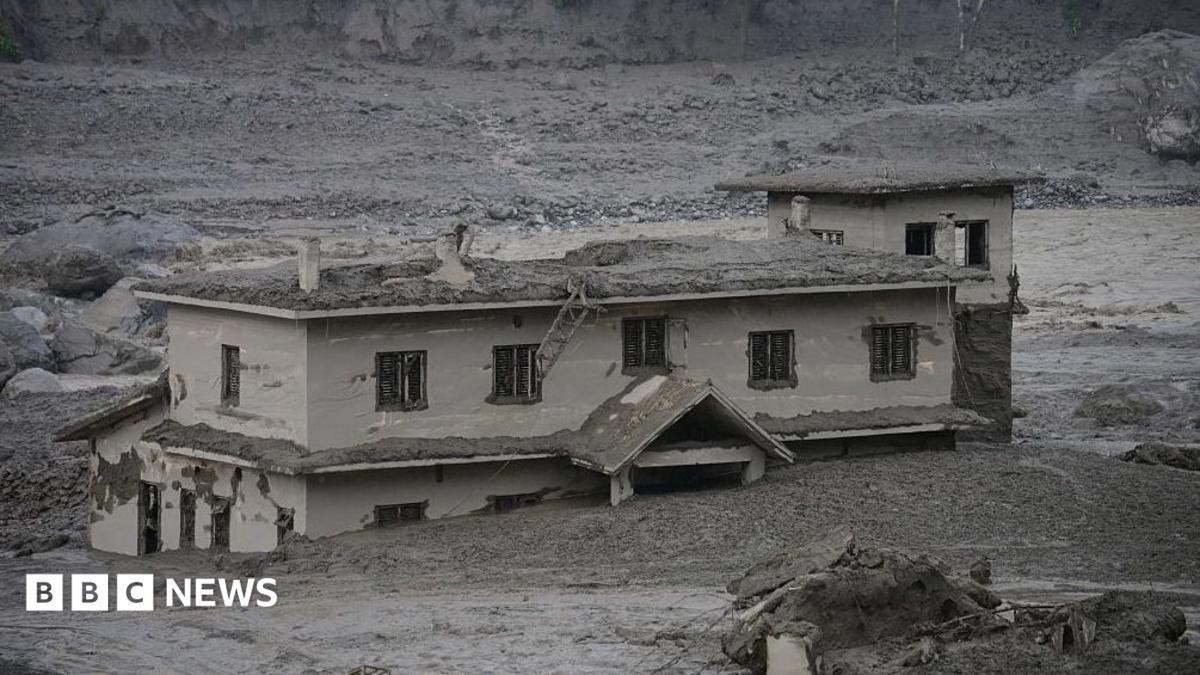
In the wake of a devastating surge of water that swept through Nepal’s Nuwakot district—damaging the Trishuli Bazar area—authorities are working to solve the mystery behind the catastrophic event. Whenever such floods strike the rugged terrain of the Himalayas, the immediate, urgent question is always: what triggered it?
Determining the precise cause has proven difficult. The event likely originated in the remote, sparsely populated regions of Tibet, where direct observation is near impossible. While experts typically rely on satellite imagery to track such developments, persistent monsoon cloud cover has severely hampered visibility, leaving scientists struggling to gather definitive evidence.
However, officials with Nepal’s Department of Hydrology and Meteorology have provided new insights. Preliminary analysis of available imagery suggests that a massive chunk of ice—likely a segment of a glacier—collapsed from a mountain on the Tibetan side of the border.
“The fall of this ice mass brought down a significant volume of rocks and sediment,” officials explained. “The immense friction generated by the falling debris, combined with the ice, appears to have triggered a surge of water.”
According to this theory, the resulting slurry of rocks and sediment created a temporary, unstable dam on the Lhende River. While this obstruction briefly held back the flow, the pressure eventually caused a breach, sending a massive, destructive wall of water downstream.
The situation remains complex, as international perspectives vary. Some Nepali academics currently in China have reported receiving similar accounts from Chinese counterparts regarding the ice collapse. Conversely, a post on X (formerly Twitter) by the Chinese state news agency Xinhua has characterized the event as a mudslide.
Earlier theories had speculated on the potential bursting of a glacial lake, but many glaciologists have since moved to rule that out.
As the search for answers continues, the international community remains on high alert. The true nature of the disaster will only be confirmed once clear satellite imagery is obtained and verified by multiple cross-border sources. For now, the tragedy underscores the growing vulnerability of communities living in the shadow of the Himalayas, where the unpredictable impacts of geological and climate-driven shifts continue to pose life-threatening risks.