








From Pests to Paramedics: The Rise of the ‘Paraborg’ Cockroach
In the aftermath of catastrophic events like earthquakes or building collapses, seconds are the difference between life and death. Now, a groundbreaking innovation from Australia is turning one of nature’s most resilient survivors—the cockroach—into a potential lifesaver for trapped victims.
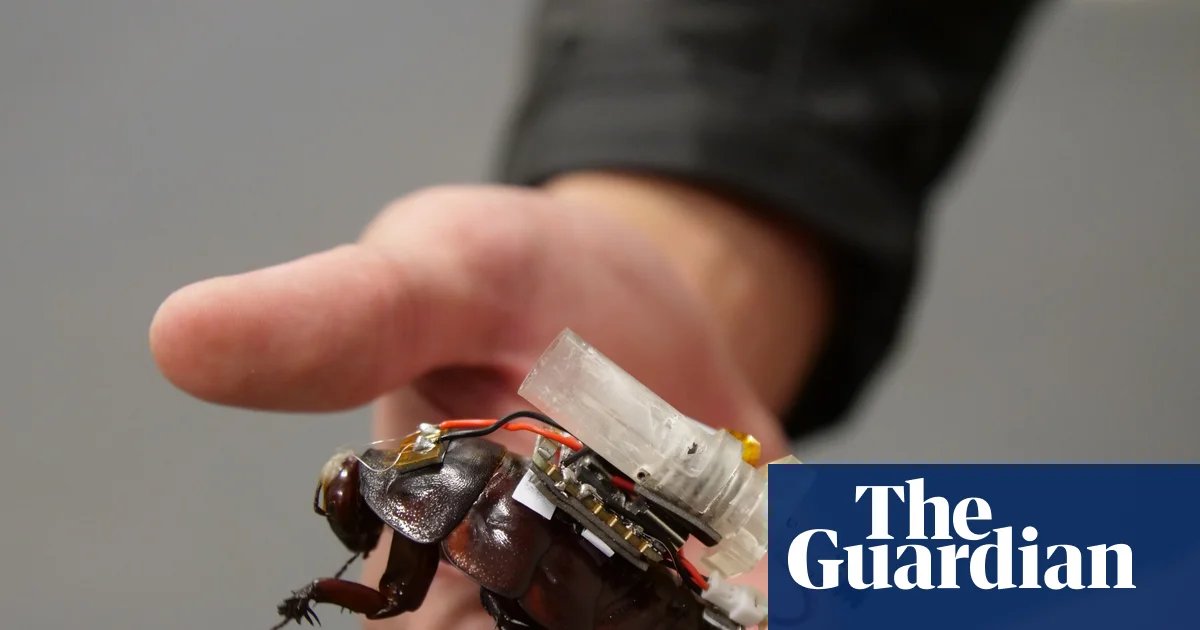
Biorobotics engineers from the University of Queensland (UQ), in collaboration with biomedical experts at the University of New South Wales (UNSW), have developed what they call “paraborgs”: six-legged cyborg insects equipped with cameras and miniature, remotely activated medical injectors.
Designed for search-and-rescue missions, these tiny first responders are built to reach victims in spaces too narrow, unstable, or hazardous for human rescuers to navigate.
Augmenting Nature
The research team utilized the giant burrowing cockroach (Macropanesthia rhinoceros), a species native to northern Queensland known for its robustness. By fitting the insects with lightweight electronics and custom-made injection systems, researchers have successfully transformed them from simple mobile sensors into active medical delivery agents.
“Cyborg insects have been designed for search and explore missions for the past couple of decades,” said UQ biorobotics engineer Thang Vo-Doan. “We wanted to take the next step. Once they find someone, can they actually help?”
The project ensures that while the roaches navigate the debris, the crucial medical decisions remain entirely in human hands. The insects are carefully anesthetized during the fitting of their microchips and harnesses, and researchers note that they live full, natural lifespans once their equipment is removed.
Precision Performance
The engineering challenge, according to PhD candidate Hai Nhan Le, was ensuring the roaches could hold steady during a delicate procedure. “The cyborg insect has to navigate to the target, position itself accurately, and remain stable enough to perform the injection,” Le explained.
In initial proof-of-concept trials, the results were promising. The paraborgs achieved a 95% success rate for injections delivered within 15cm of a target, while the end-to-end navigation and injection task was successful in 72% of trials.
While the prospect of a giant insect scurrying toward them might alarm some, Le emphasized the life-saving potential: “If you’re trapped in rubble or stuck in a cave and need help, it could make a real difference between life and death.”
A Future for Urban Search and Rescue
Emergency services have expressed optimism regarding the integration of this search and rescue technology into the field.
“If cyborg insects can safely enter spaces we can’t, locate casualties and ultimately help deliver emergency care, they could become another valuable tool in the future of urban search and rescue,” said Fire and Rescue NSW Supt Tim Hassiotis.
Looking ahead, the UQ team aims to deploy “swarms” of these specialized insects, with each individual assigned to a complementary role—such as mapping, sensing, or delivering supplies. Researchers believe that if development continues at this pace, these high-tech insects could be deployed in real-world emergencies within the next five to ten years.