







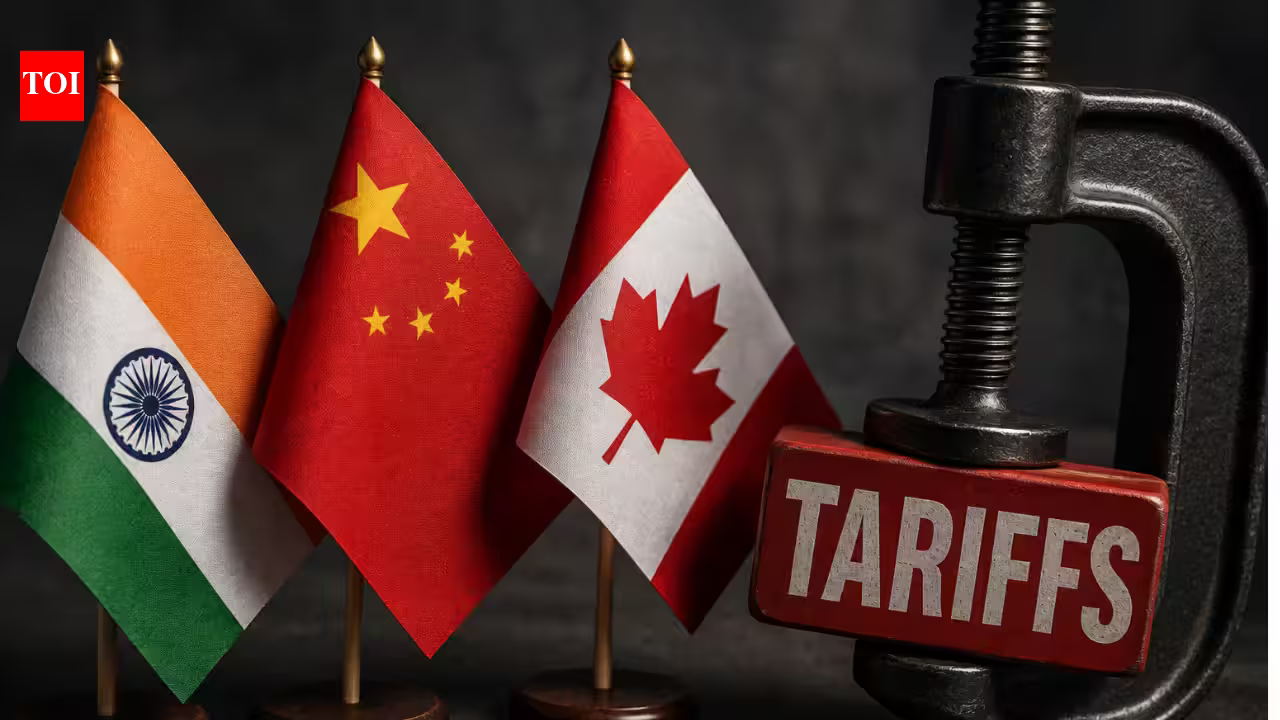
The New Geopolitics of Trade: How Trump’s Tariff Strategy is Redefining Global Economic Policy
From the borders of Canada to the energy markets of Asia, a clear pattern has emerged in Washington’s international relations. President Donald Trump’s trade policy has evolved into a multi-purpose tool of statecraft, where tariffs and sanctions are no longer confined to traditional trade deficits but are now deployed as leverage in complex geopolitical negotiations.
Whether the issue is fentanyl trafficking, migration, the war in Ukraine, or internal human rights policies, the Trump administration has turned economic pressure into a defining feature of its foreign policy. This “threaten, negotiate, delay, and retaliate” cycle has created an environment of high uncertainty for both global governments and the international business community.
A Global Squeeze: 10 Countries Under the Lens
The reach of Washington’s current economic agenda extends far beyond standard trade disputes. Here is how the tariff squeeze is playing out across the globe:
1. Canada: Beyond Trade Disputes
The relationship with Ottawa has soured significantly, with trade talks collapsing over non-economic issues. Trump has repeatedly cited fentanyl trafficking and illegal immigration as primary grievances, leading to retaliatory tariffs of up to 50% on Canadian goods. The dispute has even veered into the absurd, with debates over Quebec’s French-language laws and threats to rename regional landmarks.
2. India: The Russian Oil and H-1B Equation
India currently navigates a complex web of US pressures. Beyond recurring tariff threats, India faces U.S. scrutiny over its continued purchases of Russian oil. Furthermore, significant changes to U.S. immigration policy—specifically proposed, massive fees for H-1B visas—have hit India’s workforce hard, forcing many firms to rethink their global supply chains.
3. Iran: “Economic D-Day”
Iran remains the primary target of what the administration calls “Operation Economic Outcast.” The goal is to “sever every economic lifeline,” using secondary sanctions to target any country or entity that continues to trade with Tehran. This strategy effectively pulls third-party nations into the U.S.-Iran conflict.
4. The European Union: Security as Leverage
While a 2025 framework established a 15% tariff ceiling for most EU goods, the relationship remains fragile. Trump has consistently leveraged trade access to demand increased European defense spending and a more aggressive stance toward Moscow, proving that security policy is now inseparable from trade policy.
5. Latin American Friction (Colombia, Mexico, Venezuela, Cuba)
Across the Americas, economic penalties are being tied directly to border security and drug policy:
- Colombia faces tariffs linked to its handling of deportation flights and drug trafficking.
- Mexico has seen its tariff status dictated by migration and fentanyl policies, despite the USMCA agreement.
- Venezuela and Cuba face aggressive sanctions and tariffs aimed at strangling their fuel and financial networks, often affecting third-party suppliers in the process.
6. China: Fentanyl and Manufacturing
China remains the epicenter of the U.S. “Section 301” investigations. Washington has utilized tariffs as a bargaining chip to force Beijing to curb the flow of fentanyl precursor chemicals, while simultaneously applying pressure regarding China’s manufacturing capacity and its energy dealings with Iran.
7. Russia: Economic Warfare
For Russia, trade has been superseded by total economic isolation. Washington is currently pushing for secondary tariffs that could penalize any nation importing Russian energy, turning the global oil market into a frontline for international sanctions.
The Bigger Picture: A Structural Shift
Experts observe that we are witnessing a permanent, structural change in how global trade functions. “This marks a structural shift in the way trade policy is being used,” says Vidhu Shekhar, an assistant professor of finance and accounting.
While the U.S. has occasionally been forced to pivot—such as when the Supreme Court struck down specific IEEPA tariffs, resulting in billions in refunds to businesses—the administration continues to find new legal and regulatory justifications to maintain its pressure campaign.
As global businesses scramble to hedge against this unpredictability, one thing remains clear: in the era of modern U.S. trade policy, the question is no longer just about the price of goods, but rather what geopolitical issue President Trump might choose to use as his next justification for an economic wall.