








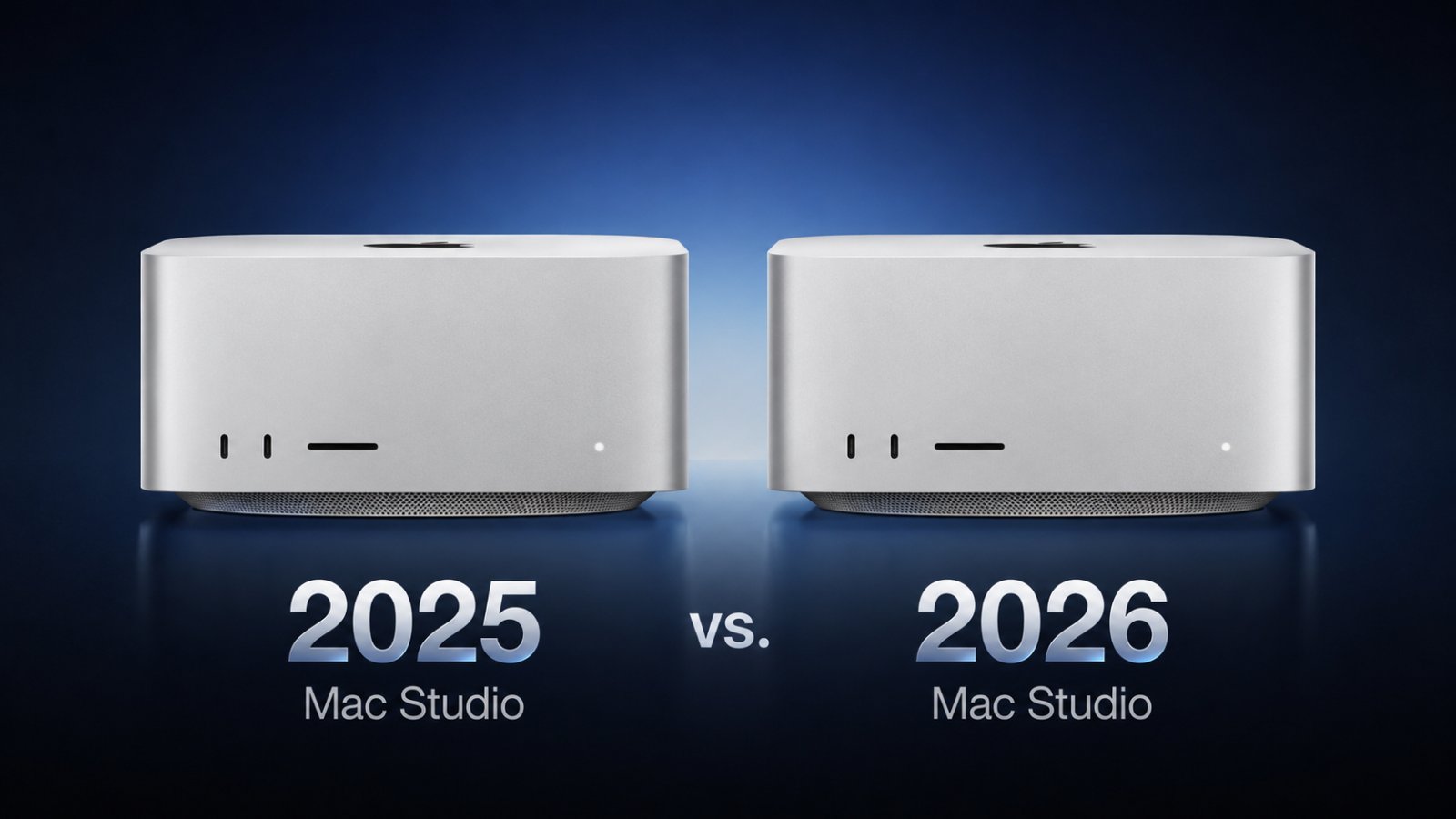
Apple Unveils New Mac Studio Featuring M5 Series Chips: What You Need to Know
Apple has officially refreshed its professional-grade desktop lineup, announcing a new Mac Studio powered by the high-performance M5 Max and M5 Ultra chips. The launch marks the immediate discontinuation of the M4 Max and M3 Ultra models that had been on the market since early 2025.
While the iconic chassis remains unchanged for the fifth consecutive year, the 2026 iteration introduces significant under-the-hood advancements, focusing heavily on AI performance, memory bandwidth, and connectivity.
Performance and Architectural Upgrades
The 2026 Mac Studio transitions to a new core architecture. For the M5 Max, Apple has moved away from the traditional performance/efficiency core split, opting instead for a powerful 18-core CPU configuration consisting of 6 “super cores” and 12 performance cores. The M5 Ultra scales this even further, offering a 30-core base CPU that can be configured up to 36 cores.
A major focus of this year’s update is the integration of Neural Accelerators into every GPU core. This enhancement results in massive performance leaps for machine learning workflows. Apple reports that M5-series users can expect up to 4.3x faster text-to-image generation and significantly accelerated LLM prompt processing compared to the previous generation.
Connectivity and Sustainability
Beyond raw compute power, the 2026 Mac Studio adopts several modern standards to keep pace with professional studio requirements:
- Networking: The inclusion of the N1 chip brings Wi-Fi 7 and Bluetooth 6 to the desktop for the first time.
- Storage: The machine now utilizes a next-generation PCIe Gen 6 SSD architecture, offering up to twice the read and write speeds of its predecessor.
- Pro Features: The addition of Genlock over USB-C caters to users in professional broadcast and production environments.
- Environmental Impact: Apple continues its push toward sustainability, constructing the new models with 35% recycled content, including 100% recycled aluminum enclosures.
Is the Upgrade Worth It?
For existing owners of the 2025 Mac Studio, Apple’s latest update is a refinement rather than a revolution. Unless your workflow is heavily reliant on local AI training, LLM token generation, or massive matrix multiplication tasks that benefit from the new Neural Accelerators, the performance gains over the M4/M3 generation may not justify the cost of a full replacement.
However, for those still using M1 or M2-era hardware, the leap is substantial. With M5-series chips, Apple claims up to 15.4x faster ML model training compared to the M1 Ultra, alongside the benefits of newer features like AV1 decoding and Thunderbolt 5 support.
The New High-End Benchmark
With Apple having officially discontinued the Mac Pro earlier this year, the M5 Ultra-equipped Mac Studio now stands as the company’s definitive flagship workstation.
The M5 Max model starts at $2,499, while the M5 Ultra begins at $5,499. While most configurations are expected to arrive by September 22, the high-capacity 512GB unified memory configuration is slated for a late October release, with pricing for that tier expected to exceed $10,000.
Pre-orders are currently live, though heavy demand has already pushed shipping estimates for M5 Ultra configurations to 10–12 weeks.