








Global Leaders Scramble for Drought Agreement as UN Sounds Alarm on Rapid Soil Deterioration
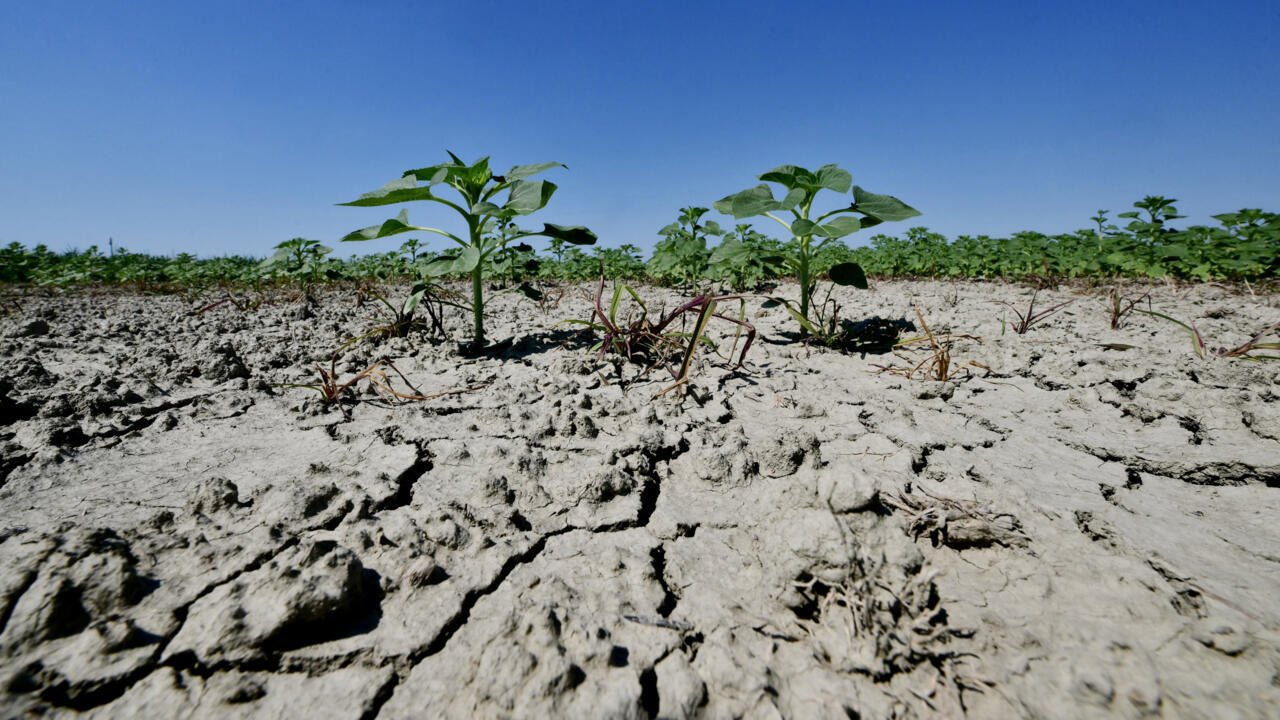
ULAANBAATAR, Mongolia – As the COP17 summit on desertification enters its final day, international delegates are engaged in high-stakes negotiations to secure a global agreement on drought management. The push for a consensus comes on the heels of a damning United Nations report revealing that the health of the world’s soils is declining at an alarming rate, threatening the future of global food security and biodiversity.
The summit, hosted in the Mongolian capital, serves as a critical checkpoint for international climate policy. Following the failure of the COP16 summit in Riyadh two years ago to produce a binding pact on drought, pressure is mounting for a breakthrough. A central point of contention remains the debate over governance: should land degradation be addressed as a standalone crisis, or must it be integrated into broader frameworks tackling climate change, biodiversity loss, and water scarcity?
A Crisis of Stewardship
The latest report from the UN’s Food and Agriculture Organization (FAO) paints a bleak picture: more than half of the world’s soils are now in “poor” or “very poor” condition. Only 14 percent of surveyed regions are currently categorized as having “good” or “very good” soil health.
“Globally, we must shift from a mindset of soil exploitation to one of soil stewardship,” the FAO stated. The agency emphasized that soils are not merely dirt; they support 95 percent of global food production, host 59 percent of terrestrial biodiversity, and function as the planet’s second-largest carbon sink, surpassed only by the oceans.
Despite the stakes, the progress on soil governance has been minimal. In the decade since the last major FAO assessment in 2015, soil conditions have deteriorated in 58 percent of the areas studied, while showing improvement in only 10 percent.
Barriers to Change
The FAO asserts that the lack of progress is not due to a shortage of scientific knowledge, but rather a lack of resources and financial incentives for farmers. High upfront costs, limited access to localized data, and a failure to incorporate indigenous knowledge are preventing the widespread adoption of sustainable farming practices.
Since 2015, the pressure on land has intensified significantly. The global population has surged by 800 million, leading to the conversion of an additional 80 million hectares—an area roughly the size of France and Germany combined—for major crop production.
The primary threat remains erosion, exacerbated by unsustainable agricultural practices. Other compounding factors include the depletion of organic carbon, nutrient mismanagement, pollution, and aggressive urban expansion.
Proven Solutions Exist
The report highlights that the tools for restoration are well-established. Strategies such as reducing or abandoning intensive tillage—which destroys soil organic life and leaves earth vulnerable to wind and rain—are identified as essential.
Other recommended interventions include:
- Cover Cropping: Utilizing legumes and brassicas on fallow fields to anchor soil and boost nutrient profiles.
- Agroforestry: Integrating trees into agricultural landscapes to stabilize land and increase resilience.
- Precision Fertilization: Optimizing the use of natural and artificial fertilizers to minimize pollution and runoff.
As the summit concludes, observers are watching closely to see if political will can bridge the gap between these known solutions and their global implementation. With climate change acting as a “threat multiplier” for soil degradation, the consensus at COP17 is clear: without an immediate, integrated global strategy, the land that sustains human civilization faces an increasingly precarious future.