









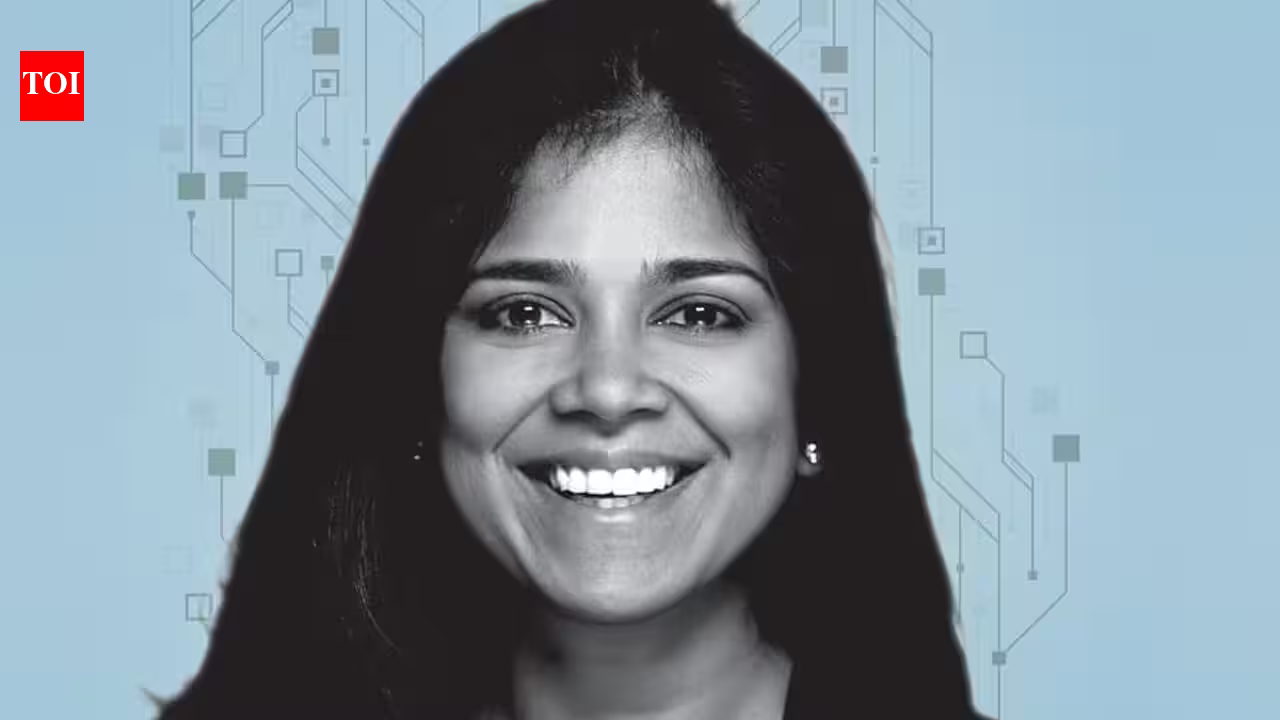
From Personal Tragedy to Medical Breakthrough: How Suchi Saria’s AI is Saving Lives
In the rapidly evolving landscape of artificial intelligence, many innovations are framed as futuristic disruptions. For Dr. Suchi Saria, however, AI is a deeply personal mission—a tool designed not to replace human expertise, but to provide doctors with the one thing that can mean the difference between life and death: time.
Dr. Saria, a professor at Johns Hopkins University and the founder and CEO of Bayesian Health, has been named to the prestigious 2026 TIME100 AI list. Her inclusion highlights a significant shift in the AI sector: a move away from abstract consumer technology toward life-saving clinical applications.
A Mission Born from Loss
Dr. Saria’s research trajectory was fundamentally altered in 2017 when she lost her nephew to sepsis. A life-threatening reaction to an infection, sepsis can trigger rapid organ failure, making every minute of medical intervention critical. The tragedy underscored a glaring gap in modern medicine: the difficulty of identifying a patient’s deterioration before it becomes clinically obvious.
Motivated by this loss, Dr. Saria accelerated her efforts to translate academic machine learning research into a robust clinical support system. Her AI platform works by continuously scanning vast volumes of patient data—including vital signs, laboratory results, and physician notes—to identify subtle, early-warning patterns that the human eye might miss.
Proven Clinical Impact
The technology, developed initially through research at Johns Hopkins and later commercialized by Bayesian Health, has moved from the laboratory to the bedside with remarkable results. In May 2026, the U.S. Food and Drug Administration (FDA) officially cleared the system as an early-warning tool for sepsis.
Clinical data supports the efficacy of this approach. Research involving over 764,000 patient encounters demonstrated that the system’s implementation was associated with an 18.2% relative reduction in mortality. Furthermore, Johns Hopkins reported that the AI is capable of identifying the onset of sepsis hours earlier than traditional clinical assessments, allowing for timely medical interventions that drastically improve patient outcomes.
Redefining the Role of AI in Healthcare
The success of Dr. Saria’s work challenges the common narrative that AI in medicine is destined to replace physicians. Instead, her system exemplifies the “human-in-the-loop” philosophy. The AI does not make final medical decisions; rather, it acts as a diagnostic assistant that alerts clinicians when a patient’s profile warrants closer inspection.
“The goal is not for a machine to make the final medical decision,” the research suggests. “It is to alert clinicians when there may be a reason to look more closely.”
A Blueprint for Future Innovators
For students and researchers, Dr. Saria’s career serves as a powerful case study on the importance of multidisciplinary work. By positioning herself at the intersection of computer science, machine learning, and clinical medicine, she has shown that the most impactful breakthroughs occur when technical expertise is paired with a deep understanding of domain-specific problems.
Her inclusion in the TIME100 AI list is a testament to the idea that technology is most profound when it is invisible yet indispensable. As Saria continues her work, she remains a guiding figure for a new generation of scientists, proving that while AI may be a digital technology, its most vital applications are rooted in the human experience.
Disclaimer: This article is based on publicly available information and statements from the individuals and organizations cited. TOI Education has not independently verified all claims, medical outcomes, or technical performance mentioned in the article.