









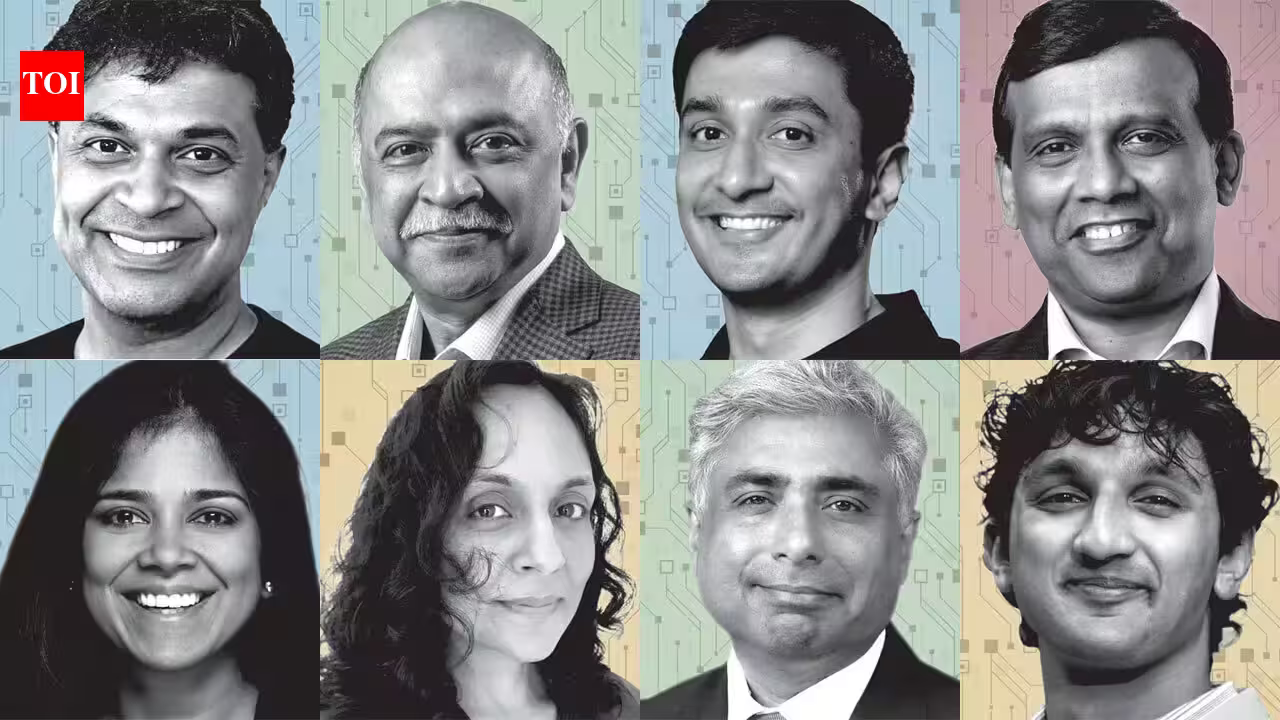
Global Influence: Nine Indian-Origin Leaders Shaping the Future of AI
While the global conversation surrounding artificial intelligence is often dominated by the giants of Silicon Valley—OpenAI, Google, Anthropic, and Nvidia—a much broader, more complex narrative is unfolding. The recently unveiled TIME100 AI 2026 list highlights this evolution, showcasing the 100 most influential people currently steering the trajectory of the technology.
Notably, nine individuals of Indian origin have been recognized for their pivotal roles across diverse sectors, including enterprise technology, scientific research, healthcare, judicial reform, and AI safety.
The Pioneers and Their Impact
The TIME100 AI list is categorized into Leaders, Innovators, Shapers, and Thinkers, reflecting the reality that influence in the AI era is no longer confined to those building large language models.
Corporate Leadership and Enterprise AI
- Arvind Krishna: The IBM Chairman and CEO, an IIT Kanpur alumnus, has challenged industry norms by championing smaller, specialized models tailored for enterprise applications, arguing that AI’s true economic potential lies beyond mere model size.
- Ravi Kumar S: The CEO of Cognizant is recognized for his pragmatic approach to the future of work. A former nuclear scientist, Kumar advocates for the idea that AI will transform professional tasks rather than simply making entire job categories obsolete.
Innovation and Linguistic Diversity
- Vivek Raghavan: A key architect behind India’s Aadhaar infrastructure, Raghavan is now co-founding Sarvam AI. His work focuses on building models that respect India’s vast linguistic diversity, advocating for technological sovereignty in the AI age.
- Anima Anandkumar: An IIT Madras graduate and Caltech professor, Anandkumar is bridging the gap between AI and physical science. Her work in high-resolution weather forecasting and physical modeling is revolutionizing how we simulate the real world.
Societal Integration: Health, Justice, and Safety
- Suchi Saria: Founder of Bayesian Health and a Johns Hopkins professor, Saria’s AI-driven sepsis detection system has received FDA clearance. Clinical studies indicate that her technology has contributed to a 20% reduction in mortality rates.
- Utkarsh Saxena: As co-founder of Adalat AI, the former Supreme Court law clerk is transforming India’s judiciary. His software is currently utilized by over 6,000 judges, with Andhra Pradesh set to adopt the system statewide by October 2026.
- Meetali Jain: Founder of Tech Justice Law, Jain is at the forefront of legal accountability. Her advocacy focuses on the critical question of how companies should be held liable for real-world harms caused by their AI systems.
- Arvind Raman: A key figure in the U.S. regulatory landscape, Raman works at NIST and the Center for AI Standards and Innovation, focusing on the rigorous testing and safety evaluations required for advanced AI systems.
- Sunny Gandhi: As the co-executive director of Encode, Gandhi is a prominent voice in policy advocacy, pushing for greater transparency, human oversight, and robust safety requirements as AI becomes integrated into critical infrastructure.
A New Era of Collaboration
The recognition of these nine figures sends a powerful message to the next generation: the field of artificial intelligence is no longer a monolith restricted to software engineering. It has matured into a multidisciplinary ecosystem that demands the expertise of doctors, lawyers, policy makers, and educators.
As the industry moves forward, the influence of these leaders confirms that the future of AI will be defined not just by the raw capability of the models, but by the choices made regarding their deployment, governance, and ethical application.
Disclaimer: This article is based on publicly available information and statements from the individuals and organizations cited. TOI Education has not independently verified all claims, figures, or technical performance metrics mentioned.