








Second Phase of Archaeological Excavation Commences at Ancient Buddhist Site in Baramulla
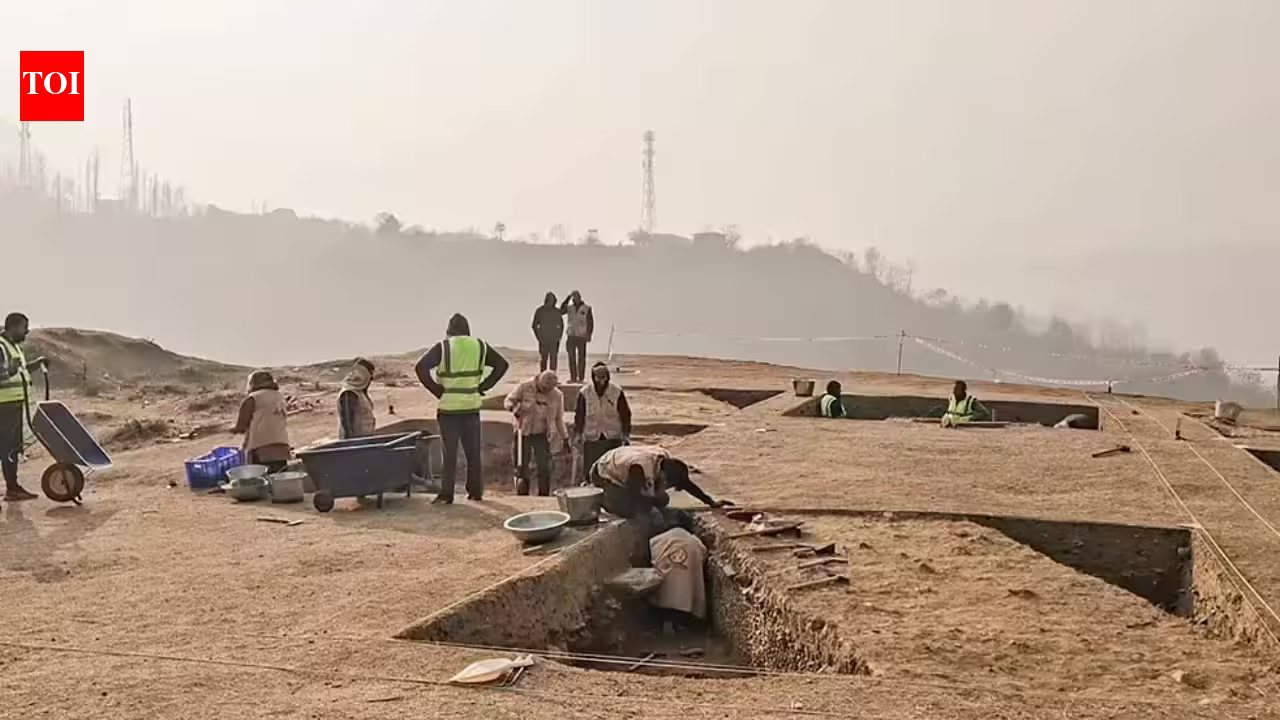
ZEHANPORA, BARAMULLA: A significant chapter in the historical narrative of Jammu and Kashmir unfolds today as authorities launch the second phase of excavations at a 2,000-year-old Buddhist site in Zehanpora. The project is set to be inaugurated by J&K Chief Secretary Atal Dullo, marking a pivotal step in unveiling the region’s long-lost ancient heritage.
A Discovery Across Borders
The existence of this ancient Buddhist settlement was brought to light last year by Professor Mohamad Ajmal Shah of the University of Kashmir’s Department of Central Asian Studies. The site’s significance gained national attention after Prime Minister Narendra Modi highlighted the discovery during his Mann Ki Baat radio address on December 28.
The breakthrough occurred in October 2023, while Professor Shah was on a fellowship in France. At the Guimet Museum, he encountered century-old archival photographs depicting distinct stupa domes in the Baramulla region. Recognizing the geography immediately, Shah realized that the mounds locals had overlooked for generations were, in fact, remnants of an ancient civilization.
“What struck me was the domes in the photos looked much larger than what we see now,” Shah noted, emphasizing that these historical images provided the essential “missing link” for modern archaeologists to reconstruct the site’s layout.
Unearthing the Past
Following the initial findings, the J&K Department of Archaeology funded a pilot excavation in November last year. The team, utilizing drone imagery to map wall alignments beneath the earth, successfully unearthed an apsidal (semi-circular) stupa. Excavations also yielded a variety of historical treasures, including iron and copper artefacts, ancient needles, and intricately decorated objects.
According to researchers, the site holds deep historical weight. Professor Shah posits that Zehanpora may have been connected to the Fourth Buddhist Council, which took place in the 1st century CE—a turning point when Buddhism saw the evolution of the Hinayana school into the Mahayana tradition.
Connecting to Ancient Chronicles
Historical records appear to support the importance of this region. Professor Shah pointed to the travelogues of the famed Chinese explorer Hiuen Tsang, who documented his journeys through the Kashmir valley. Tsang explicitly mentioned staying at Uskur—a known Buddhist site near Baramulla—and visiting several prominent monasteries.
“This suggests Tsang must have visited the monastery at Zehanpora as well,” Shah added.
As the second phase of the excavation begins, experts remain optimistic that beneath the soil of Baramulla lie further secrets that will provide a clearer picture of the valley’s role as a major centre of ancient spiritual and cultural exchange. The ongoing project is expected to deepen the understanding of how Kashmir served as a cradle for the spread of Buddhist philosophy across Central Asia.