








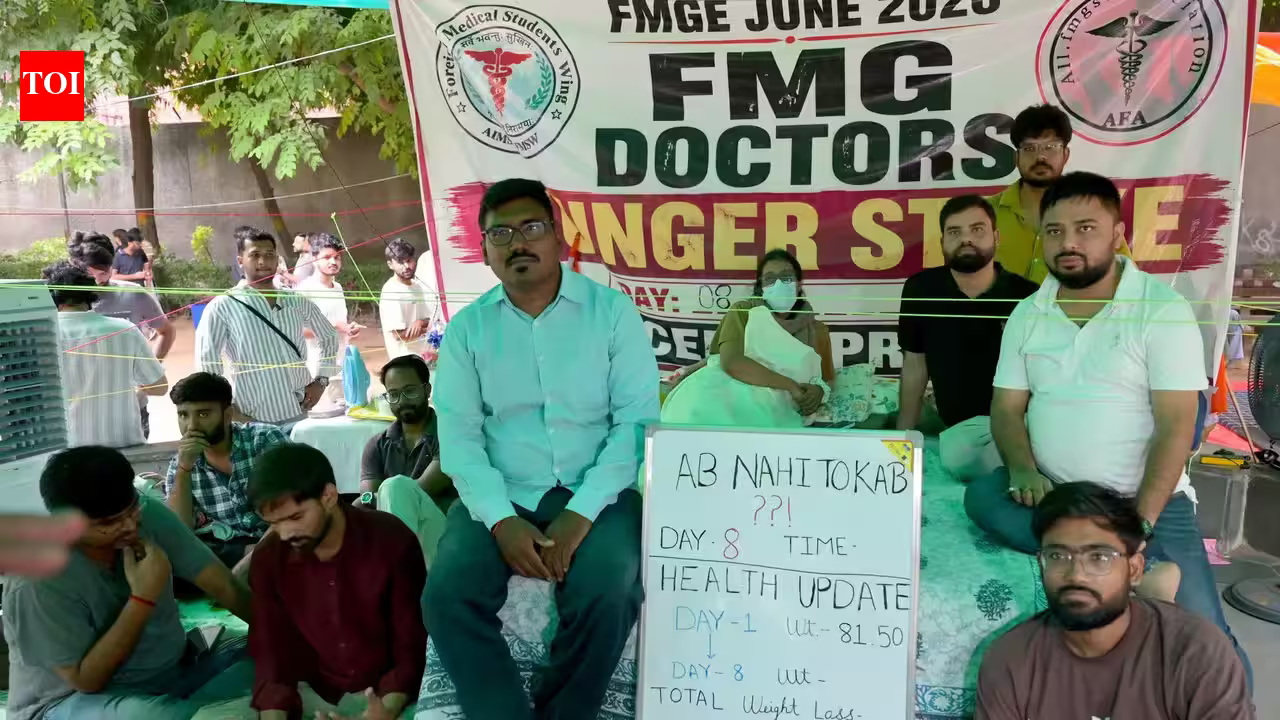
Foreign Medical Graduates Call Off Protests Following Major Reform Commitments by NBEMS
In a significant breakthrough for medical aspirants, Foreign Medical Graduates (FMGs) have officially called off their protests against the National Board of Examinations in Medical Sciences (NBEMS). The decision follows a high-level meeting on August 27 between NBEMS officials and representatives from the All India Medical Students Association–Foreign Medical Students Wing (AIMSA-FMSW), resulting in a comprehensive agreement aimed at reforming the licensing examination process.
The protests were sparked by widespread frustration over the June 2026 session of the Foreign Medical Graduate Examination (FMGE), which saw a dismal pass rate of only 12.8 percent. Candidates had raised vocal concerns regarding the extreme difficulty of the paper, the prevalence of complex video-based questions, and suboptimal conditions at various examination centers.
Rationalizing Exam Difficulty
The most pivotal outcome of the negotiations is the commitment by the NBEMS to restructure the difficulty level of future question papers. Moving forward, the examination board will adopt a balanced distribution: 30 percent low-difficulty, 50 percent moderate-difficulty, and 20 percent high-difficulty questions.
While these reforms provide a path forward, the NBEMS has firmly clarified that it will not compromise on medical standards. There will be no grace marks or retroactive changes to the June 2026 results, as the board maintains that the competency threshold for practicing medicine in India must remain stringent.
New Exam Opportunities and Schedule
Recognizing the professional toll of delayed certification, the NBEMS has announced an additional FMGE session to be held by the end of October 2026. This move effectively grants candidates a third opportunity this year, providing immediate relief to those looking to restart their career paths without waiting for the next annual cycle.
Looking beyond this year, the board has committed to a more consistent cadence for the screening process. Starting in the next cycle, the FMGE 2026 will transition to a three-times-a-year schedule, with windows proposed for December/January, April/May, and August/September. This systemic shift is expected to significantly reduce the waiting period for graduates, allowing for faster professional progression.
Increased Transparency and Infrastructure
To address complaints regarding the fairness of the evaluation process, the NBEMS has agreed to increase operational transparency. Candidates will now be granted access to detailed breakdowns via the applicant portal, including:
- Specific Question IDs
- Correct Answer IDs
- Individual candidate responses
- Marks awarded per question
Furthermore, the board has pledged to improve the physical and technical infrastructure at examination centers, including allocating additional time for biometric verification, which had previously been a point of contention for many test-takers.
While the immediate standoff has concluded, the medical community will be watching closely as these reforms are implemented. For the thousands of foreign-trained doctors whose careers hinge on these results, the upcoming October examination will serve as the first major test of the NBEMS’s commitment to a more transparent and predictable evaluation framework.