








Beyond the Disaster Bulletin: Why India’s Climate Strategy Must Pivot to Proactive Investment
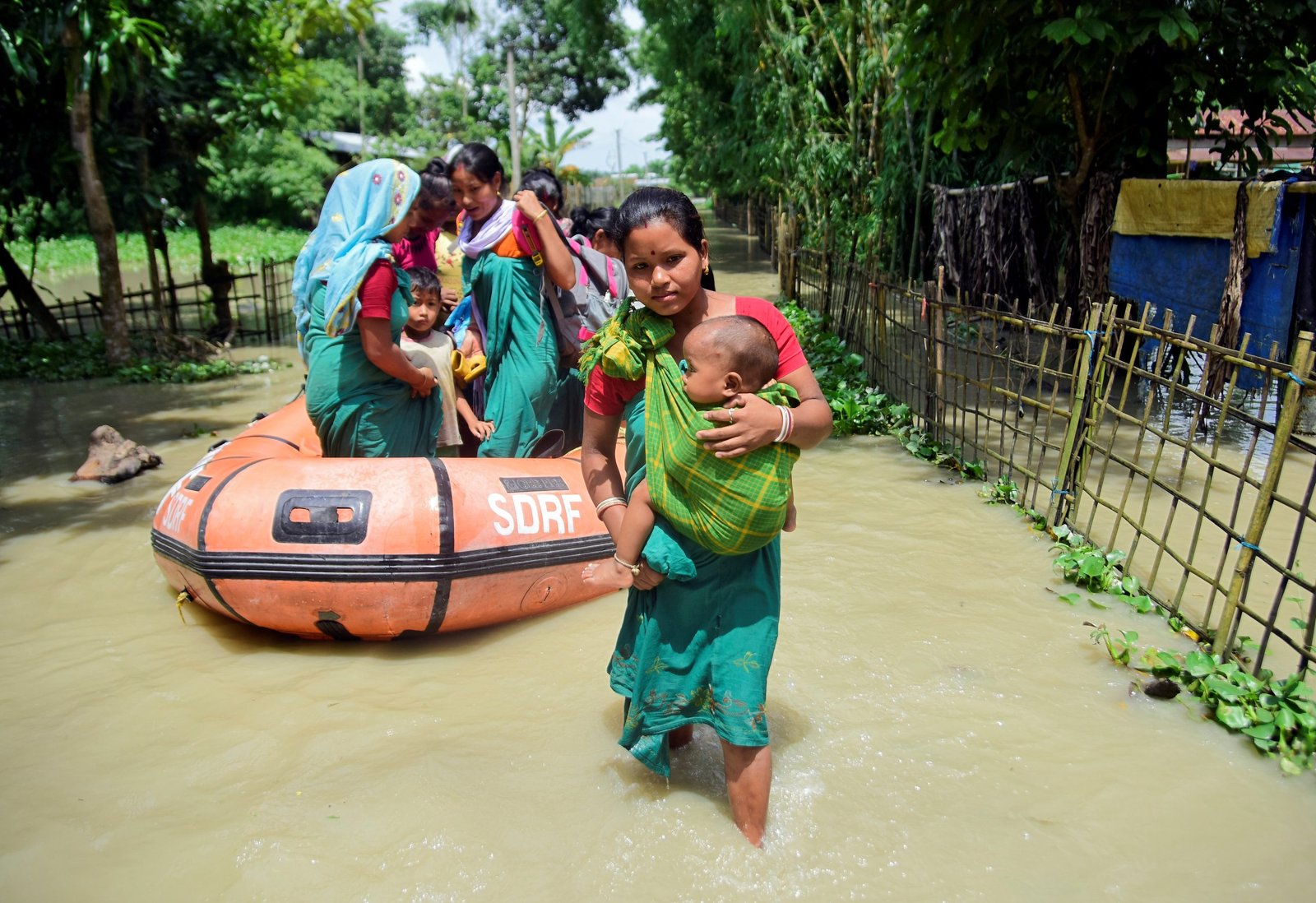
When Rojo Neog stepped out into the night to buy candles during a power outage in his northeast Indian village this July, he had no way of knowing he was walking into a tragedy. Within thirty minutes, floodwaters surged from knee-deep to neck-high, sweeping him away. Three days later, his body was recovered.
His death is a harrowing illustration of a new, volatile reality: climate risk in India has broken free from predictable seasonal calendars. From the severe flooding in Assam—which has claimed over 100 lives and displaced nearly 50,000 people—to the drastic water rationing in Mumbai, where reservoir levels plummeted to a mere 10% earlier this year, the country is facing a climate emergency that is increasingly hard to contain within standard disaster bulletins.
According to experts at Iora Ecological Solutions, a New Delhi-based firm specializing in climate action and policy, the fundamental challenge is not a lack of warning. Rather, the bottleneck lies in the institutional and financial lag between foreknowledge and preemptive action. As global leaders prepare for COP31 in Antalya this November, India is uniquely positioned to advocate for a structural shift in how climate adaptation is financed and implemented.
The Cost of Reaction vs. The Value of Resilience
The current paradigm is overwhelmingly reactive. When a disaster strikes, relief efforts are mobilized—but often too late for those whose livelihoods or lives have already been erased.
“Adaptation should not be an obligation triggered only once a crisis has arrived,” the experts argue. Instead, it must be treated as a strategic investment made while there is still assets and infrastructure to protect. True resilience requires that finance moves in tandem with identified risks, ensuring that institutions are empowered to act before an emergency is officially declared.
This approach requires clear, pre-agreed thresholds. If local authorities had established triggers—such as specific river water levels—that automatically released emergency funds, communities in Assam could have moved livestock, secured critical documents, and prepositioned life-saving supplies before roads became impassable.
Bridging the Knowledge-Finance Gap
The path to this proactive model is already being forged at the local level. In Majuli, an island district in Assam, communities have already taken the lead by mapping flood and erosion risks across 64 villages. They have identified specific resilience measures and drafted potential budgets. The missing piece of the puzzle is a formal mechanism that connects this grassroots wisdom with the national and international institutional capital necessary to act.
This integration is already showing promise in the public health sector. In New Delhi, once-rigid vector-control strategies have evolved; workers no longer wait for a defined “dengue season” but operate on a year-round alert system, using real-time surveillance and hotspot mapping to mitigate risks as they emerge. Scaling this to incorporate climate-resilient agriculture, water security, and infrastructure drainage is the next logical—and necessary—frontier.
A Financial Reality Check
The economic incentive for this shift is massive. While India spent roughly 5.6% of its GDP on adaptation-related activities in 2021-22, this is dwarfed by the estimated $100 billion annual requirement to build genuine, long-term resilience.
International support is currently falling drastically short, with public adaptation finance failing to keep pace with the scale of the threat. However, shifting the conversation from “charitable relief” to “economic investment” could unlock new avenues. By preparing projects well, governments can attract private capital into areas like efficient irrigation, cold-chain logistics, and risk-proofed infrastructure, while reserving public funds for the most vulnerable communities and essential environmental safeguards, such as restoring wetlands.
Ultimately, the true measure of success in the climate-altered world will not be the speed of post-disaster relief, but the quiet, unseen victories of prevention: the livestock saved, the medicines prepositioned, and the families who were able to move to safety while the roads were still open.
“Adaptation becomes an investment,” the authors conclude, “when it preserves those choices before they disappear.”