






Arizona Chamber Joins Supreme Court Pushback Against EPA Air-Quality Mandate
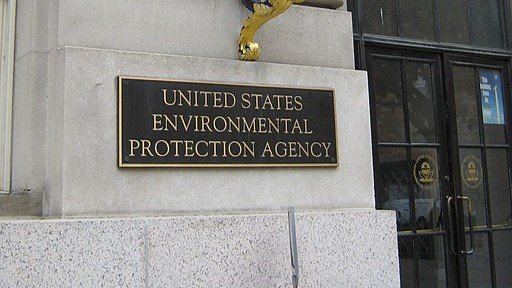
PHOENIX – The Arizona Chamber of Commerce & Industry has joined a high-stakes legal coalition petitioning the U.S. Supreme Court to strike down a federal air-quality regulation that business leaders warn could stifle economic growth and paralyze critical infrastructure projects nationwide.
The petition, filed on Friday, challenges the Environmental Protection Agency’s (EPA) 2024 revision to the National Ambient Air Quality Standard (NAAQS). The updated rule mandates a 25% reduction in the allowable annual concentration of fine particulate matter (PM2.5), slashing the limit from 12 micrograms per cubic meter to nine.
The Regulatory Hurdle
PM2.5 consists of microscopic particles small enough to lodge deep within human lungs. Under the Clean Air Act, communities that fail to meet these stringent standards face a “nonattainment” designation, triggering onerous regulatory burdens.
For the business community, the primary concern is the potential gridlock in the permitting process. Even in regions currently meeting federal standards, the new, lower threshold could force companies to undergo exhaustive demonstrations to prove that any new or expanded facility—from manufacturing plants to energy grids—will not push air pollution levels above the federal ceiling.
“Arizona can protect clean air and continue to grow, but we have to be realistic about what these rules mean on the ground,” said Danny Seiden, President and CEO of the Arizona Chamber of Commerce & Industry. “When a federal standard makes it harder to permit a new manufacturing plant, energy project or piece of critical infrastructure, that has consequences for investment, jobs and our ability to compete. Businesses need tough rules to also be clear, lawful and workable.”
Questioning the EPA’s Process
At the heart of the legal dispute is not necessarily the goal of cleaner air, but the methodology used by the EPA to reach its decision. The Clean Air Act mandates that the agency conduct a “thorough review” of standards every five years. The petitioner coalition argues that the EPA bypassed this established scientific cycle, effectively cutting corners during the Biden administration’s adoption of the 2024 rule.
According to the petition, this marked the first instance in which the EPA revised a national air-quality standard without completing the comprehensive review required by law. Furthermore, the agency allegedly failed to account for the economic costs of initiating such a discretionary, off-cycle review.
“The issue here is whether EPA can make a major change to an air-quality standard without going through the full review Congress required,” said Vanessa Pomeroy, deputy general counsel and chief counsel of the Arizona Chamber Legal Center. “Our position is that it can’t. When a rule can affect permitting, investment and major projects across the country, the process matters.”
A Legal Tug-of-War
The case has been marked by judicial and administrative confusion. The EPA initially defended the rule, but later reversed its position, requesting that the U.S. Court of Appeals for the D.C. Circuit vacate the regulation—agreeing with industry critics that the proper procedural rigor was missing.
However, in a surprising turn, the D.C. Circuit rejected both the business coalition’s challenge and the EPA’s own request to vacate the rule, leaving the 2024 standards in effect as of June. This has prompted the Arizona Chamber, the U.S. Chamber of Commerce, the National Association of Manufacturers, and various Arizona legislative leaders to take their federal air-quality rule challenge to the nation’s highest court.
The “Non-Point Source” Problem
Industry groups argue the rule is particularly misguided because businesses have little control over the majority of particulate matter in the air. Data suggests that approximately 84% of PM2.5 emissions originate from non-point sources—such as wildfires, road dust, and construction—while industrial sources and power plants account for only about 16%.
As the Supreme Court considers whether to hear the case, the outcome remains a critical milestone for Arizona. The decision will not only shape the state’s industrial future but will also clarify the extent to which federal agencies can tighten environmental standards outside of mandated review cycles, ultimately determining the future of state-level economic development and infrastructure investment.