







Himalayan Trade Lifeline Severed: Devastation at Rasuwagadhi-Gyirong Border
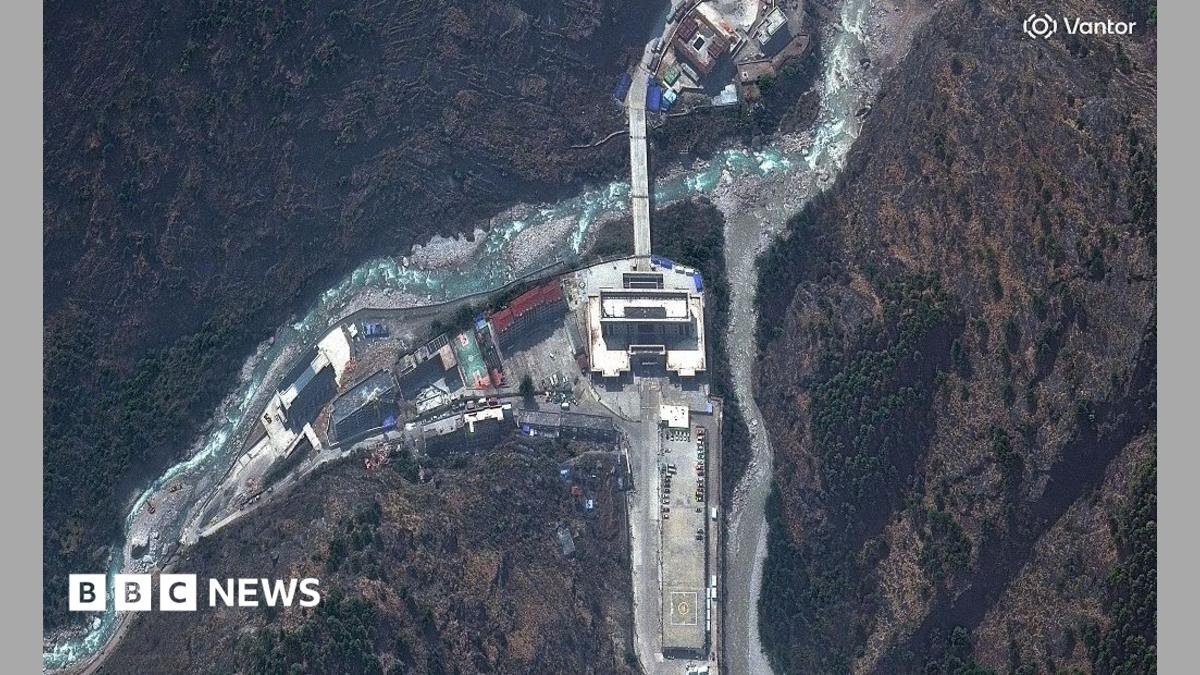
KATHMANDU – The vital mountain pass connecting Nepal and China, a critical artery for trans-Himalayan trade, lies in total ruin following catastrophic flooding. As rescue teams sift through the debris, the disaster has thrown Nepal’s economic security into sharp focus, exposing the fragility of its reliance on a single, high-risk trade corridor.
When a 21-member Chinese rescue team arrived at the Gyirong crossing on August 28, the scene was one of apocalyptic destruction. “As far as the eye could see, there was nothing but ruins,” one rescuer told Reuters, describing the aftermath of the floods that decimated the border infrastructure.
A History of Fragility
The Rasuwagadhi-Gyirong crossing, which serves as a primary gateway for goods entering Nepal from the north, has long been plagued by geological volatility. This latest disaster comes just months after a grueling recovery effort; in July 2025, major flooding had shuttered the crossing for nearly six months. It only returned to operation on January 1, 2026, following the construction of a temporary bridge by Chinese authorities.
Traffic had only just begun to normalize. Chinese border authorities reported over 100,000 crossings by June, while Nepali immigration records noted 53,742 arrivals and departures in the year leading up to mid-July. While the two sets of data use different reporting metrics, they underscore the site’s immense importance to regional mobility, with Indians, Nepalis, and Chinese nationals making up the bulk of the foot traffic.
Economic Chokepoint
Beyond human movement, the route is a lifeline for Nepal’s economy. Posh Raj Pandey, chairman emeritus of the Kathmandu-based South Asia Watch on Trade, Economics and Environment, notes that Rasuwagadhi, alongside the Tatopani border point, accounts for approximately one-third of Nepal’s $2.95 billion trade with China.
“Around 60 to 70 trucks passed through the gorge each day,” Pandey explained. These shipments were essential, carrying everything from heavy machinery and vehicles to electronics and consumer goods. Most critically, the route handled roughly 80% of Nepal’s electric-vehicle imports.
With the closure of the Rasuwagadhi crossing, Nepal is now facing a supply chain crisis. The government’s attempt to pivot trade to the Tatopani crossing has faltered, as Chinese authorities have also temporarily closed that facility, citing persistent landslide risks on the Nepali side of the border.
Future Uncertainty
The disaster has cast doubt on long-term infrastructure projects, including the proposed trans-Himalayan railway—a centerpiece of bilateral development plans meant to tether Kathmandu more closely to Beijing.
For experts like Pandey, the tragedy is a stark warning. “Nepal should develop an alternative China trade route and reconsider its wider development strategy, including its heavy concentration of hydropower projects along the same river system,” he said. “We have put all eggs here. We need to develop an alternative border port.”
The Human Cost
While policy analysts look to the future, those who worked at the border are left to grapple with the personal toll of the disaster.
Recalling the final days before the flood, immigration official Pokharel described a staff perpetually on edge. Following the previous year’s flooding, workers at the Rasuwagadhi office were keenly aware of their precarious position. “At night, we sometimes felt vibrations and went outside to check the river,” he recalled, noting that the team had even devised escape plans to run uphill should the waters rise again.
For many of his colleagues, however, that opportunity never came. “My friends could not get that chance,” he said.