









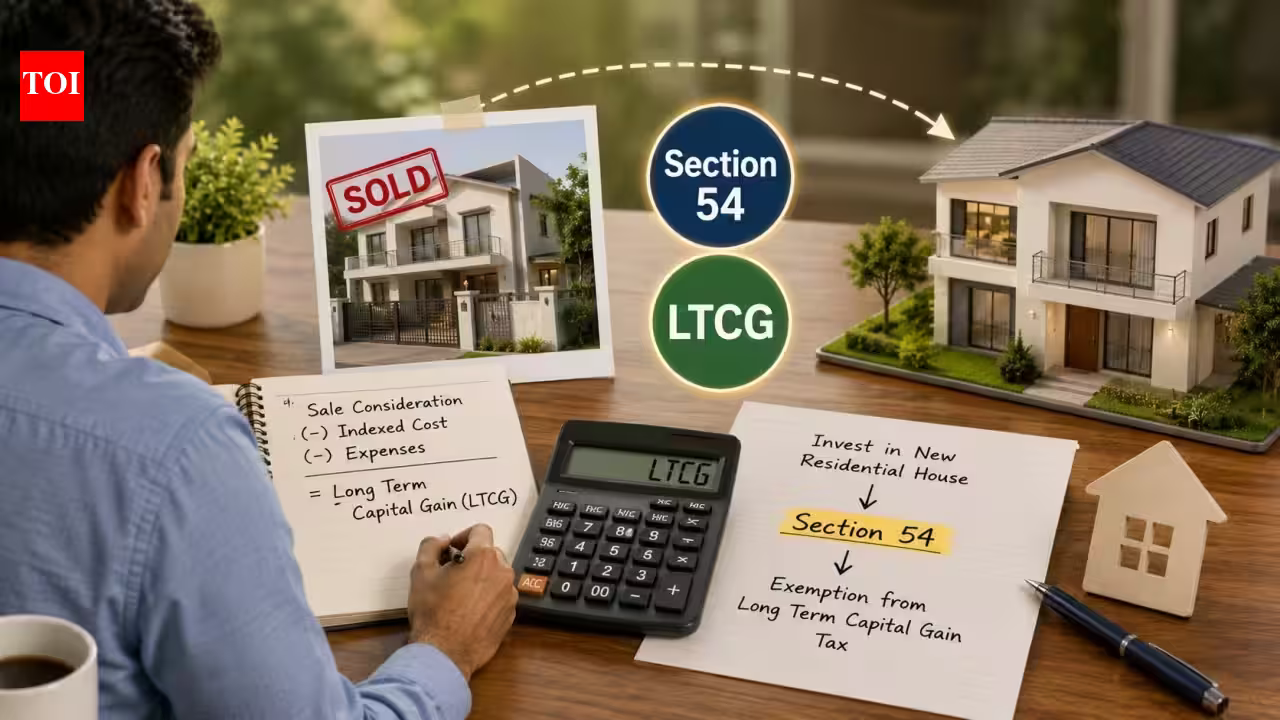
Selling a Jointly Owned Property? How to Claim 100% LTCG Exemption When You Provided All the Funding
Many taxpayers face a common dilemma: they purchase a property jointly with their spouse to ensure ease of succession or convenience, but the entire purchase price is paid by only one partner. When it comes time to sell that property and claim a Long-Term Capital Gains (LTCG) tax exemption under Section 54, confusion often arises regarding ownership requirements for the new investment.
If you find yourself in this situation, experts confirm that it is entirely possible to claim the full exemption, provided you can substantiate your financial contribution.
Proving Beneficial Ownership
According to Shubham Agrawal, a senior taxation adviser at TaxFile.in, if you can provide a clear financial trail—such as bank statements and transaction records—that proves the initial property was funded entirely by you, you are legally considered the 100% “beneficial owner.” Consequently, the replacement property purchased to claim the Section 54 exemption can be registered in your name alone.
Essential Steps for Compliance
To ensure your tax filing remains compliant and to avoid potential scrutiny from the Income Tax Department, consider these professional recommendations:
- TDS Deduction: Ensure the buyer deducts the full Tax Deducted at Source (TDS) against your PAN exclusively.
- Income Reporting: Report the entirety of the sale proceeds and the resulting capital gains in your own Income Tax Return (ITR).
- Managing the AIS: Because the property sale will likely appear in your wife’s Annual Information Statement (AIS) due to data sharing from the sub-registrar, she should use the “Feedback” option on the income tax portal. She should clarify that the transaction belongs to the husband’s PAN, preventing her from receiving an unnecessary tax notice.
- Documentation: Maintain meticulous records of the original payments to serve as evidence of your sole contribution.
Understanding Section 54 Exemptions
Section 54 of the Income Tax Act allows individuals and Hindu Undivided Families (HUF) to save on tax when selling a residential property and reinvesting the gains into a new home within India. To qualify, taxpayers must keep the following critical conditions in mind:
1. Holding Period
To qualify for the exemption, the property sold must be a long-term capital asset, which requires a minimum holding period of 24 months.
2. Strict Timelines
The new property must be purchased within one year before or two years after the date of sale. If you are constructing a new home, you are granted a three-year window from the date of the transfer.
3. Ceiling and Limits
The exemption is capped at the lower of the capital gain amount or the total investment in the new home. Additionally, starting from the Assessment Year 2024-25, any investment exceeding Rs 10 crore in a new residential property will not be eligible for the exemption, effectively setting a Rs 10 crore ceiling.
4. Capital Gains Deposit Account Scheme
If you have not finalized your new property purchase by the time your ITR is due, you must deposit the unutilized capital gains into a Capital Gains Deposit Account Scheme. Failing to meet the due date for this deposit will result in the loss of the tax exemption benefit.
5. Lock-in Period
Finally, be aware that the tax benefit is conditional. If you sell the newly acquired property within three years of its purchase or completion, the previously claimed exemption will be clawed back and added to your taxable income for that year.