







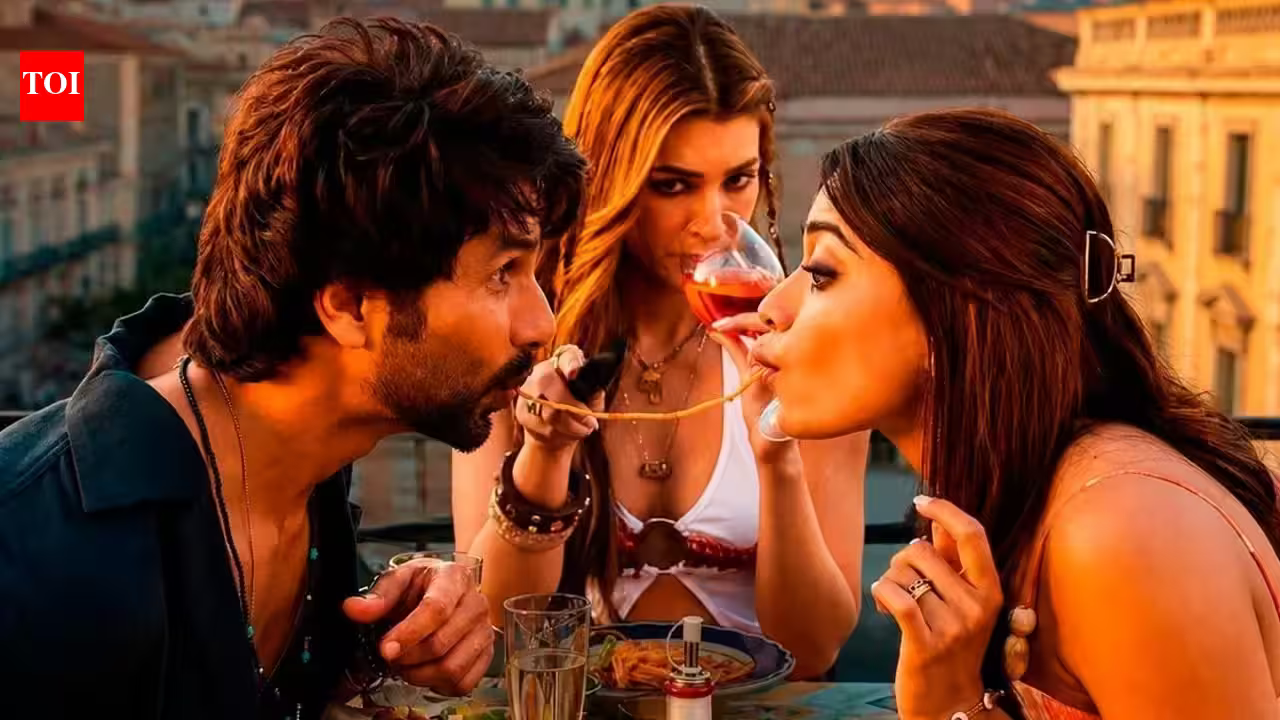
From ‘Mother India’ to ‘Cocktail 2’: Has Indian cinema really given women agency?
The recent resurgence of political discourse surrounding patriarchy—highlighted by high-profile calls to “smash” systemic inequality—has turned the spotlight back on how cultural institutions, particularly Indian cinema, shape our perceptions of gender. While political leaders and social activists debate the role of women in the public sphere, a closer look at the history of Bollywood and regional cinema reveals a complex, often uneven, journey toward female representation.
For decades, Indian cinema has been a powerful cultural force, influencing everything from fashion and romance to societal norms. Yet, the screen has historically struggled to portray women as complete, independent individuals, often restricting them to roles defined by their relationships—as mothers, daughters, wives, or lovers. While women with agency have certainly appeared on screen, they have frequently been the exception, not the rule.
The Archetype of the Sacrificial Mother
Historically, the “heroine” in Indian cinema was often synonymous with the “sacrificial mother.” Figures like Radha in the iconic Mother India set a standard for female strength that was inextricably linked to duty and chastity. While Radha possessed immense screen presence, her agency was fundamentally tied to her maternal burden and her role as a symbol of the nation. This trope of the self-sacrificial woman persisted through decades, turning characters like Sumitra Devi in Deewaar or Nandini in Kabhi Khushi Kabhie Gham into moral anchors rather than autonomous individuals. Their rebellion, when it occurred, was almost always a byproduct of their maternal love, rather than an assertion of personal desire.
Redefining Agency
True agency, as defined by thinkers like Naila Kabeer and Amartya Sen, involves the “power within”—the internal capacity to make strategic life choices. Throughout the mid-20th century, filmmakers like Satyajit Ray (in Mahanagar and Charulata) and directors of the “New Wave” cinema like Shyam Benegal and Sai Paranjpye challenged the status quo. They crafted women who navigated the world with ambition and conflict, independent of their male counterparts. Bengali cinema, in particular, has long been noted for its tradition of portraying women as the architects of their own stories.
The Illusion of Modernity
The 1990s and early 2000s brought a stylistic “makeover” to Bollywood. Characters became more “modern”—wearing contemporary fashion and pursuing careers—yet many remained tethered to the “Who will she choose?” narrative. Even in films that seemed to celebrate female independence, such as Dilwale Dulhania Le Jayenge, the pursuit of personal freedom often ended in the traditional validation of family and romantic love.
In the current era, while there has been an influx of brilliant female directors and writers—such as Zoya Akhtar, Gauri Shinde, and Alankrita Shrivastava—the industry remains divided. While projects like Delhi Crime, Piku, and Queen have broken barriers, commercial pressures continue to favor male-centric narratives. Recent blockbusters, such as Animal, have sparked intense debates about whether we are witnessing a “return of male machismo,” where female characters are once again relegated to the periphery of a man’s obsession.
The Path Forward: Coexistence and Normalization
Industry insiders like filmmaker Mainak Bhaumik and director Nandita Roy emphasize that the path forward isn’t just about “women-centric” films, but about creating an environment where women’s stories are not treated as niche or moralistic.
“The moment we make it a non-topic, it’s normalized,” Bhaumik notes. The real goal for the future of Indian cinema is for a woman’s independent existence to be so commonplace that she no longer needs to be introduced primarily as an extension of a man. If cinema can evolve to the point where women are allowed to be heroic, flawed, or simply ordinary without their gender becoming the defining constraint of their narrative, we may finally see the shift that proponents of equality are fighting for.
Perhaps the most significant change will not come from “strong” female characters, but from the simple, radical act of presenting women as people, full stop.