






TOKYO — Toyota Motor Corp. has announced an ambitious strategic shift to regain its competitive edge in the global autonomous vehicle market, pledging to develop its own proprietary artificial intelligence. By moving away from a reliance on third-party technology, the automotive giant aims to challenge entrenched rivals in the United States and China through an “end-to-end” AI system capable of navigating everything from congested city streets to high-speed expressways.
The company’s roadmap targets a major milestone in 2028, when it plans to launch vehicles featuring autonomous technology so advanced that it will essentially eliminate the need for human intervention. Akihiro Sarada, head of Toyota’s Software Development Center, confirmed that the technology will be integrated into the company’s most popular models, with a wider rollout across its fleet expected by 2030.
At the heart of Toyota’s strategy is its massive global scale. With 10 million vehicles sold annually, the company possesses an unparalleled database of real-world driving conditions. By leveraging this vast trove of data to train its onboard AI, Toyota believes it can rapidly refine the system’s decision-making capabilities. Unlike traditional self-driving systems that rely heavily on pre-mapped data and external sensors, Toyota’s new approach utilizes AI that can perceive and respond to road conditions in real-time, independent of human input.
To ensure safety in unpredictable scenarios, Toyota is also developing a supplementary “Guardrail” program. This system is designed to oversee and override AI judgments when sudden, high-risk obstacles—such as pedestrians emerging from blind spots behind buildings—threaten safety.
However, Toyota acknowledges that onboard AI alone is not a panacea. To address the limitations of vehicle-mounted sensors, the company is looking beyond the car itself. Using its experimental “Woven City” in Shizuoka Prefecture, Toyota is testing “smart infrastructure,” such as traffic signals equipped with cameras and sensors that can communicate directly with passing vehicles. By linking these roadside systems with the vehicle’s AI, the company hopes to provide cars with “eyes” around corners, significantly reducing accident risks.
National security has also played a pivotal role in the shift toward in-house development. By keeping the technology stack domestic, Toyota aims to secure its supply chain against geopolitical volatility.
This move comes as the Japan Automobile Manufacturers Association pushes for a nationwide initiative to create information control platforms. The proposed network would allow self-driving cars to tap into shared data from roadside cameras across the country, providing real-time insights into traffic flow and congestion.
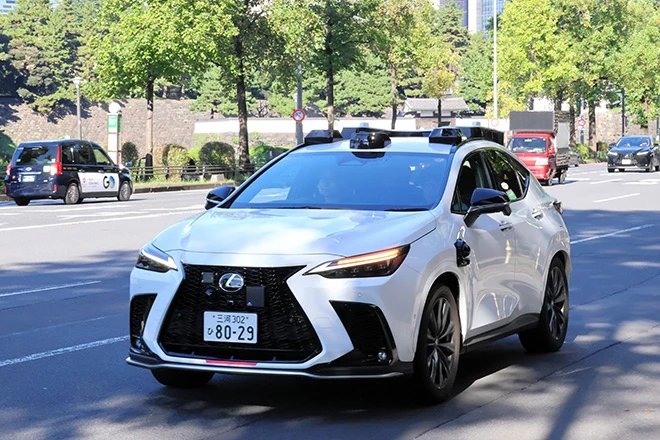
With a successful recent test drive of a Lexus SUV navigating Tokyo’s complex urban landscape, Toyota is signaling that it is ready to move from the research phase to a new era of mobility—one where the car is no longer just a vehicle, but an intelligent, connected participant in a safer urban environment.
Disclaimer: This content is auto-generated for informational purposes only.
Source: Read Original News