






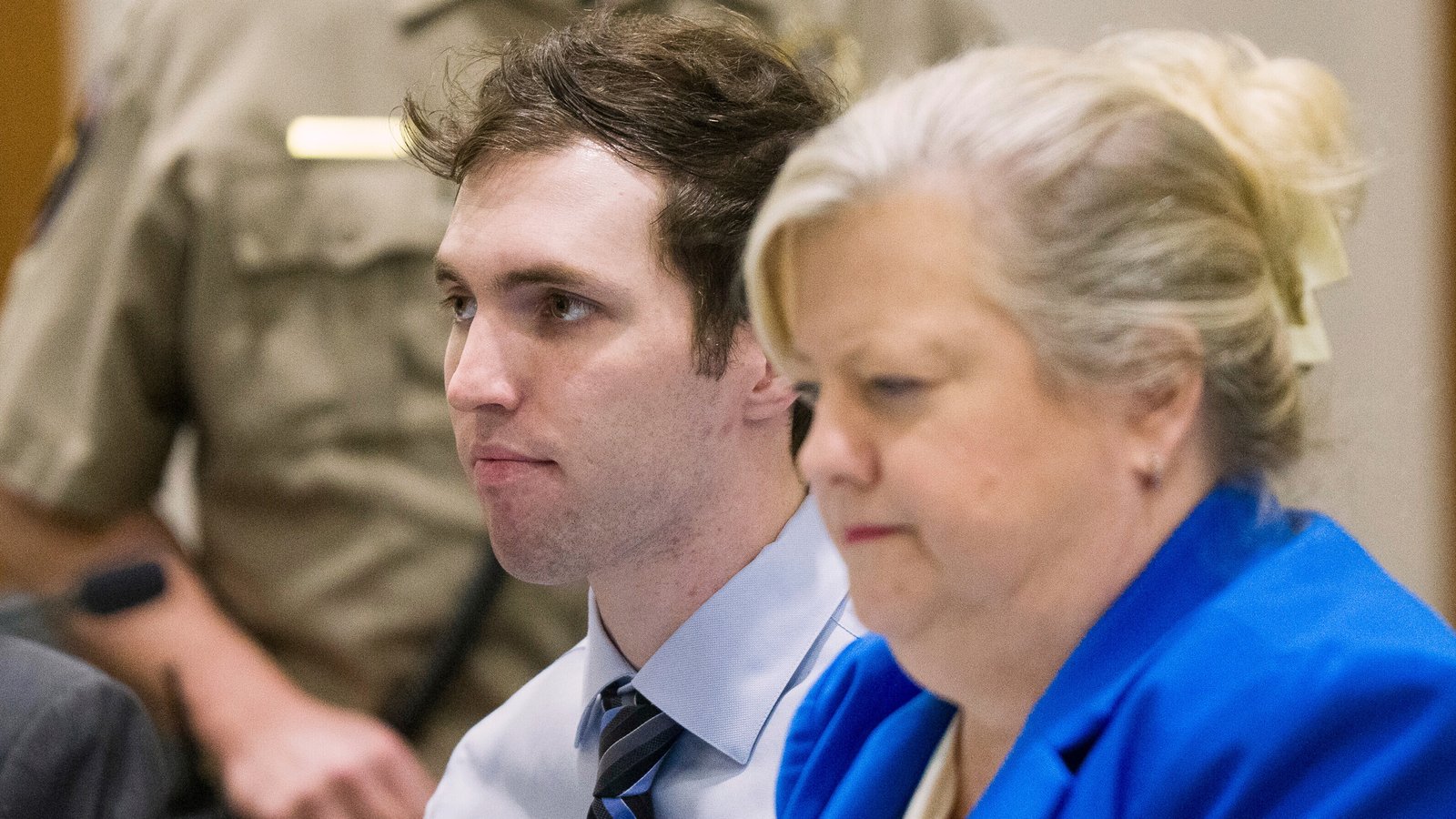
Utah Judge to Decide if Tyler Robinson Will Face Death Penalty in High-Profile Murder Case
PROVO, Utah — A Utah District Court judge is set to deliver a pivotal ruling on Tuesday that will determine whether Tyler Robinson will stand trial for the aggravated murder of conservative activist Charlie Kirk. The decision carries significant legal stakes, as an aggravated murder charge would make the 23-year-old defendant eligible for the death penalty.
The upcoming ruling follows an intensive five-day preliminary hearing held in July, during which prosecutors presented what they characterized as “overwhelming” evidence linking Robinson to the shooting. Kirk, a prominent figure in conservative circles and a co-founder of Turning Point USA, was killed last September while speaking at an open-air event on the campus of Utah Valley University.
The Legal Battle Over “Aggravated Murder”
District Judge Tony Graf holds the authority to either allow the case to proceed to trial on the charge of aggravated murder or reduce the charges to murder, which carries a sentencing range of 15 years to life in prison. He also retains the power to dismiss the charges entirely, though prosecutors would remain free to refile them.
The distinction between murder and aggravated murder rests heavily on the concept of a “zone of danger.” Defense attorneys have argued that the shooter successfully hit his intended target without endangering bystanders. However, prosecutors contend that because the shot was fired from a rooftop more than 400 feet away, numerous individuals in the vicinity of the stage were placed at risk, justifying the heightened charge.
Allegations of Political Motivation
A central theme of the prosecution’s case is that the killing was politically motivated. Prosecutors have introduced a series of inflammatory items as evidence, including an engraved bullet found in the suspected murder weapon. The casing bore the inscription, “Hey Facist! CATCH!”—a phrase authorities maintain is a clear “overt political reference.”
Furthermore, prosecutors allege that Robinson left a handwritten note for his romantic partner, Lance Twiggs, stating: “I had the opportunity to take out Charlie Kirk, and I took it.” Another alleged text message from the defendant read, “I had enough of his hatred. Some hate can’t be negotiated out.”
Defense counsel has pushed back against these claims, arguing that the evidence is insufficient to prove a political motive or to confirm the defendant’s intent. They have also challenged the reliability of DNA analyses that investigators claim link Robinson to the bolt-action rifle and the tools used to engrave the ammunition.
A Turn Toward Accountability
The suspect turned himself in to authorities one day after the shooting. According to investigative records, Robinson told an online chat room, “it was me at UVU yesterday,” shortly before surrendering. His partner, Lance Twiggs, told investigators that Robinson expressed regret for the shooting the day after it occurred, though Twiggs noted he had never heard Robinson discuss Kirk prior to the incident.
As the court prepares for closing arguments, the family of the victim—including widow Erika Kirk and his parents, Robert and Kathryn—are expected to be present in the courtroom.
The outcome of this charlie kirk shooting case remains a focal point for both legal observers and those invested in the high-stakes intersection of political activism and public safety. Judge Graf is expected to announce his decision from the bench following final arguments on Tuesday.