








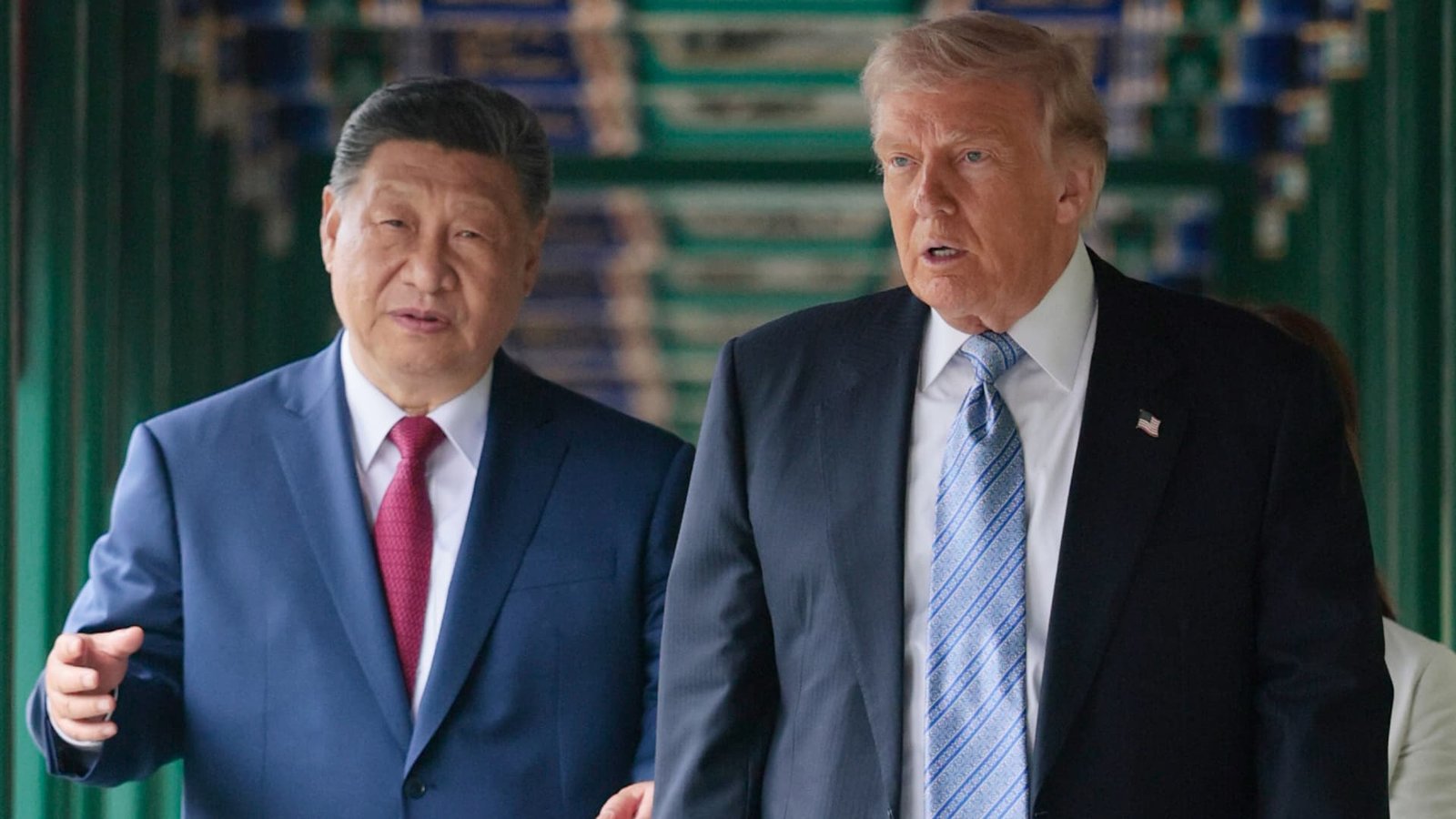
Expectations Muted as Trump and Xi Prepare for High-Stakes Washington Summit
As President Donald Trump prepares to host Chinese leader Xi Jinping at the White House on September 24, observers remain cautious about the potential for major breakthroughs. Despite the significant global challenges currently at play—including the ongoing war in Iran and shifting geopolitical alliances—analysts are framing the upcoming meeting as a “low-expectations” event centered on crisis management rather than grand policy shifts.
The Shadow of the Iran War
The war in Iran, now entering its seventh month, looms over the diplomatic agenda. The U.S. has recently signaled an intent to enforce “Operation Economic Outcast,” a plan to levy secondary sanctions on entities conducting business with Tehran. Given that China is Iran’s largest trading partner, the policy presents a direct friction point.
However, many experts believe the issue will be relegated to the margins of the discussion. Treasury Secretary Scott Bessent has emphasized that while China holds the key to a solution, the administration is wary of triggering a global financial collapse by over-sanctioning Chinese institutions.
“The U.S. is finding itself increasingly between multiple rocks and multiple hard places,” said Scott Kennedy, a scholar at the Center for Strategic and International Studies. He noted that the desire to pressure Tehran is constantly weighed against the necessity of preserving the current, fragile trade détente with Beijing.
A “Transaction-First” Approach
The summit serves as a test for President Trump’s hallmark top-down leadership style. Moving away from the traditional, laborious diplomatic “spade work,” the administration favors leader-to-leader negotiations to generate quick wins.
Matthew Kroenig of the Atlantic Council noted that while the two leaders may emerge with high-level announcements, the structural details often remain unresolved. This echoes the sentiment following Trump’s trip to Beijing four months ago, which was marked by pageantry but yielded few tangible business or geopolitical results.
“The relationship increasingly produces transactions without trust and stability without settlement,” said Craig Singleton of the Foundation for Defense of Democracies.
Domestic Pressure and the AI Frontier
The summit comes at a precarious moment for the Trump administration. With the U.S. midterm elections just six weeks away and consumer costs remaining a top voter concern, the president is under immense pressure to deliver economic results.
Despite Trump’s previous assertions regarding the success of his trade policies, the administration has recently taken steps to mitigate the impact of tariffs, including allowing some tariff-free beef imports to curb domestic price surges. Artificial Intelligence is also expected to be a key agenda item, as both nations compete for technological dominance in an increasingly fragmented global economy.
Looking for Stability
While skepticism abounds, there is a mutual interest in preventing a total breakdown in relations. The White House, citing the need for “strategic stability,” appears focused on keeping communication lines open. Sources indicate that President Xi may receive a rare formal state dinner, a gesture of diplomatic significance previously reserved for only a select few world leaders during Trump’s second term.
Ultimately, the goal for both sides may be modest: to avoid any actions that could derail the status quo before the upcoming U.S. elections. As the Trump-Xi summit approaches, the world remains watching to see if the two leaders can manage the current stalemate or if the underlying tensions will force a change in course.