









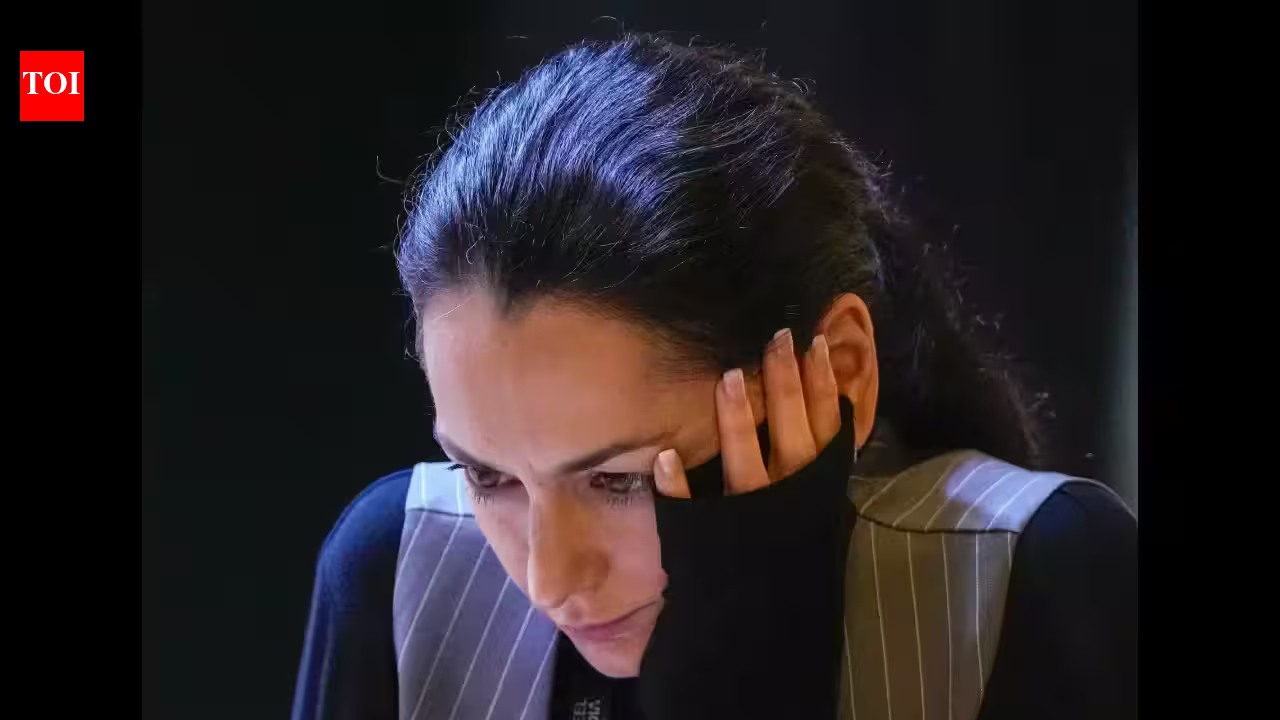
Blitz Chess is a Catalyst, Not a Detriment, Says Alexandra Kosteniuk
Former women’s world champion Alexandra Kosteniuk has dismissed concerns that the meteoric rise of fast-paced chess formats is eroding the integrity of the classical game. As the chess world pivots toward shorter time controls, the Swiss Grandmaster argues that the foundation of success remains firmly rooted in the discipline and strategic depth required by traditional play.
Speaking ahead of her return to the Global Chess League in Bengaluru, where she will represent the Triveni Continental Kings for the third consecutive season, Kosteniuk emphasized that the modern shift toward rapid and blitz formats is not a departure from the game’s core values.
A Unified Skill Set
Addressing the intersection of online gaming and professional competition, Kosteniuk noted that even the most casual online players often find that their progress is bottlenecked by a lack of fundamental knowledge.
“In order to show good results in blitz or rapid, you still need to work on chess,” Kosteniuk told the Times of India. “It’s kind of connected. I don’t see a problem with introducing faster time controls or even focusing on them. Players who take online chess seriously also work hard to improve their level.”
According to the 2008 world champion, the rigorous study of openings, tactical motifs, and strategic patterns remains non-negotiable, regardless of whether a player has ninety minutes or three minutes on the clock. She suggests that these faster formats act as a sharpening tool rather than a replacement for classical training.
The Paradox of Time Pressure
Contrary to the belief that shorter time controls lead to sloppy play, Kosteniuk pointed out that elite players often produce master-level quality even under the extreme stress of a ticking clock.
“Sometimes the level of a blitz game can be very, very high, even compared to a classical game,” she noted. “When you overthink, having a lot of time on the clock, you can also make more mistakes.”
Her perspective highlights an often-overlooked aspect of the game: that the constraints of blitz chess can force a heightened state of intuition and precision, stripping away the hesitation that sometimes plagues longer formats.
The State of Women’s Chess
Beyond the debate on time controls, Kosteniuk also weighed in on the broader health of women’s chess. Addressing concerns regarding the current distribution of Elo ratings—specifically the limited number of female players crossing the 2500 and 2600 thresholds—Kosteniuk remained optimistic.
She dismissed the notion that the sport is stagnating, arguing that raw rating numbers are a flawed metric for gauging the actual growth of the game. “Women’s chess is on the rise as well,” she asserted, noting that the evolving landscape of professional play makes gaining rating points a more challenging endeavor than in previous eras.
As she prepares for the upcoming season, Kosteniuk’s message is clear: whether in the hushed, deliberate atmosphere of a classical match or the high-intensity environment of the blitz arena, the pursuit of chess mastery remains an endeavor of continuous growth, academic study, and unyielding intellectual rigor.