









Coast Guard Jet Carrying Secretary Mullin Makes Emergency Landing at Reagan National
WASHINGTON — A Coast Guard jet carrying Homeland Security Secretary Markwayne Mullin was forced to make an emergency landing at Ronald Reagan Washington National Airport on Wednesday afternoon following a mid-air engine failure. The incident serves as the latest in a series of alarming close calls within the nation’s increasingly congested and scrutinized airspace.
The aircraft, a Gulfstream C-37A, landed safely at approximately 1:35 p.m. after the crew reported the failure to air traffic controllers. According to audio recordings from the event, the pilot calmly notified the Potomac Consolidated Terminal Radar Approach Control center, stating, “We just lost our right engine and would like to declare an emergency and immediate landing at DCA.”
The pilot confirmed there were 14 people on board and approximately 2.5 hours of fuel remaining at the time of the distress call.
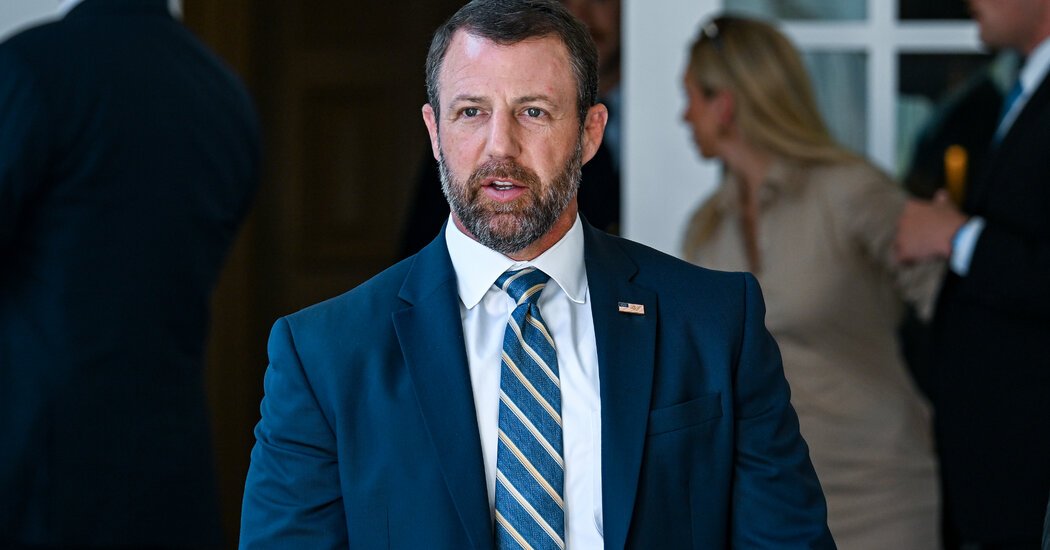
Secretary Mullin, who was aboard the aircraft, took to social media shortly after the incident to praise the flight crew’s composure. “The United States Coast Guard pilots made the single engine landing feel routine. No panic, just straight professionalism,” Mullin wrote. “After we landed, the pilots told me that was a first for them! We could not have been in better hands.”
The Metropolitan Washington Airports Authority confirmed that the landing was executed without incident and noted that the emergency had no impact on other commercial flight operations at the busy hub.
The event occurs against a backdrop of heightening anxiety regarding safety protocols in Washington’s skies. Aviation authorities have been under intense pressure since January 2025, when a tragic mid-air collision between an Army Black Hawk helicopter and an American Airlines passenger jet resulted in the loss of all 67 lives on board. In response, the Federal Aviation Administration (FAA) has implemented stricter limitations on helicopter transit and moved to bolster the national air traffic controller workforce.
This week’s incident also echoes recent communication lapses involving Marine One, the presidential helicopter. Last month, concerns were raised after two separate instances of communications failures between the presidential aircraft and the control tower at Reagan National. A report by the National Transportation Safety Board suggested that ongoing construction at the White House—specifically a new ballroom—may have interfered with radio lines of sight, forcing the presidential flight crew to utilize intermediary aircraft to relay instructions.
Beyond the immediate safety concerns, the emergency landing has reignited a debate regarding the condition of the Coast Guard’s aging fleet. Last year, the Department of Homeland Security faced significant political pushback over a $172 million expenditure to acquire two new Gulfstream jets, a move intended to replace older models.
Congressional critics, including Democratic leaders on the House Homeland Security Committee, have previously argued that while leadership requires reliable transport, the funds would be better directed toward the modernization of the broader Coast Guard fleet, much of which dates back to the 1980s and 90s and remains essential for search-and-rescue and national security operations.
As federal agencies continue to investigate the mechanical failure, the episode has once again spotlighted the volatile nature of the emergency landing in one of the world’s most complex aviation environments.