







“Supersizing Before Our Eyes”: UN Warns of Unprecedented Super El Niño
The United Nations has issued a stark warning as the current El Niño climate phenomenon continues to “supersize before our eyes,” with climate models indicating it is on track to become the most powerful event of its kind in at least 1,000 years. As this natural cycle collides with the accelerating reality of human-induced global heating, experts warn that 2027 is poised to “blow apart” previous temperature records, marking the hottest year in human history.
A “Godzilla-Level” Event
El Niño, a natural climate pattern characterized by wind shifts over the Pacific that trigger a massive release of ocean heat into the atmosphere, is already showing extreme intensity. Current data reveals that ocean temperatures at the heart of the event are 2.6°C above the 30-year average—a level nearing the record-breaking 3.1°C anomaly seen in 2015.
With the peak expected in November, an average of 14 global climate models suggests that the temperature anomaly could reach a staggering 4°C. Climate analyst Zeke Hausfather noted that, according to proxy data including tree rings, corals, and historical records, the world has not witnessed an El Niño of this magnitude in the last millennium. The sheer scale of the phenomenon has led experts to describe it as a “Godzilla-level” event, capable of reshaping the global climate landscape.
A Crisis of Global Proportions
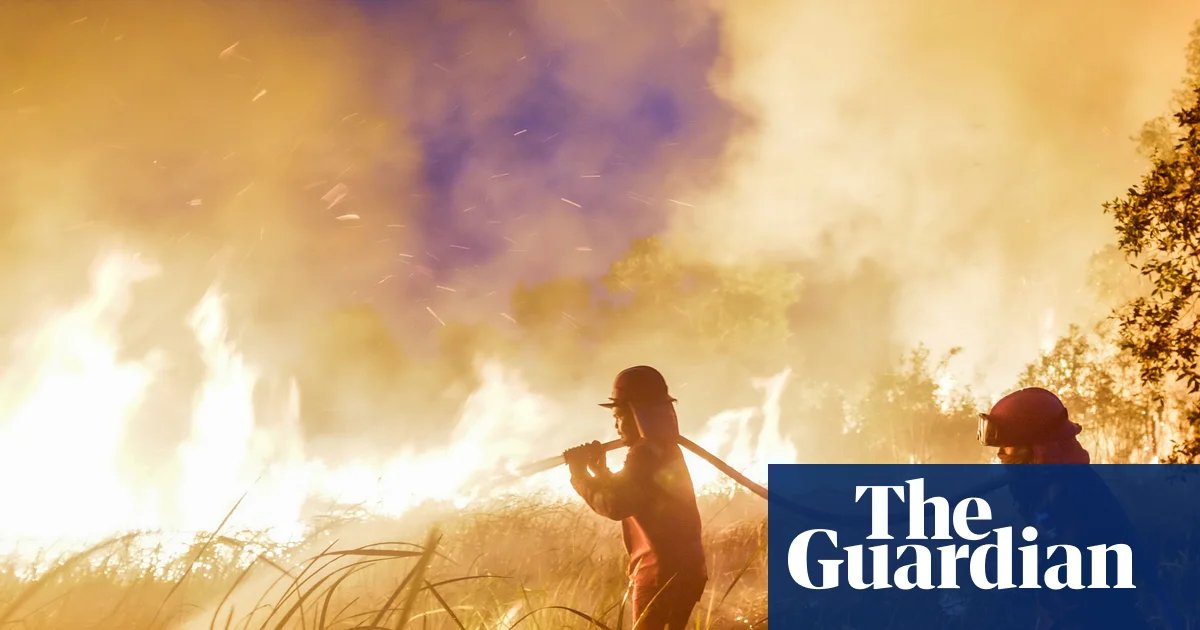
The consequences of this warming are already manifesting in catastrophic fashion. From devastating wildfires currently tearing through Indonesia to a historically weak monsoon season in India, the impact is both widespread and immediate.
The World Food Programme has warned that this climate cycle could push approximately 50 million people into acute hunger by next year. The combination of El Niño and climate change is also exacerbating extreme weather, which this year included an unprecedented heatwave in Europe that resulted in at least 35,000 excess deaths.
UN Secretary-General António Guterres emphasized the gravity of the situation, stating, “The science leaves no room for doubt: the planet is in uncharted waters, and those waters are heating up. The world is in the danger zone of extreme weather. The race now is between rising risks and our commitment to take climate action and protect people. We must win that race.”
The Future of Climate Resilience
The World Meteorological Organization (WMO) has launched a major mobilization effort alongside national weather services to mitigate the impacts of what they confirm will be a “very strong event.” WMO Secretary-General Celeste Saulo highlighted that the disruptions caused by droughts and floods are expected to intensify as the year progresses.
Experts point out that the climate crisis is no longer a future threat but an immediate economic and humanitarian burden. Chris Jaccarini of the Energy and Climate Intelligence Unit noted that the extreme weather driven by these shifts is already destabilizing global food supplies.
“After five heatwaves and widespread drought, British arable farmers are now facing the worst harvest on record in 2026,” Jaccarini said. “Unless we rapidly cut emissions and strengthen resilience, climate change impact will continue to worsen with El Niño turbocharging the trend every few years.”
As the world heads into this “danger zone,” the scientific consensus is clear: the convergence of natural cycles and man-made climate change is creating an environment that will test the limits of global adaptation and international cooperation.