









From Mobile Gacha to Console Classic: Hands-On With Final Fantasy Resonance
When Square Enix first announced Final Fantasy Resonance ($49.99), the news was met with a mix of intrigue and apprehension. Featuring gorgeous “HD-2D” aesthetics reminiscent of Octopath Traveler, the title immediately caught the eye of RPG enthusiasts across PC, PS5, Xbox Series X/S, and the Nintendo Switch family. However, the revelation that the game was a total reimagining of the now-defunct mobile title Final Fantasy Brave Exvius prompted immediate questions: Could a game born from predatory gacha mechanics and repetitive mobile tropes truly be salvaged for a premium console experience?
After a deep-dive hands-on preview, the answer is a resounding “yes.” Resonance is not merely a port or an asset flip; it is a meticulously crafted reconstruction that sheds the bloat of a decade-long live-service title in favor of the strategic depth found in the franchise’s golden age.
The 26-Vision Job System
The most striking transformation is the overhaul of the roster. Brave Exvius was notorious for its sprawl, having amassed over 2,500 units during its nine-year lifespan, largely fueled by duplicates and cross-brand marketing.
In a move that will surely spark debate, Resonance has ruthlessly trimmed this down to exactly 26 core hero characters, known as “Visions.” While fan favorites like Tifa or Vivi may not make the cut, this curation allows for a balanced, rewarding gameplay loop. Instead of treating these characters as separate “gacha pulls,” Resonance utilizes a flexible Job System akin to Final Fantasy V.
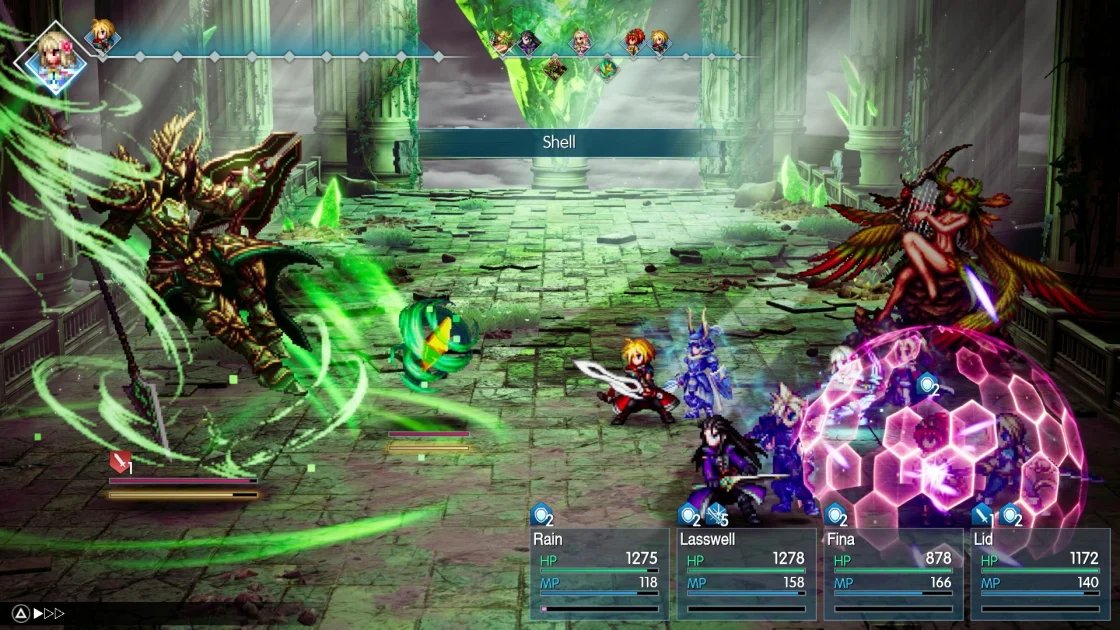
Players can equip their main party members—Fina, Lasswell, Lid, and Rain—with these Visions, effectively swapping stats, elemental affinities, and skill sets on the fly. By replacing predatory microtransactions with an exploration-driven unlock system found in overworld shrines and boss battles, Square Enix has successfully recaptured the discovery-based joy of classic RPGs.
Strategic Combat Reborn
The gameplay has shifted from mindless screen-tapping to a sophisticated, timeline-based turn system similar to Final Fantasy X. The addition of a “Stagger” mechanic—a staple of modern Final Fantasy—adds a new layer of tactical urgency. By exploiting elemental weaknesses, players can collapse an enemy’s stagger gauge to stun them and earn bonus turns.
The most innovative addition is the “Sweeping Stagger” system. By timing the stagger of multiple enemies simultaneously, players unlock a high-octane finisher phase reminiscent of the Valkyrie Profile series. This feature forces players to think strategically about party composition and turn order rather than relying on brute force. During a grueling encounter with the boss Veritas of the Heavens, the necessity of mastering these mechanics was clear; even when “overleveled,” the fight demanded precision and efficient use of the new stagger systems.
A New Blueprint for Preservation
Final Fantasy Resonance serves as a powerful argument for the creative potential of game preservation. By stripping away the “live-service” fluff, Square Enix has unearthed the diamond in the rough that was Brave Exvius and polished it into a standalone experience that respects the player’s time and intelligence.
Whether you are a longtime fan of the franchise or a newcomer looking for a traditional tactical experience, this revival proves that defunct mobile games don’t have to stay in the past. When Final Fantasy Resonance launches on October 22, 2026, it will arrive not as a cash grab, but as a potential blueprint for how publishers can treat their back catalogs with the reverence they deserve.