







Yorkshire’s Dirty Business: Public Outrage Mounts Over Sewage Pollution and Regulatory Failure
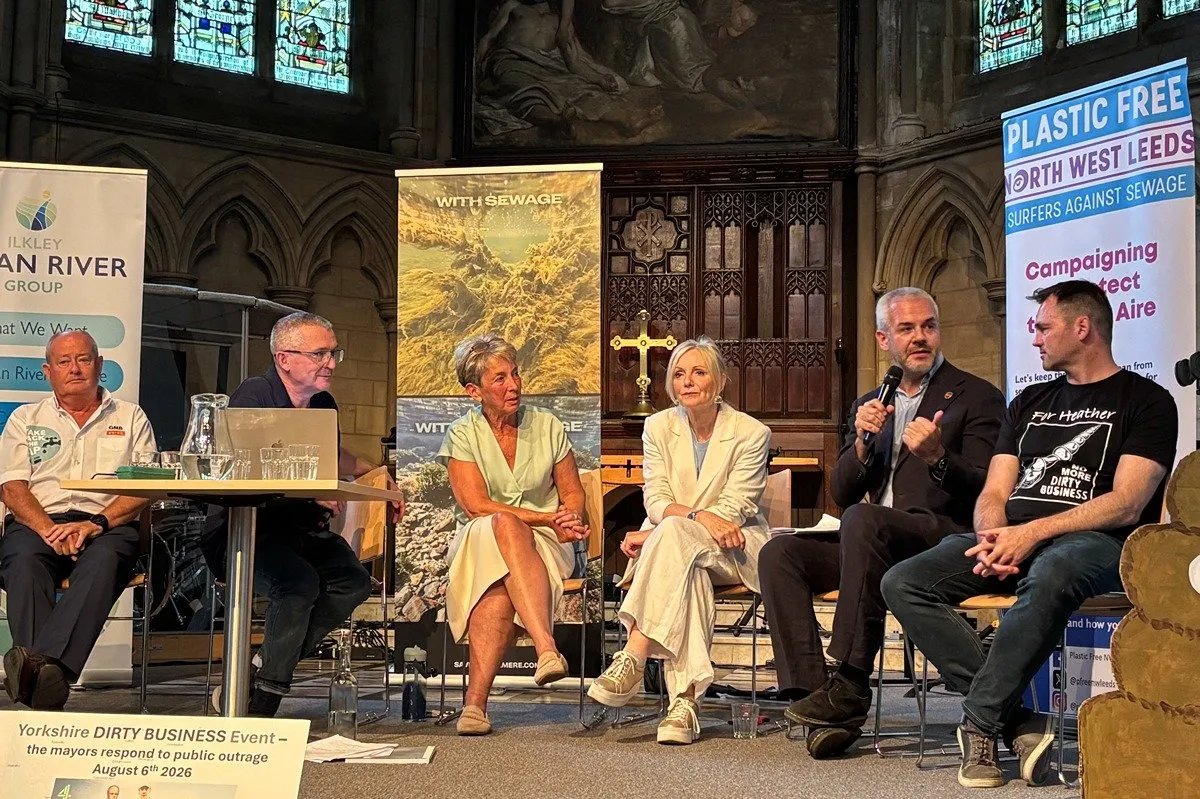
Public anger is reaching a boiling point across Yorkshire as residents, environmental campaigners, and political leaders unite to confront what they describe as a systemic failure in river health and corporate oversight. As participants gather for the “Yorkshire’s Dirty Business: The Mayors Respond to Public Outrage” forum, the spotlight is firmly fixed on a single question: are regional leaders prepared to hold water companies and regulators to account?
A Crisis of Trust
The debate has been supercharged by new data released by the Environment Agency under Environmental Information Regulations. The disclosures paint a damning picture of pollution in the River Wharfe and River Aire catchments, revealing a concerning trend of low-frequency site visits by regulators, frequent downgrading of incident severity, and a sluggish enforcement record.
For communities along these waterways, the issue has transcended environmental protection. It has become a fundamental crisis of trust in the organizations tasked with safeguarding public health and the natural landscape.
Staggering Pollution Statistics
According to Yorkshire Water’s own performance summary, 2025/26 was a year of regression. The company recorded 260 confirmed pollution incidents—nearly double the 145 incidents reported in 2022. Even more alarming are the figures for “dry-day spills,” where raw sewage is discharged into rivers without the justification of rainfall. Yorkshire recorded 1,030 such events in 2025, the second-highest rate among all English water companies.
The severity of these incidents is also under scrutiny. While Yorkshire Water faced 13 “serious” pollution incidents in 2024—the third-highest number in the country—the Environment Agency’s response appears to be weakening. Data from 2016–2026 shows that only 56 out of 421 recorded pollution events in the Wharfe and Aire were actually attended by agency officers. In 2026, the attendance rate plummeted to just 12%, with zero serious incidents in the River Wharfe receiving an on-site visit.
The Problem with “Remote” Regulation
Campaigners argue that the Environment Agency’s classification system is flawed. Without a site visit, the Agency often relies solely on evidence provided by the water companies themselves to determine the severity of an incident.
Transparency is further undermined by reporting delays. Data reveals that in 2025, it took an average of 19 hours for Yorkshire Water to report pollution incidents—a delay that campaigners argue hampers investigations and makes it nearly impossible to capture ephemeral evidence.
Perhaps most contentious is the practice of “downgrading.” In 2025 alone, 122 reports initially classified as serious (Category 1 or 2) were downgraded to lower-severity status (Category 3 or 4) without a single site visit by an official.
The Demand for Accountability
With the last successful criminal prosecution of Yorkshire Water by the Environment Agency dating back to 2022, critics are questioning the efficacy of the current regulatory framework. While the company has entered into 20 “enforcement undertakings”—civil sanctions that involve payments for environmental remediation—campaigners argue these lack the deterrent power of the courtroom.
Pressure is now mounting on regional leaders to act. At the Yorkshire’s Dirty Business event, attendees—including representatives from Ilkley Clean River and Surfers Against Sewage—demanded that mayors take a stronger stance, including exploring the potential for public ownership of water companies as a path toward true accountability.
Political Leaders Respond
West Yorkshire Mayor Tracy Brabin has expressed her solidarity with the campaigners. “There is injustice and unfairness,” Brabin stated. “I live on the River Aire and I can see and smell the pollution… 13 serious discharges when Ofwat’s target is zero. We pay 41% more on our bills and the system gets worse. It is my mission to work with the Sewage Campaign Network and campaigners to do whatever I can to change this.”
As Yorkshire Water warns that its Environment Agency rating is expected to drop to a dismal one-star status, the public demand for answers is growing. For the region’s leaders, the message is clear: the era of passive observation is over, and the public is demanding a fundamental shift in how the region’s waterways are governed, protected, and restored.