








Operational Liability and Consumer Rights: Analyzing the Kerala Railway Compensation Ruling
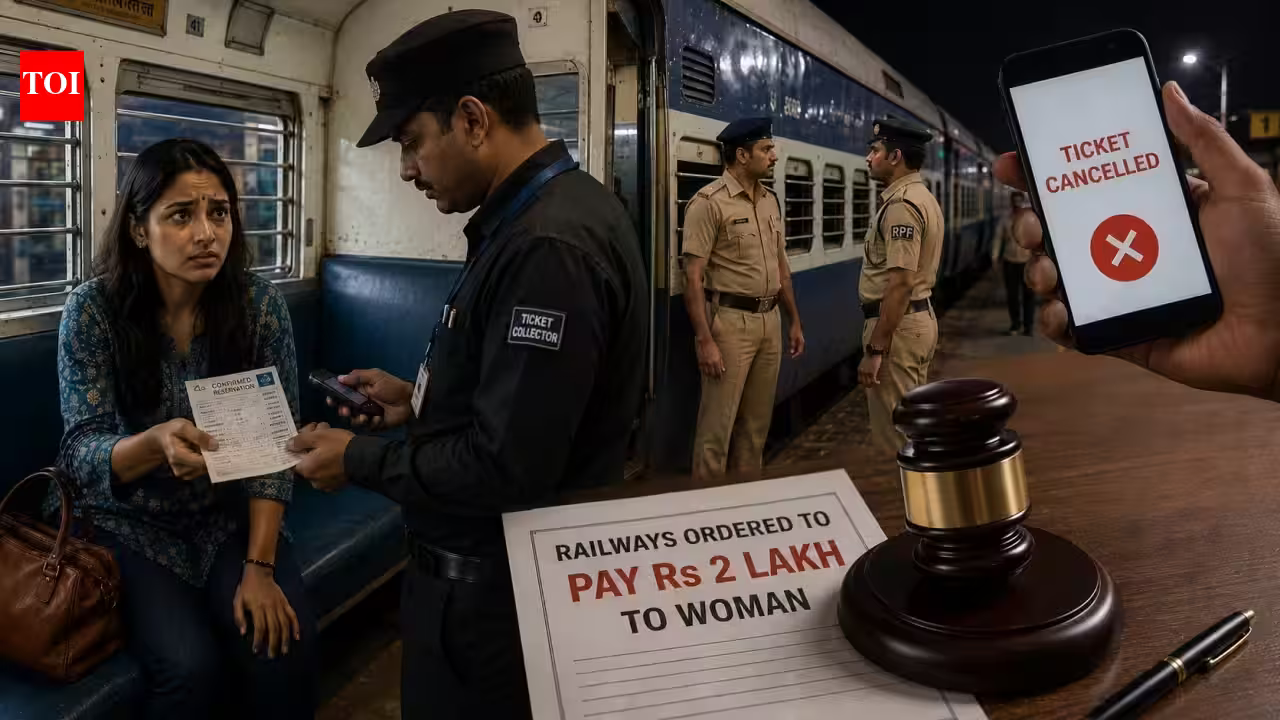
The recent directive by the Kerala State Human Rights Commission (KSHRC) ordering Indian Railways to pay Rs 2 lakh in compensation to a passenger, K. Jayasmitha, highlights a critical intersection between administrative negligence and the protection of consumer rights. While the incident may appear as a localized clerical error, it serves as a sobering case study on how systemic failures within a large-scale Business infrastructure can lead to profound personal and professional repercussions for the end-user. As the organization faces scrutiny, the ruling underscores the importance of accountability in service delivery and the potential for legal precedents to reshape how public service entities manage digital data and passenger treatment.
The Anatomy of a Systemic Failure
The root of this incident lies in a breakdown of data integrity during the booking process. Due to an erroneous entry—a single digit discrepancy in the registered mobile number—the passenger’s reservation details were diverted, enabling an unauthorized cancellation by a third party. From a Business operations standpoint, this raises significant questions regarding the validation protocols embedded in the ticketing system. When a passenger presents a valid PNR and boarding identification, the rigidity of automated systems often fails to account for human error, leading to a “guilty until proven innocent” environment. The subsequent deboarding of the passenger at midnight not only violated the passenger’s basic rights but also demonstrated a lack of critical judgment by frontline personnel, who failed to verify the passenger’s claim before resorting to punitive measures.
Economic and Reputational Impact
The consequences of this administrative failure were not merely limited to the inconvenience of a disrupted journey; they cascaded into severe socio-economic damages for the passenger. The arrest, predicated on an inaccurate assumption of unauthorized travel, led to the loss of her government contract position. This highlights the “multiplier effect” of administrative negligence, where a minor digital error can destroy individual livelihoods. For the Indian Railways, this case serves as a warning regarding the hidden costs of poor customer experience. While the immediate financial impact involves a Rs 2 lakh payout, the intangible costs—damage to brand perception, loss of consumer trust, and the resources diverted toward internal investigations—pose a significant challenge to the organization’s reputation in an increasingly competitive travel Market.
Legal Precedent and Operational Accountability
The KSHRC ruling, presided over by Justice Alexander Thomas, is particularly noteworthy for its emphasis on procedural fairness and the safety of women traveling alone. By citing Sections 137 and 139 of the Railways Act, the commission has established that the state entity cannot hide behind bureaucratic processes to evade liability. Crucially, the order allows the Divisional Railway Manager to recover the compensation amount directly from the officials found responsible for the mistreatment. This shift toward individual accountability is a significant development. It suggests that administrative immunity is weakening and that those responsible for enforcing policies must exercise discretion and empathy alongside regulatory compliance. Such measures act as a safeguard, ensuring that the burden of bureaucratic error does not fall solely upon the passenger.
Market Implications and Future Policy Reform
Looking ahead, this ruling may influence how major service providers approach digital ticket management. In a global Market where data accuracy is paramount, organizations must adopt more robust, multi-factor verification processes to prevent unauthorized cancellations and data leakage. Furthermore, the directive for the Railways to issue a circular emphasizing the safety of women at night suggests a broader need for specialized training for railway protection staff. As the Railways continues to evolve, the integration of human rights considerations into its standard operating procedures will be essential to avoid similar legal liabilities. Ultimately, this case serves as a catalyst for a more passenger-centric approach, proving that even in a massive state-run enterprise, every individual’s right to dignified service remains a non-negotiable benchmark of operational success.
Source: Read Original News