







The Supersizing of El Niño: A Warning from the Deep Ocean
For decades, the global scientific community has grappled with a haunting question: is human-induced climate change fundamentally altering one of the planet’s most powerful atmospheric phenomena? El Niño, the periodic warming of the tropical Pacific, has long been recognized as a driver of erratic weather, but its inherent variability made it nearly impossible to distinguish between natural cycles and long-term human impacts. Recent evidence suggests that the mystery may finally be unraveling. A breakthrough study published in the journal Science, utilizing nearly 1,000 years of coral records from the Galápagos, indicates that modern El Niño events are significantly more intense than those observed in the pre-industrial era. As we face the current “super” El Niño—which is developing at a record-breaking pace—this research provides a sobering look at how climate change may be “supersizing” weather disasters across the globe.
Unearthing History: What the Corals Reveal
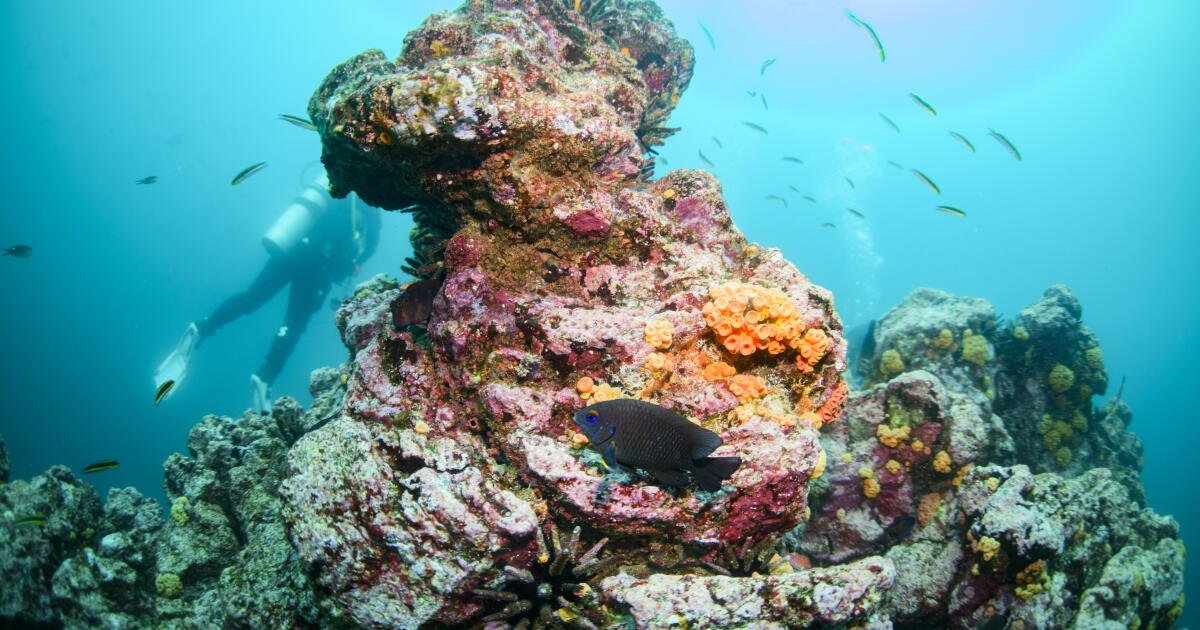
Because direct thermometer records of the deep ocean are a relatively modern luxury, researchers led by paleoclimatologist Julia Cole turned to the living history of the sea: coral reefs. Like trees, corals develop calcium carbonate layers as they grow, creating a chronological record of their environment. By analyzing the chemical composition of these skeletons, specifically the ratio of strontium to calcium and oxygen isotopes, scientists reconstructed sea surface temperatures spanning back to the medieval period. The findings are startling: modern El Niños are approximately 36% stronger than they were before the mid-1800s. In the last four decades alone, there has been a “striking amplification” of 16%. This data suggests that while El Niño has always existed, our warming planet is pushing this system into uncharted, high-intensity territory, making extreme events more frequent and more damaging than any recorded in the last millennium.
The Cost of a Warming World
The ramifications of an intensified El Niño are not merely academic; they represent a direct threat to global stability. El Niño events are notorious for triggering a cascade of catastrophic outcomes, including severe droughts that cripple agriculture, floods that destroy infrastructure, and intense heat waves that endanger public health. Furthermore, these events exacerbate ecological collapse, leading to mass coral bleaching and the degradation of marine ecosystems already stressed by ocean warming. As United Nations Secretary-General António Guterres aptly noted, the planet is in a “danger zone.” When El Niño is layered over a backdrop of record-breaking ocean temperatures—as seen in the current Pacific marine heat wave—the risks of cascading climate failures reach a critical threshold. Failing to address these systemic pollution drivers means we are essentially priming the atmosphere and the oceans for more frequent “super” events that global society is ill-equipped to handle.
Urgent Action and Path to Resilience
While the debate regarding the exact causal link between fossil fuel combustion and El Niño intensity continues, the scientific consensus is shifting toward a reality we can no longer ignore: the baseline for our climate has changed. To mitigate the future impact of these intensified oscillations, the world must transition from a reactive posture to one of radical adaptation and mitigation. First, urgent, global decarbonization is essential to halt the rapid warming of the oceans, which serves as the “fuel” for these extreme events. Every fraction of a degree in global temperature rise increases the likelihood of high-intensity oceanic fluctuations.
Beyond carbon mitigation, governments and communities must prioritize “climate-proof” infrastructure. This involves investing in advanced early warning systems, drought-resistant agricultural practices, and water management strategies designed for a world where “extreme” is the new normal. We must also prioritize the protection of natural carbon sinks, such as mangrove forests and healthy coral reefs, which act as buffers against the devastating impacts of storm surges and erratic weather. The science serves as a final call to action: the time to curb the anthropogenic warming of our oceans is now, before the current “super” El Niño ceases to be an anomaly and becomes our permanent, harsh reality. We are no longer waiting for the future; we are living through the consequences of an overheated planet today.
Source: Read Original News