







Redefining Global Trade: Europe’s Strategic Pivot Toward India
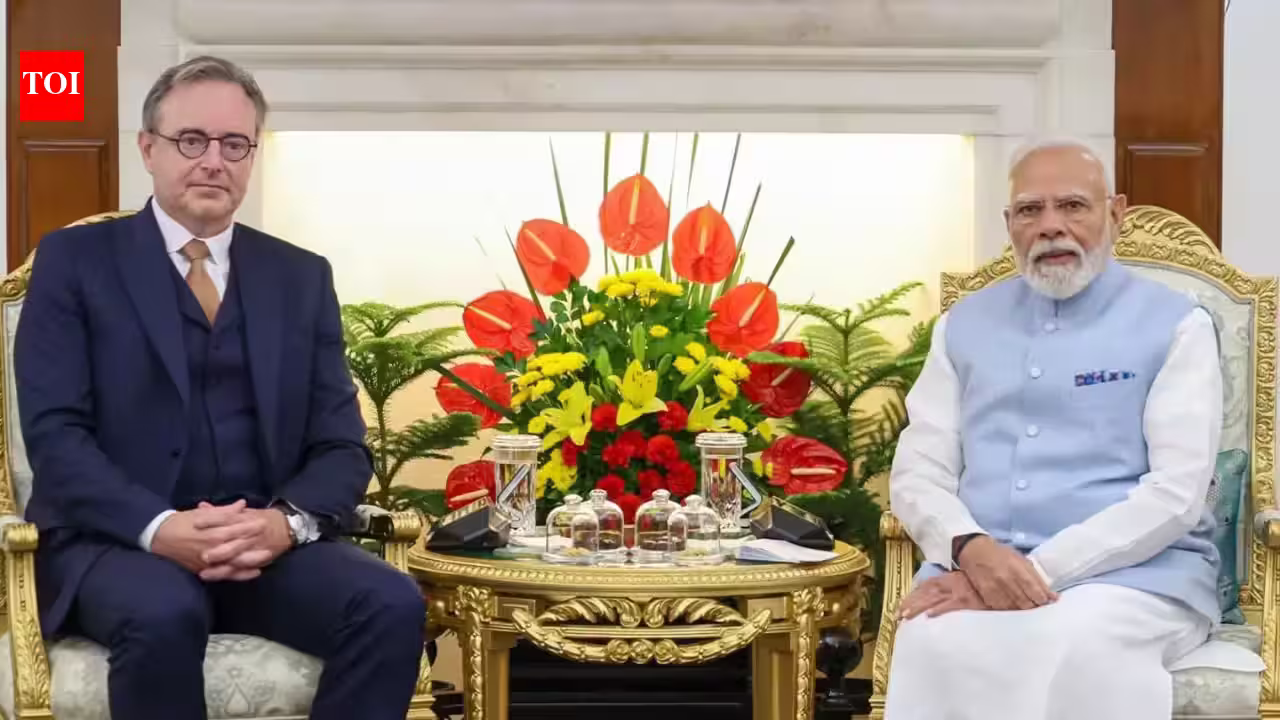
The global Business landscape is undergoing a profound structural shift, characterized by the move away from hyper-globalization toward a model defined by strategic autonomy and supply-chain resilience. During a recent bilateral engagement in New Delhi, Belgian Prime Minister Bart De Wever acknowledged that European nations are experiencing a “rude awakening” regarding their previous trade dependencies. By explicitly noting that India’s early warnings regarding the weaponization of economic interdependencies were largely unheeded by Brussels, De Wever signaled a pivotal shift in European foreign policy. This admission highlights a growing consensus among Western powers that the era of unfettered access to global markets, often exploited by centralized power blocks, is unsustainable. For the international Market, this represents a transition toward “de-risking”—a strategy that prioritizes reliability and shared values over mere cost-efficiency.
The Cost of Complacency: Addressing Overcapacity and Leverage
Prime Minister De Wever’s critique of the current trade environment serves as a veiled yet unmistakable indictment of China’s economic practices. For years, European industrial sectors have been hollowed out by the influx of goods sold below production costs, a phenomenon of overcapacity that has forced policymakers to rethink their dependency on foreign manufacturing hubs. As nations grapple with the volatility of the global Stock environment and industrial instability, the realization that trade links have been utilized as geopolitical leverage has catalyzed a legislative response. By ignoring India’s foresight, Europe allowed its industrial base to become vulnerable. The current effort to diversify trade is not merely an economic preference but a defensive necessity to safeguard European sovereignty against coercive trade practices.
India as the Strategic Anchor for European Growth
In his analysis of future partnerships, De Wever placed India at the top of Europe’s list of preferred collaborators. India’s trajectory as the world’s fastest-growing major economy provides a compelling alternative for Europe’s capital and technological exports. Unlike more mature, stagnant economies, India offers a unique combination of demographic dividends, a massive pool of technical talent, and a growing consumer class. From an analytical perspective, this partnership is highly synergistic: Europe provides the high-end industrial and technological infrastructure, while India offers the scale and innovation ecosystem required to sustain long-term growth. De Wever’s assertion that India is the “number one” partner reflects a shift in thinking where India is no longer seen as an emerging market, but as a stabilizing democratic anchor in a fragmenting global order.
Market Implications and Future Outlook
The strategic realignment between Brussels and New Delhi suggests significant implications for multinational corporations and international investors. We are likely to see increased European investment in India’s manufacturing, renewable energy, and digital infrastructure sectors, aimed at establishing “China Plus One” supply chain models. This creates a more predictable, rules-based environment that favors multilateralism over protectionist blocs. While the transition will require significant adjustments in logistics and regulatory compliance, the long-term benefit for both regions is the mitigation of systemic risks.
Ultimately, the partnership between India and Europe signals that while global trade will remain essential, it will henceforth be governed by the principles of trust and mutual respect. As the geopolitical climate necessitates choosing sides, the alignment of these two democratic powerhouses suggests a future where economic security and open trade are no longer mutually exclusive. For the global Business community, this presents an urgent invitation to recalibrate investment strategies in alignment with this new, more secure, and resilient geopolitical reality.
Source: Read Original News