






India’s Textile Sector Navigates New Horizons Amid Shifting Global Trade Dynamics
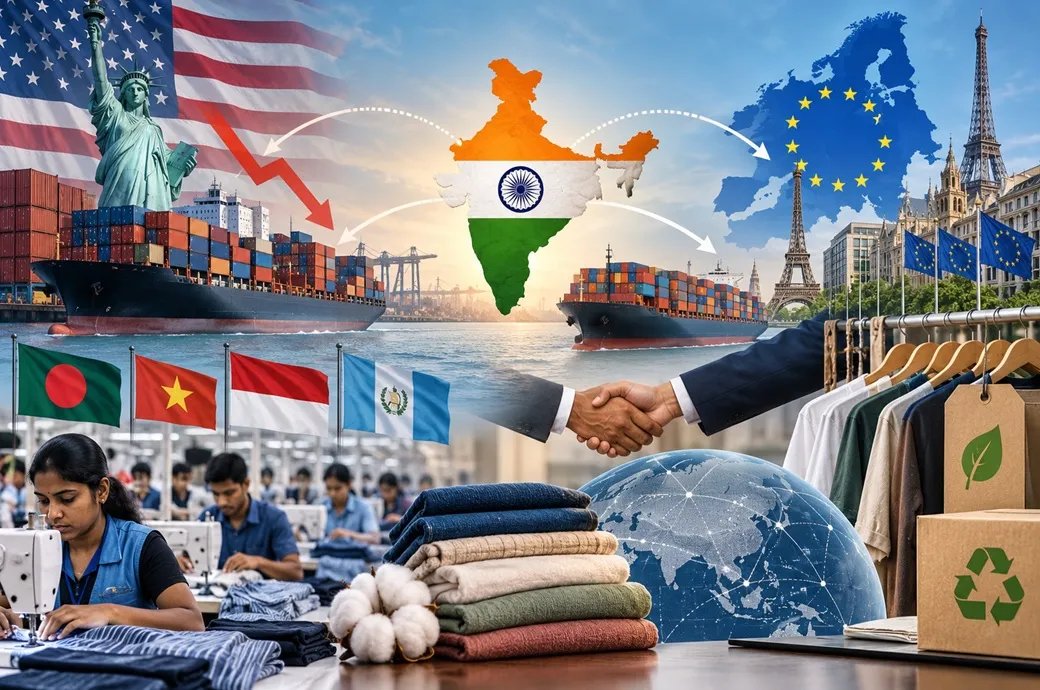
The Indian textile industry has recently emerged from a period of significant volatility, characterized by challenging market conditions and substantial shifts in international trade policy. For many exporters, the preceding year proved to be one of the most arduous in recent memory, as global trade tensions—marked by a series of fluctuating tariffs under the previous U.S. administration—created a disruptive environment for international commerce. As exporters grapple with the aftermath of these fiscal pressures, the Indian government is actively pursuing an India-EU free trade agreement. This potential partnership is being viewed as a critical strategic pivot, with industry analysts and policymakers examining whether the European market can successfully compensate for the export deficits experienced in the North American sector. While the European Union represents a massive, high-value consumer base, experts maintain a balanced perspective, noting that while the European market may not immediately fill the vacuum created by U.S. trade volatility, it serves as a transformative mechanism for long-term growth and market diversification.
The adversity faced by Indian textile manufacturers was largely rooted in a complex framework of reciprocal and penalty-based levies. Between August 2023 and February 2024, Indian shipments to the United States were subjected to a multifaceted tariff regime. Washington implemented a system where standard reciprocal duties were compounded by an additional percentage penalty, which was specifically linked to India’s geopolitical positioning regarding energy imports from Russia under Executive Order 14112. These punitive measures placed immense financial strain on exporters, forcing many to navigate reduced margins and diminished competitiveness in a key market. However, the regulatory landscape underwent a significant transformation in February 2024. Following a series of diplomatic negotiations, the White House issued an executive order terminating the additional duties, a decision contingent upon India’s commitment to realign its oil import strategy. Simultaneously, the broader reciprocal tariffs were systematically dismantled after the U.S. Supreme Court struck down the underpinning authority, ruling against the application of these specific duties under the International Emergency Economic Powers Act (IEEPA).
As the domestic industry looks toward the future, the emphasis has shifted from crisis management to long-term sustainability. The potential for a comprehensive textile trade framework with the European Union is currently at the forefront of economic discussions. Unlike the turbulent experience with the U.S. market, a standardized trade pact with Europe promises a more predictable regulatory environment, which is essential for capital investment and large-scale manufacturing expansion. While the transition from reliance on the American market to a more balanced, multi-regional export strategy will not occur overnight, the current trajectory suggests a move toward deeper integration with European supply chains. This shift is widely regarded as a necessary evolution for the Indian textile sector, enabling it to hedge against the geopolitical risks that have historically hampered its global growth. By diversifying its export destinations and leveraging favorable trade terms in the EU, India aims to stabilize its textile economy and reinforce its position as a primary global manufacturing hub.
Source: Read Original News