








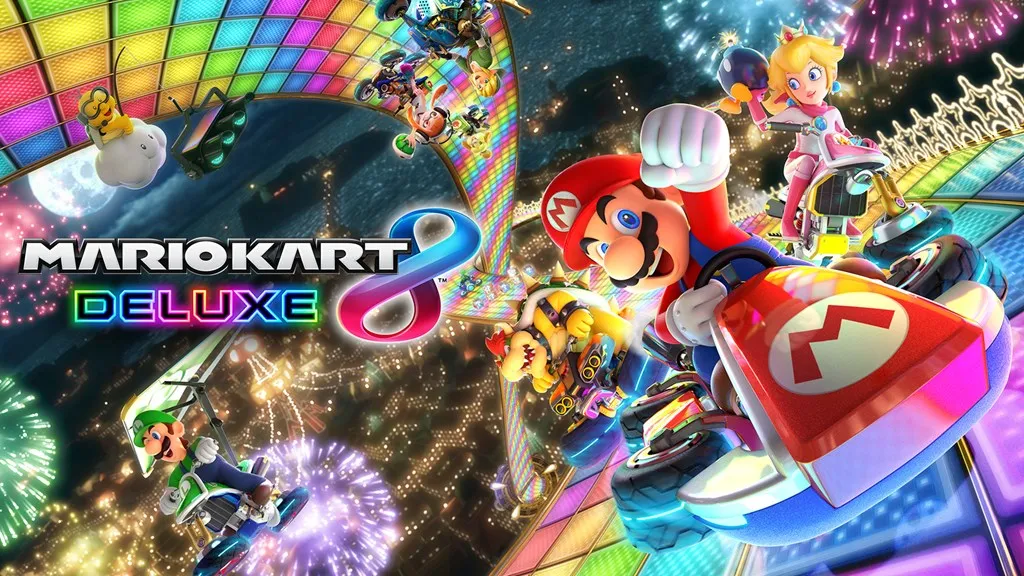
Disparities in the Mario Kart 8 Deluxe 4.0.0 Update
The release of the version 4.0.0 update for Mario Kart 8 Deluxe marks a significant transition period for Nintendo’s flagship racing title. As the ecosystem expands to include the Nintendo Switch 2, developers have introduced hardware-specific enhancements, such as increased rendering resolutions and expanded split-screen capabilities. However, these technical upgrades have introduced unexpected discrepancies between the original console and its successor. Players engaging in online multiplayer have discovered that the game environment is not rendering identically across both platforms, leading to minor but noticeable differences in track geometry and hazard placement.
While the core gameplay mechanics remain consistent, the divergence in environmental assets presents a unique challenge for competitive fairness. In technical terms, the game engine is now dynamically adjusting asset loading based on the hardware profile it detects. While this allows the Switch 2 to render higher-fidelity environments, it has inadvertently caused certain static elements—specifically peripheral track hazards—to manifest on the newer hardware while remaining absent on the original console.
Technical Discrepancies and Hazard Placement
The most significant observations regarding these differences involve the presence of additional assets on the Switch 2 that are entirely missing on the original Switch. Technical analysis reveals that specific hazards, such as gas canisters on select courses, are rendered in the Switch 2 version but fail to appear in the original console version. Similarly, track details such as black tires located on the periphery of Mario Circuit GBA are visible on the new hardware but absent on the predecessor.
These objects are generally situated on the sidelines of the track rather than directly in the driving lane. Despite this, the presence of these items carries functional consequences. Mario Kart 8 Deluxe players frequently employ off-road strategies, particularly when utilizing speed-boosting items like Mushrooms to cut corners or recover from mistakes. An object that is visible on one screen but invisible on another creates a disparity in spatial awareness. If a player on the Switch 2 expects a hazard to be present, they might navigate differently, whereas a player on the original Switch, unaware of the object due to its absence, might attempt a line that appears clear but is physically obstructed on their opponent’s screen.
Impact on Competitive Integrity and Synchronization
Beyond the rendering of static hazards, there are reports concerning the synchronization of game items. Investigations into the Piranha Plant Pipeline course have highlighted instances where item boxes fail to display consistently across different hardware versions. In a game defined by millisecond reactions and the strategic use of items, the synchronization of these elements is critical. If a player on the Switch 2 perceives an item box that a player on the Switch 1 does not, or if there is a delay in the manifestation of these assets, the integrity of the race is compromised.
The fundamental issue appears to be related to how the game handles asset priority and network state management between two disparate hardware architectures. When two consoles communicate during an online session, they must agree on the state of the game world. If the software logic dictates that the Switch 2 version of the game includes more detailed environmental geometry, it must ensure that this does not conflict with the simplified geometry of the original Switch. The current discrepancies suggest that the game is not fully reconciling these environmental differences during matchmaking, leading to a fragmented experience where the racing surface itself is perceived differently by participants.
Understanding Hardware-Specific Asset Loading
The root cause of these differences lies in how modern game engines manage multi-platform deployments. To accommodate the superior processing power of the Switch 2, Nintendo has implemented a system that pulls more complex, high-resolution assets when the game detects the more capable hardware. This is standard procedure for cross-generational titles, intended to provide a more immersive experience for owners of the latest hardware.
However, the implementation of these assets must be strictly controlled to ensure that environmental additions do not interfere with hitboxes or collision detection. When assets like gas canisters or tires are added to the background of a track, they are supposed to be purely aesthetic. The current situation suggests that there may be a lack of alignment between the logic that governs the visual representation of these items and the underlying physics engine. If one version of the game renders an object as an aesthetic piece, while the other renders it as a potential obstacle or a visual distraction, it creates a lack of parity that complicates high-level play.
Future Adjustments and Maintenance
As developers continue to refine the 4.0.0 update, addressing these inconsistencies will likely be a priority. Nintendo has a history of iterating on its software post-launch to address stability and synchronization issues. To resolve these discrepancies, the development team will likely need to introduce a patch that either standardizes the environmental assets across both platforms—potentially by removing the extra hazards from the Switch 2 version—or updates the game logic to ensure that all assets remain strictly decorative and identical in their collision profiles regardless of the hardware.
For the average player, these discrepancies may seem minor, but for those dedicated to time trials and competitive online racing, the difference in screen information is a legitimate concern. Ensuring that both the original Switch and the Switch 2 provide an identical racing surface is paramount for maintaining the long-term health of the game’s online community. As the transition to the new hardware continues, users should monitor official communications for further stability updates that will inevitably seek to bridge the gap between these two console generations, ensuring that no player possesses an unintentional advantage based solely on their choice of hardware.
Disclaimer: This content is auto-generated for informational purposes only.
Source: Read Original News