









KUALA LUMPUR — As Malaysia navigates the complex landscape of fiscal management, a clearer picture has emerged regarding the true value of the government’s wide-reaching support system. While many citizens equate aid strictly with direct cash transfers, new data reveals that the collective value of subsidies—spanning essential goods, education, and transport—amounts to a significant, albeit variable, annual safety net for lower-income households.
Determining the exact worth of these measures is not a one-size-fits-all calculation. Instead, the final value depends on a complex interplay of household income, family size, and consumption habits. To illustrate this, analysts have modeled the potential annual support for a hypothetical household of four—two adults and two secondary-school children—earning below RM2,500 per month.
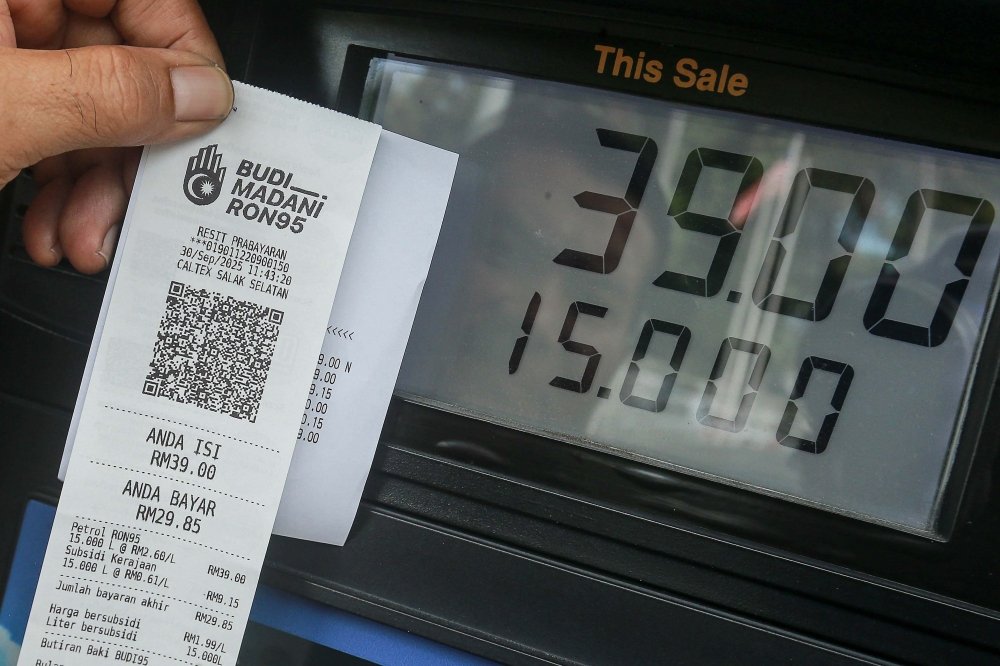
For this demographic, the assistance is multifaceted. It includes, but is not limited to, targeted fuel subsidies such as BUDI95 and BUDIDiesel, electricity rebates for the hardcore poor registered under eKasih, and various cost-of-living initiatives like the Jualan Rahmah programme.
However, experts caution that these figures serve as a potential ceiling rather than a guaranteed income. For instance, the maximum subsidy value for fuel is calculated on the assumption that two eligible adults each utilize the full 300-litre monthly allocation. Similarly, electricity rebates are strictly reserved for verified recipients under the eKasih database, meaning not every low-income family automatically qualifies for the maximum RM40 monthly deduction.
Beyond these quantifiable cash-equivalent benefits, the government provides substantial “hidden” support that is harder to calculate on a ledger. Controlled prices for essential items—including local white rice, cooking oil, LPG, sugar, and wheat flour—act as a constant, if fluctuating, subsidy that protects families from global market volatility. Furthermore, public healthcare, heavily subsidized education, and transport concessions remain cornerstones of the national welfare strategy, providing services that would be prohibitively expensive if left to market forces.
The annual total of these quantified benefits is derived from the latest Budget 2026 projections and ongoing aid programmes. By aggregating the maximum potential value of targeted rebates and fuel subsidies, the government aims to demonstrate the weight of its commitment to the bottom 40 per cent (B40) of the population.
Ultimately, the analysis underscores a shift in government strategy: moving away from blanket subsidies toward a targeted approach that maximizes impact where it is needed most. While the “value” of this support remains dependent on how a household shops, travels, and consumes energy, the government’s latest breakdown provides a clearer understanding of how these diverse initiatives insulate Malaysian families from rising costs. For the average household, the cumulative effect of these non-cash interventions remains a vital, if often invisible, pillar of their financial stability.
Disclaimer: This content is auto-generated for informational purposes only. It has been rewritten and paraphrased from the original source.
Source: Read Original News