









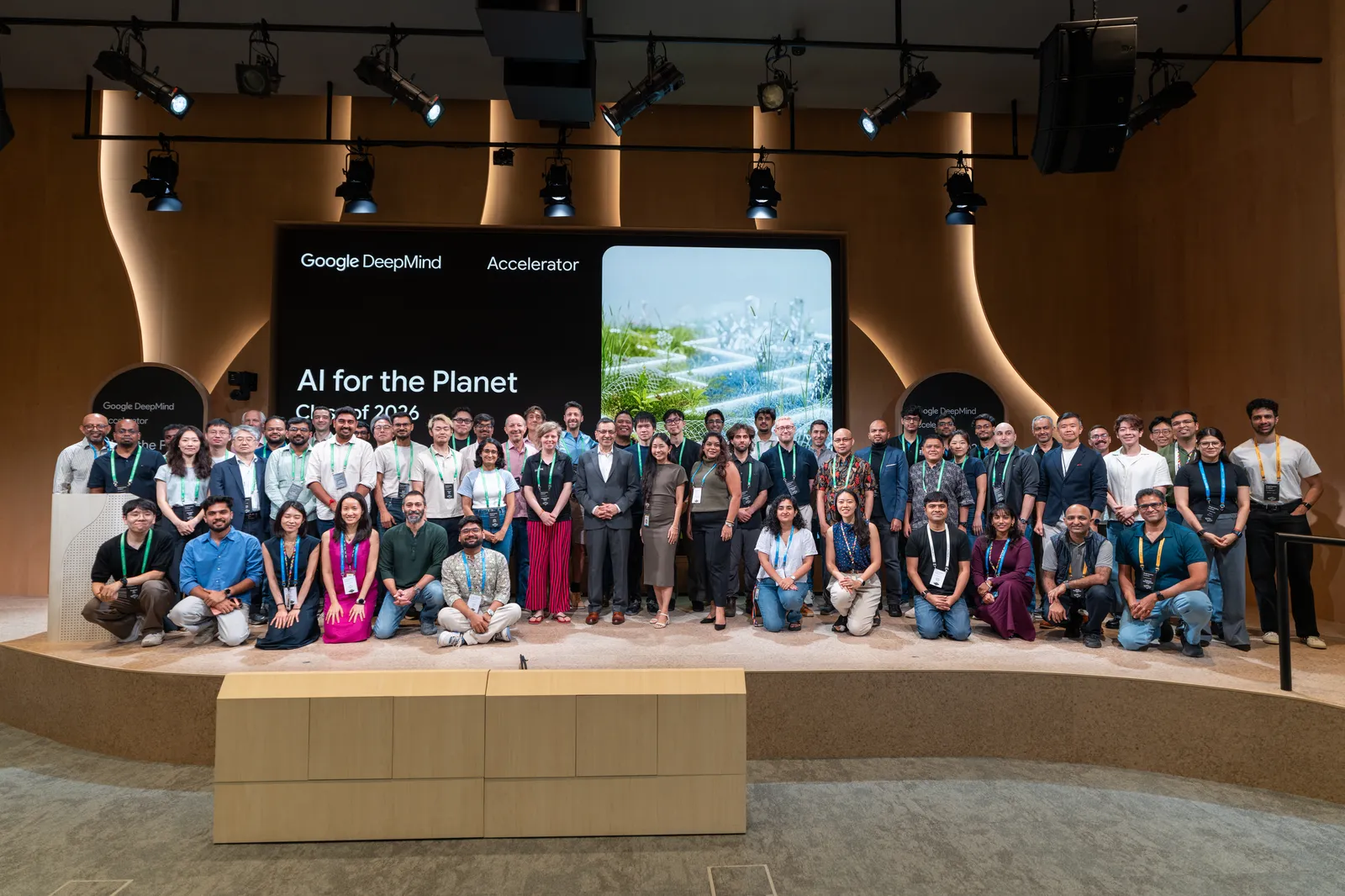
Google DeepMind has officially launched its inaugural “AI for the Planet” accelerator in the Asia-Pacific region, selecting 16 diverse startups, nonprofits, and research teams to integrate advanced artificial intelligence into environmental conservation and climate resilience efforts. The three-month program, which commenced this week with an intensive bootcamp in Singapore, aims to bridge the gap between frontier AI technology and the practical challenges of ecological sustainability.
The accelerator represents a strategic move by Google to scale the application of its proprietary models—such as AlphaEarth Foundations, SpeciesNet, and ForestCast—to address pressing regional environmental threats. According to Google, participants will receive comprehensive support, including technical mentorship, cloud computing credits, and direct access to specialized AI systems, all on an equity-free basis. Following the initial in-person sessions, the cohort will transition to virtual mentorship through December, culminating in a Demo Day where participants will present their refined solutions to an audience of investors and strategic partners.
The selected projects are categorized into three primary focus areas: nature conservation, sustainable agriculture, and climate-focused carbon solutions. Each project highlights the growing reliance on data-driven interventions to manage complex ecosystems.
In the realm of biodiversity and climate resilience, six teams are leveraging AI to monitor ecosystems. Projects like New Zealand’s 800 Trust, Listening Lab, and Wildlife.ai are deploying bioacoustics and AI-powered camera networks to track species populations in real-time. Meanwhile, Singapore’s Kumi Analytics is utilizing deep learning to analyze remote sensing data, providing the foundational baselines necessary for long-term conservation. South Korea’s TelePIX and Indonesia’s Yayasan Ekosistem Lestari are similarly focused on landscape-level challenges, with the latter specifically using data to link environmental degradation to disaster risk, offering a proactive approach to regional climate adaptation.
Sustainable agriculture constitutes a second major pillar of the program. With five teams selected, the cohort addresses the needs of smallholder farmers and the efficiency of food systems. Indonesia’s Edufarmers is implementing AI-driven messaging services to provide farmers with real-time guidance on pest control and weather patterns. Other ventures, such as India’s Terrastack and Australia’s X-Centric, are focusing on granular land intelligence and innovative soil-testing hardware, respectively. By integrating satellite-based crop yield estimation from Singapore’s SIGMA and biological fertilizer development from Thailand’s Living Roots, these teams aim to increase agricultural productivity while minimizing environmental impact.
The remaining five ventures are targeting the complexities of carbon markets and urban energy management. Japan’s Archeda is applying satellite data to verify nature-based carbon credits, addressing a significant bottleneck in the accuracy of environmental markets. In India, teams such as Climitra Carbon, Farmers for Forests, and Varaha Climate are working on diverse solutions ranging from converting invasive species into biochar to deploying drones for agroforestry and verifying regenerative farming practices. Additionally, Singapore’s City Syntax Lab is working to optimize energy efficiency and carbon output across dense urban districts, showcasing how AI can be utilized to decarbonize city infrastructure.
This initiative is the first of its kind for Google DeepMind in the Asia-Pacific region, signaling a broader commitment to applying high-level technical expertise to the global climate crisis. Upon the program’s conclusion in December, the graduates will be inducted into Google’s accelerator alumni network, providing them with ongoing connectivity to the company’s infrastructure and resources. As the program progresses, industry observers will be watching to see how these localized AI solutions scale and whether they can effectively translate technical outputs into measurable, long-term environmental gains.
Disclaimer: This content is auto-generated for informational purposes only. It has been rewritten and paraphrased from the original source.
Source: Read Original News