







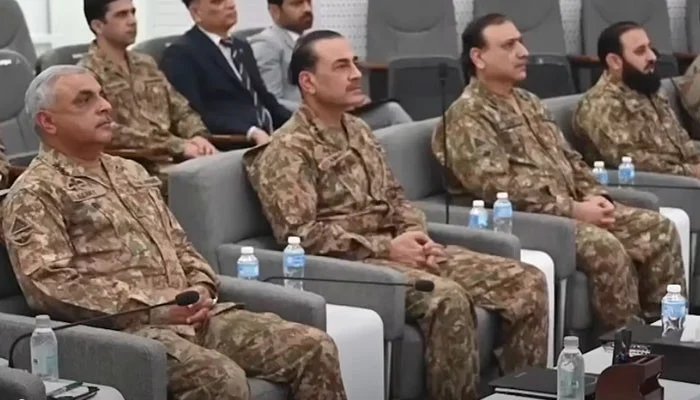
The intersection of regional security and sustainable development took center stage in Quetta this week, as Field Marshal Asim Munir, Chief of Defence Forces and Chief of Army Staff, underscored the inextricable link between a stabilized environment and the socio-economic advancement of Balochistan. During a visit to the Quetta Garrison on September 5, 2026, the Army Chief emphasized that the state’s long-term vision for the province is contingent upon maintaining a secure atmosphere that fosters both ecological stability and economic growth.
The visit, which focused on the prevailing security landscape and the operational preparedness of field formations, highlighted a strategic shift toward integrating security protocols with developmental initiatives. According to the Inter-Services Public Relations (ISPR), the briefing provided to the COAS covered not only the kinetic aspects of regional stability but also the institutional coordination required to support the province’s socio-economic trajectory.
For Balochistan, a region often characterized by its rugged terrain and vast, untapped natural resources, the environment plays a critical role in the lives of its inhabitants. Sustainable development in the province is frequently hampered by instability, which limits access to essential infrastructure and hinders the implementation of environmental conservation projects. Field Marshal Munir’s remarks suggest that the military leadership recognizes that lasting peace is the fundamental prerequisite for environmental stewardship and the responsible management of the province’s natural wealth.
By prioritizing an environment “conducive to sustained economic activity,” the military’s current approach seeks to create a predictable landscape where development projects—ranging from water management and agricultural expansion to infrastructure—can proceed without disruption. The COAS stressed the necessity of robust coordination among law enforcement agencies and state institutions, noting that such synergy is essential to consolidate peace. When institutional efforts are aligned, the state is better positioned to protect the ecological and human capital of the province, ensuring that future generations can benefit from a more stable and managed landscape.
The focus on “development initiatives” and “economic opportunities” in the COAS’s address signals a broader understanding that the prosperity of Balochistan is intrinsically tied to the land. Environmental sustainability in the region depends on reducing conflict, which often leads to the degradation of resources and the displacement of communities. By maintaining a stable security environment, the state aims to protect the integrity of the province’s natural assets and facilitate the orderly development of its vast, semi-arid and mountainous tracts.
During his interactions with commanders and commanding officers, the Army Chief lauded the professionalism of the troops, whose work on the ground remains the primary deterrent against forces that threaten the stability of the province. He reaffirmed that the well-being of the people of Balochistan remains the central pillar of the state’s efforts, a commitment that necessarily includes the provision of a stable environment where citizens can thrive without the shadow of uncertainty.
As the province continues to navigate the complexities of regional security, the integration of developmental and environmental goals remains a key indicator of progress. The visit to Quetta serves as a reaffirmation of the military’s role in providing the security “shield” under which civil authorities and developmental agencies can work to address the challenges posed by geography, climate, and economic underdevelopment. Through this cohesive approach, the state aims to pave the way for a more resilient Balochistan, where the environment is preserved as the foundation for future prosperity.
Disclaimer: This content is auto-generated for informational purposes only. It has been rewritten and paraphrased from the original source.
Source: Read Original News