








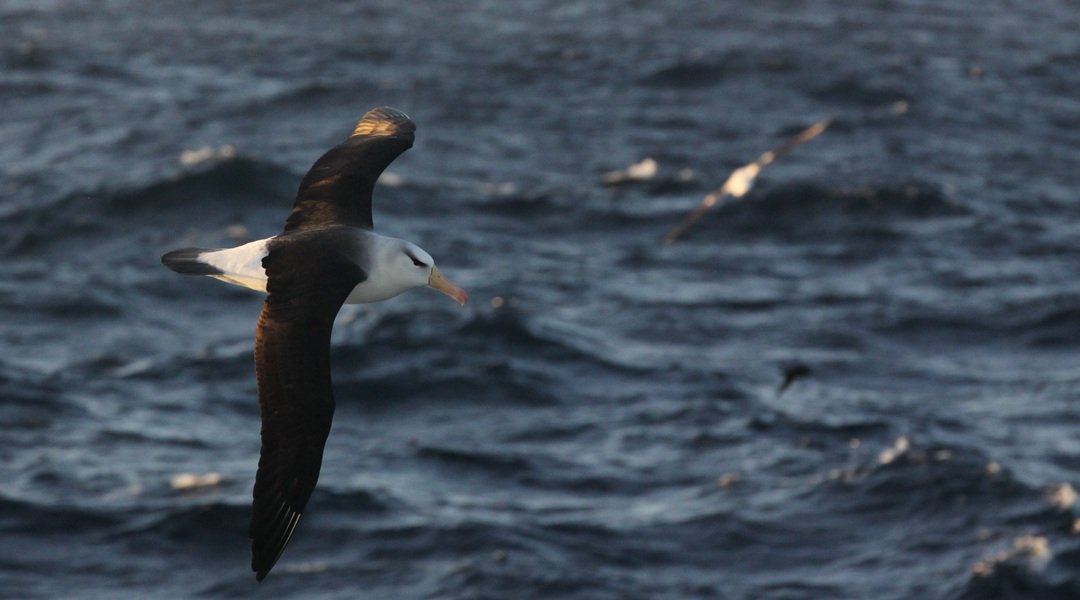
For the black-browed albatross (Thalassarche melanophris), the decision to reproduce is a high-stakes gamble. Every chick raised requires a significant diversion of the energy and resources that an adult bird relies on for its own survival. New research spanning five decades of data reveals that when environmental conditions become unpredictable, these majestic seabirds adopt a conservative “bet-hedging” strategy, favoring long-term survival over rapid reproduction.
The study, led by Bertille Mohring of the University of Liverpool, utilized long-term monitoring programs from two distinct populations: Bird Island in South Georgia and the Kerguelen archipelago. By tracking thousands of breeding attempts between 1975 and 2024, researchers were able to compare how the same species adapts its “pace of life” to different environmental pressures.
The findings highlight a stark contrast between the two sites. Environmental conditions—measured by sea surface temperatures and food availability—are three times more variable on Bird Island than in the Kerguelen archipelago. The albatrosses inhabiting the more volatile Bird Island environment were found to be more cautious breeders. They reached reproductive milestones at a slower pace, delayed the onset of their breeding years, and experienced a much more gradual decline in performance as they aged—a process known as reproductive senescence.
“This means that individuals need more years to produce the same amount of offspring and that the decline in breeding performance in late-life starts later and is slower, so environmental variation slows the pace of life,” Mohring explained.
By spreading the risk of offspring mortality across a greater number of breeding attempts over a longer lifespan, these birds protect their own survival during lean years. This strategy is a classic example of evolutionary “bet-hedging,” where an organism trades the potential for a massive, immediate reproductive payoff for the stability of a prolonged life.
However, the study also uncovered a complex reality within these populations. Researchers had initially hypothesized that while individuals within a colony might adopt different “fast” or “slow” life strategies, they would ultimately achieve similar levels of lifetime reproductive success. Instead, the data showed that birds that adopted a “fast” strategy—reproducing earlier and experiencing a more rapid decline in late-life function—actually achieved higher overall fitness and produced more offspring during their lifetimes.
The team suggests two possible drivers for this discrepancy. It is possible that “fast” individuals are simply more efficient at foraging and resource acquisition, allowing them to support a faster pace of life without immediate penalty. Alternatively, the “reproductive cost” theory suggests that these birds pay a high price for their success, as the sheer energy expenditure of multiple successful breeding cycles accelerates the aging process.
This research arrives at a critical juncture for conservation efforts. As climate change intensifies fluctuations in ocean productivity and disrupts prey availability across the Southern Ocean, the environmental variability currently seen at Bird Island may become the new baseline for species across the region.
“Populations of long-lived seabirds may face changes in environment and it is important to evaluate how they will respond,” said Mohring. The next phase of the team’s research will focus on identifying the specific individual traits that determine where a bird falls on this “fast-slow” continuum, as well as examining how reproductive costs incurred in one season dictate the survival and breeding capacity of subsequent years.
Understanding these trade-offs is essential for predicting how vulnerable populations will fare in an increasingly unpredictable world. For the black-browed albatross, the ability to pivot between cautious survival and high-energy reproduction may be the ultimate key to navigating the challenges of a warming climate.
Disclaimer: This content is auto-generated for informational purposes only. It has been rewritten and paraphrased from the original source.
Source: Read Original News