








Supreme Court Rejects Extension for Aravalli Definition Panel; Sets Firm November Deadline
The Supreme Court has delivered a sharp reprimand to the high-powered committee (HPC) tasked with establishing a uniform definition for the Aravalli hills, rejecting its request for a six-month extension. Chief Justice of India (CJI) Surya Kant expressed deep dissatisfaction with the panel’s timeline, pointedly questioning if the committee was intentionally delaying its findings until after his retirement.
“Work Day and Night”
The five-member panel, headed by Indian Council of Forestry Research and Education (ICFRE) Director General Kanchan Devi, had petitioned the court for an extension until February 28, 2027. The CJI, who is scheduled to demit office on February 9, 2027, dismissed the request during Monday’s proceedings.
“They should have clearly asked for a date after my retirement… it appears they are waiting for my retirement. We are not going to allow this,” CJI Kant remarked to Additional Solicitor General Aishwarya Bhati, who represented the Centre.
The bench, which also includes Justices Joymalya Bagchi and V. Mohana, issued a firm directive for the committee to complete its work by November 30, 2026. Emphasizing the urgency of the matter, the court instructed the experts to “work day and night,” explicitly stating that no further extensions would be entertained.
Resolving the Ecological Stand-off
The judicial intervention follows a period of intense public and environmental scrutiny. In November 2025, the Supreme Court had initially accepted a controversial definition that classified Aravalli hills based on a 100-metre elevation criterion. Environmentalists warned that this narrow definition risked excluding vast portions of the ecologically fragile range, potentially leaving them vulnerable to rampant mining.
Following widespread protests, the Supreme Court took suo motu cognisance of the issue, keeping its previous order in abeyance in December 2025 and halting the issuance or renewal of mining leases. The current HPC was constituted in May to conduct a comprehensive, science-based review of the landscape.
A Holistic Approach
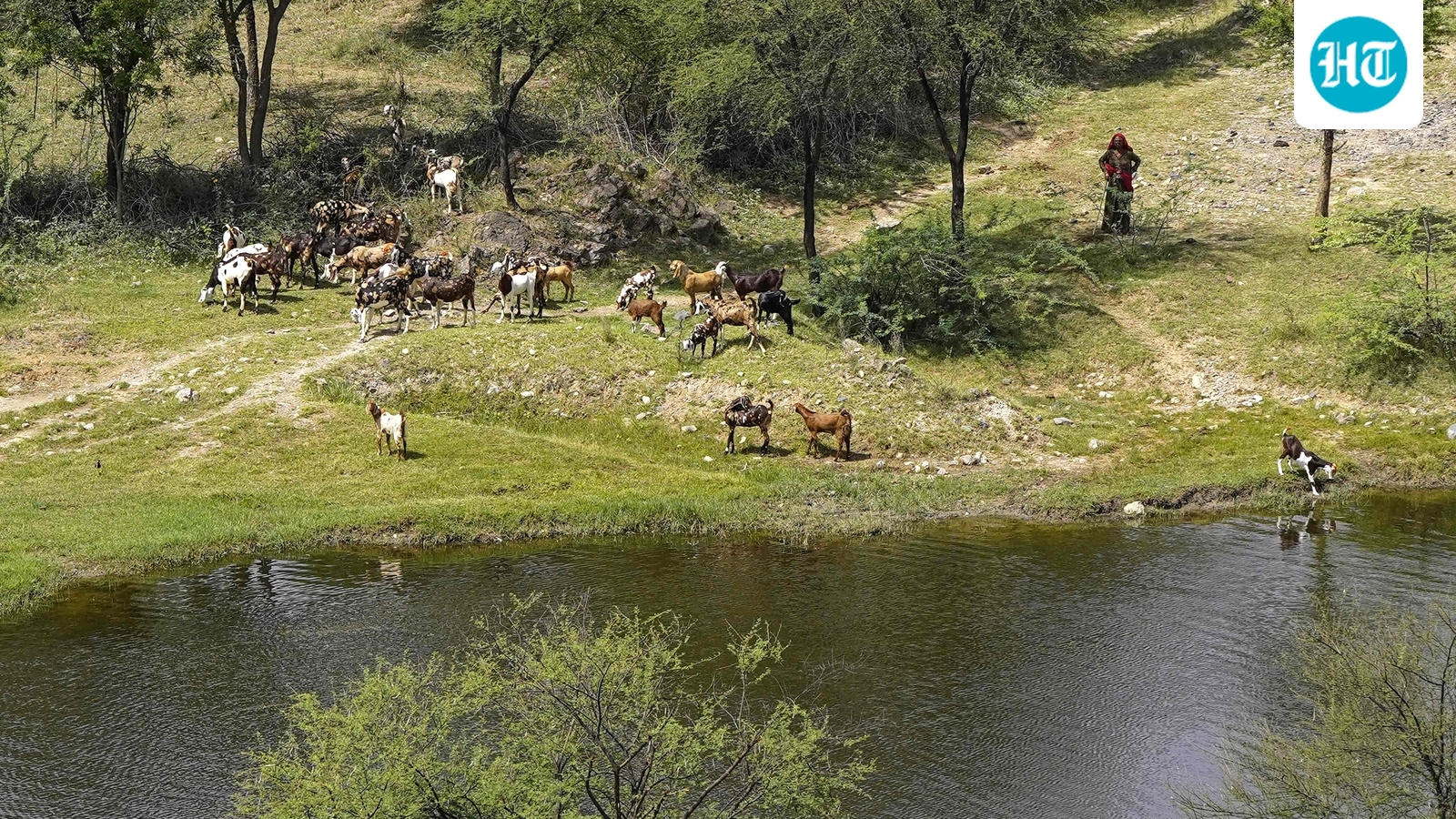
In its interim report submitted on August 31, the committee acknowledged that the Aravallis cannot be defined by simple terrain or elevation metrics alone. The panel noted that its research involves analyzing complex layers, including hydrology, biodiversity, geological evidence, and socio-economic factors. The committee’s mandate involves viewing the range as a connected ecological system that includes sacred sites, traditional pastures, wetlands, and critical groundwater recharge zones.
While the committee argued that it needed more time for field validation and specialized data analysis, the Supreme Court has urged a more agile approach. The bench has directed the panel to submit interim reports on specific, urgent matters in the coming weeks, ensuring that critical disputes can be addressed without waiting for the final document.
The court has scheduled the next hearing for December 2, at which point it expects the committee to have finalized its comprehensive report and provided clarity on the contested landscape. As the clock ticks toward the November 30 deadline, the pressure remains on the committee to balance scientific rigor with the time-sensitive protection of one of India’s oldest mountain ranges.
Disclaimer: This content is auto-generated for informational purposes only.
Source: Read Original News