





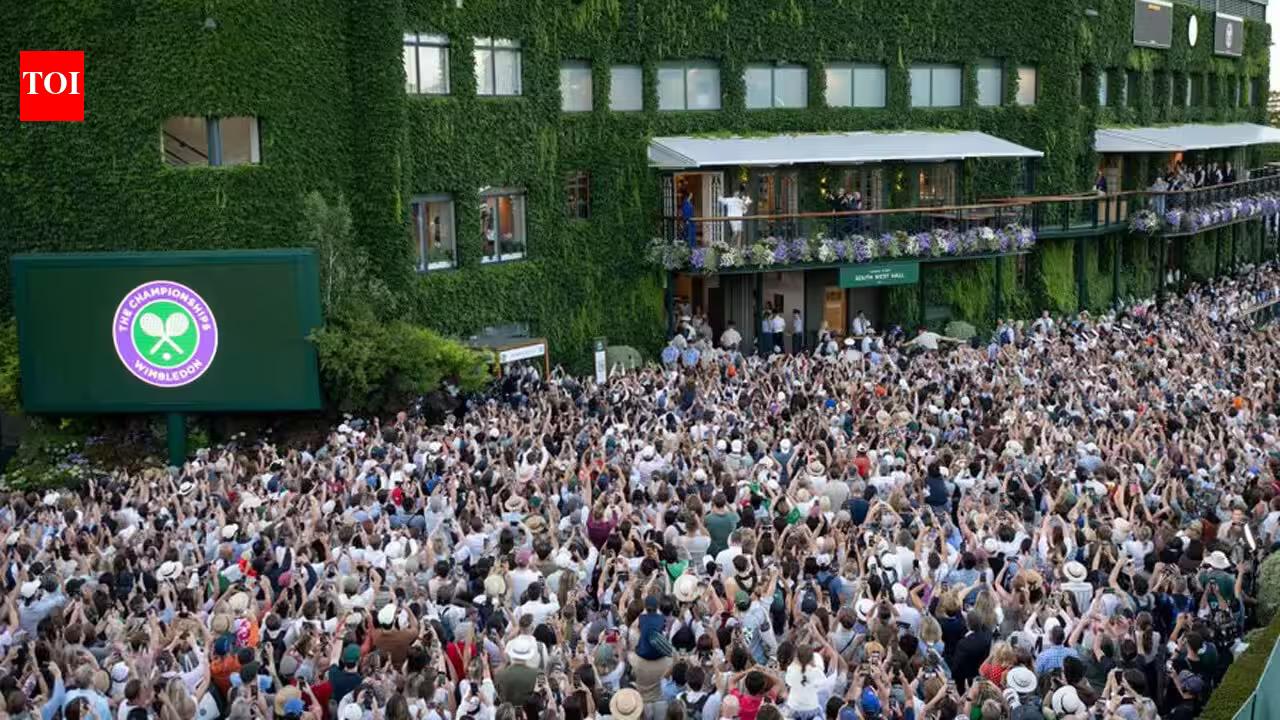
Wimbledon is officially drawing a hard line in the grass. In a strategic pivot that signals a firm rejection of the “influencer culture” currently transforming major sporting events, the All England Club has announced it will resist the trend of dedicated creator-based accreditation for its 2027 tournament. As the debate over the sanctity of tennis etiquette reaches a fever pitch following a chaotic summer in New York, SW19 is opting for tradition over the aggressive digital expansion seen at the US Open.
According to reports from the Press Association, Wimbledon officials have no intention of rolling out the red carpet for social media personalities. Moving forward, the tournament plans to maintain strict oversight of spectator behavior, including the potential confiscation of professional-grade content equipment—such as ring lights and specialized rigs—that threatens the concentration of players on the court.
## The US Open’s “Influencer Experiment” Under Fire
The decision by the All England Club comes in direct response to the friction observed at the US Open, where the USTA pushed an ambitious digital strategy to court a younger, internet-savvy demographic. With roughly 100 influencers credentialed for this year’s tournament—nearly doubling the previous year’s figure—the US Open aimed to bridge the gap between legacy sports and the viral economy.
However, the experiment quickly devolved into controversy. The flash-and-flicker of social media production became a tangible on-court nuisance, most notably during Naomi Osaka’s first-round match. A group of spectators, filming in a suite, introduced a bright ring light into the direct line of sight of the players. The disruption was so severe that chair umpire Kader Nouni was forced to halt play to restore order.
The incident sparked a firestorm of criticism regarding the prioritization of “content” over competition. Naomi Osaka, while diplomatic about the necessity of growing the sport, did not mince words regarding the lack of professionalism displayed by some invited guests. “I feel like it’s common courtesy to read up on the sport, especially the etiquette,” Osaka noted. “I feel like it could be a good thing for people to make the sport of tennis popular to their specific audience, but I think it has to be managed a lot better.”
## From “Spectacle” to “Zoo”: Players Speak Out
The frustration is not isolated to a single incident or a single player. As the presence of non-traditional spectators has surged, veterans of the tour have begun to express deep concerns about the degradation of the match environment.
French stalwart Adrian Mannarino delivered a scathing assessment of the current atmosphere at Flushing Meadows, describing the court conditions as bordering on a “zoo.” Between the unauthorized movement of fans during live points and the pervasive noise levels, the traditional silence required for elite-level focus has been replaced by the chaotic energy of an entertainment venue. “The tournament puts up with it,” Mannarino remarked, “and I don’t know if it’s the best thing for tennis in general.”
This sentiment is echoed by American stars. Coco Gauff, the 2023 US Open champion, suggested that the issue stems from a fundamental lack of tennis literacy among invited influencers. “Sometimes it’s their first tennis match; they don’t know,” Gauff observed. “With any venue you go to, if you’re being invited to a red carpet, you wouldn’t show up in jeans. I think it’s just following the etiquette of the sport.”
Jessica Pegula, meanwhile, highlighted the professional toll such distractions take on the athletes. “People are down there trying to perform, and it’s their career and their job,” Pegula stated. “It seems like a bit disrespectful… I think when you have the other side literally interrupting matches, it gets a little tough.”
## Wimbledon Stakes Out a Traditionalist Stance
For Wimbledon, the US Open has served as a cautionary tale. While the All England Club recognizes the power of the digital age, they remain committed to the belief that the prestige of a Grand Slam is tied to its unique, hushed atmosphere—a characteristic that is fundamentally at odds with the demands of an influencer who requires constant engagement and visual “content.”
By declining to create a specialized category for influencers, Wimbledon is signaling that it will not sacrifice the player experience to appease social media algorithms. While this move might be perceived by some as stodgy or behind-the-times, it serves as a massive validation for the athletes who have long argued that tennis is a sport of precision that cannot function in a “creator-first” environment.
The message from London is unmistakable: the gates of the All England Club are open to fans, but the court itself belongs to the players. As tennis navigates its future, the divide between the raucous, modern exhibitionism of the US Open and the curated, historic stillness of Wimbledon is set to become one of the most interesting cultural fault lines in global sports. For now, it appears the “ring light” era will be stopped at the border.
Disclaimer: This content is auto-generated for informational purposes only.
Source: Read Original News