







A 149-year tradition in professional tennis has officially reached a somber, historic terminus. For the first time since the inception of Grand Slam tennis at Wimbledon in 1877, the sport has concluded a season without a single man utilizing a one-handed backhand reaching a major semi-final. The staggering statistic marks the definitive end of an era that once defined the aesthetic and technical soul of the game.
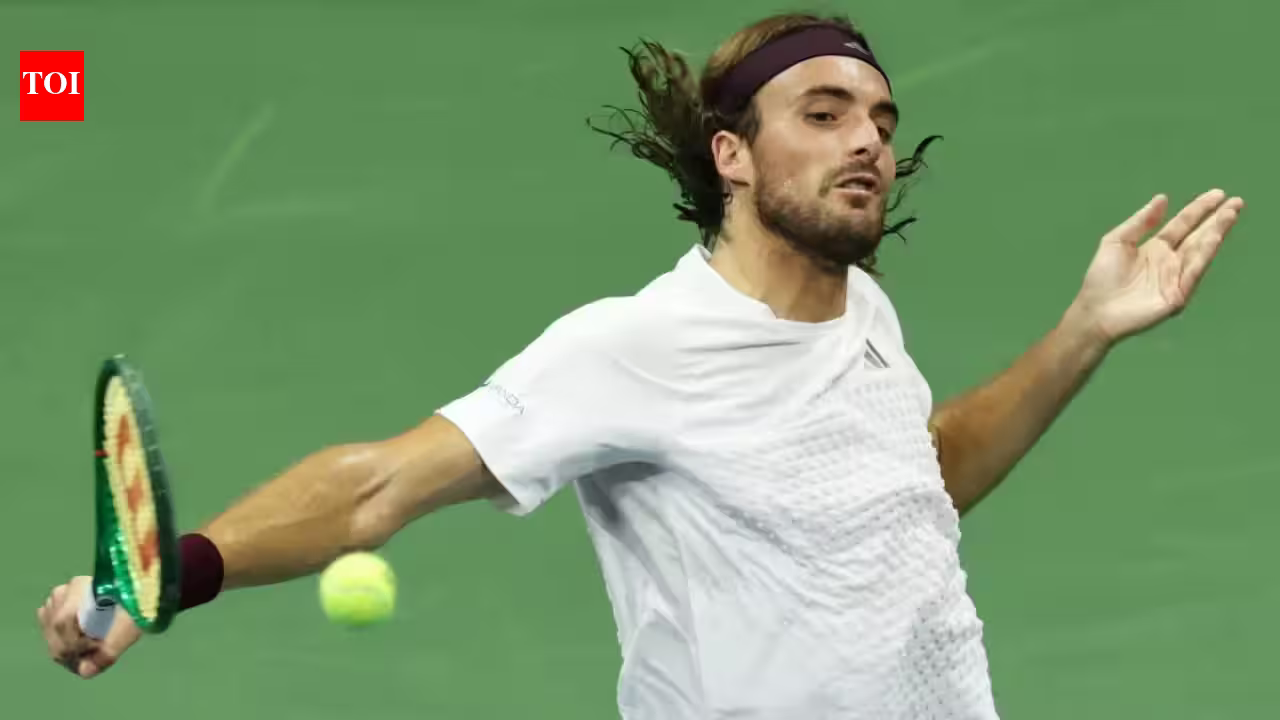
Stefanos Tsitsipas, one of the modern torchbearers for the dying art, summarized the situation with his signature blend of philosophy and blunt reality. “I’ve got a 150-year streak to save,” he posted on social media as he entered the US Open. While the Greek star is known for his eccentric commentary, his assessment of the state of the sport proved chillingly accurate. Following a series of exits by the few remaining practitioners of the stroke—including Tsitsipas himself, Lorenzo Musetti, Denis Shapovalov, and the legendary Stan Wawrinka—the record books have officially closed on a chapter that dates back to the very infancy of tennis.
From Default to Dwindling: The Evolution of the Stroke
In the early years of the sport, the one-handed backhand was not merely a stylistic choice; it was the default requirement of the game. When wooden rackets were the industry standard, players relied exclusively on the single-handed swing to maneuver, slice, and dictate play. It was the mark of legends: John McEnroe, Ivan Lendl, Stefan Edberg, Pete Sampras, Gustavo Kuerten, and, most notably, the maestro Roger Federer, all built their empires upon the grace and precision of that singular motion.
The decline has been as gradual as it has been relentless. In 1905, the four Grand Slam tournaments saw 16 players with one-handed backhands reach the semi-final stage. By 2005—a century later—that figure had dropped to five, with Federer accounting for four of those appearances alongside Mariano Puerta. Last year, the presence of the one-handed backhand in the final four of a major had been reduced to a lone representative: Italy’s Lorenzo Musetti.
With Musetti failing to navigate the early rounds of this year’s US Open, and with veterans like Wawrinka bowing out, the statistical dam has finally broken. The extinction, it seems, is no longer a looming threat—it is a current reality.
‘Like Dinosaurs Going Extinct’
The shift in professional tennis is reflected clearly in the raw data. Today, there are only 19 one-handed backhanders remaining in the ATP Top 300. By comparison, that number was 62 in 2013 across the ATP and Challenger circuits.
“Every single decade, we’re decreasing. We’re like dinosaurs going extinct,” said Tsitsipas. The sentiment is shared by his peers, who acknowledge that the sport has evolved into a realm where the two-handed backhand is fundamentally more efficient for the rigors of the modern game.
The reasons for this obsolescence are multifaceted, ranging from the blistering pace of contemporary play to the way tennis is taught at the youth level. Roger Federer, arguably the most iconic one-handed player of the modern age, pointed to the cycle of coaching as a primary factor.
“I think when your coach is a one-handed tennis player, you will most likely be a one-handed tennis player too,” Federer noted recently. “Nowadays, probably the coaches are mostly double-handed players, and it’s just easier to teach a kid to have two hands on the backhand side. One of my kids is switching from a double-hander to a one-hander, and I just see how hard it is for him to hit it and control it.”
A Question of Utility vs. Aesthetics
While the one-handed backhand offers distinct advantages in shot variety and the ability to create unique angles, those nuances are increasingly outweighed by the raw defensive stability of the two-handed version. Players like Diane Parry have even adopted hybrid approaches, using two hands to return massive serves before switching to a single hand for rally play—an acknowledgment that the modern game demands a level of power and consistency that the single-hander struggles to provide under pressure.
Even the purists admit the tactical discrepancy. Lorenzo Musetti, despite his affection for the beauty of the stroke, is pragmatic about its future. “In terms of efficiency, I think the two-handed backhand is more advantageous, especially in the modern game, with the speed at which tennis is played today,” he stated.
Yet, there remains a sentimental pull. Musetti confessed that even if he knows the two-handed style is superior for winning, he would still hope to see his own future students carry on the legacy. “Aesthetically, yes, I would teach it. I would love for my son, or perhaps a player I coach in the future, to have a one-handed backhand. I would love to see that.”
For now, however, the archives remain unchanged. The sport moves forward, faster and more powerful than ever, leaving behind a 149-year-old tradition that was as much about the art of tennis as it was about the result. As the curtain closes on this historic season, the one-handed backhand finds itself relegated to the history books, serving as a nostalgic reminder of a game played at a slower, more graceful tempo.
Disclaimer: This content is auto-generated for informational purposes only.
Source: Read Original News