







In the high-stakes, hyper-competitive landscape of Tamil cinema, most actors spend their lives chasing “the big role”—the transformative script that turns a journeyman performer into a household name. But for actor-turned-politician Karunas, the path to legacy wasn’t paved with selfish ambition; it was paved with a rare, almost uncharacteristic level of professional restraint.
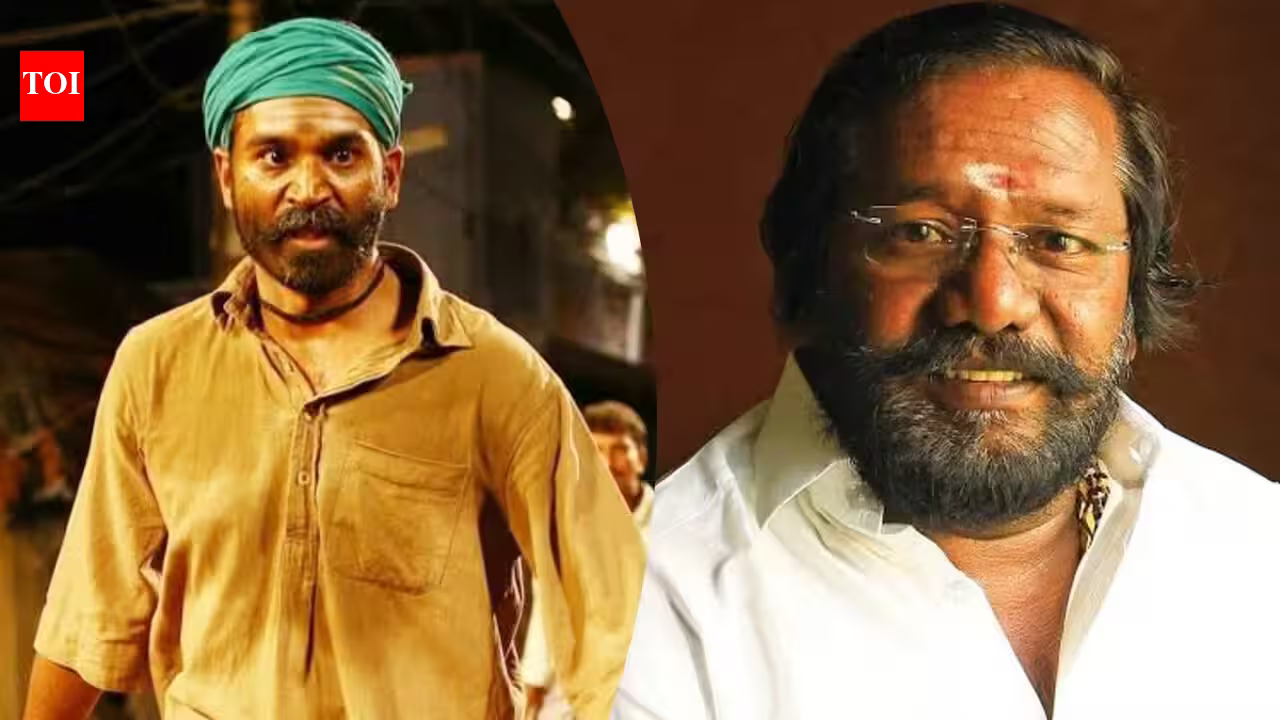
In a candid, soul-baring conversation with Behindwoods, Karunas recently peeled back the curtain on one of the most significant “what-if” moments in modern Kollywood history. He revealed that long before the world was captivated by the visceral intensity of Vetri Maaran’s 2019 masterpiece Asuran, the director had actually approached him to play the central role. To turn down a Vetri Maaran script is a bold move; to turn down the lead role is, by industry standards, nearly unthinkable.
The Weight of the Script: Why Karunas Walked Away
Most actors look at a script and see their own reflection—how they might look in the frame, how the audience might react to their performance, or how it might boost their market value. Karunas, however, approached the screenplay of Asuran with the clinical eye of a producer and the heart of a purist.
When he first sat down with Vetri Maaran, the potential for a career-defining performance was laid bare. The story, based on Poomani’s seminal novel Vekkai, required an actor who could embody both the simmering trauma of a man hiding his past and the explosive brutality of a father protecting his son. While the director was confident that Karunas could carry the narrative, the actor felt a profound sense of dissonance.
“I was supposed to act in Asuran along with my son,” Karunas explained. “Vetri Maaran was ready to make the film with me. I read the story and immediately told him, ‘Sir, this will work only if a hero acts in it. I won’t act.’” It wasn’t a lack of ability; it was a matter of optics and the harsh realities of the box office. Karunas recognized that for the message of the film to resonate with a pan-regional audience, it needed a performer who carried the weight of a traditional “hero” image.
Artistic Integrity Over Individual Glory
The beauty of this anecdote lies in the push-and-pull between the creator and the performer. Vetri Maaran, known for his stubborn commitment to his vision, didn’t immediately concede. He wasn’t just casting a face; he was casting an essence. He insisted that he knew how to frame the film around Karunas, believing that his specific acting style could translate the source material with authenticity.
But Karunas remained unmoved. “I told him the story was excellent and that if someone with a hero image played the lead, the film would work better commercially,” he noted.
In an industry often criticized for ego-driven casting, this is a breath of fresh air. Karunas essentially acted as a guardian for the project, prioritizing the film’s survival in the marketplace over his own screen time. He understood that the power of Asuran lay in its ability to spark discourse, and that reach is often dictated by the star-power attached to the poster. By stepping aside, he wasn’t admitting defeat—he was ensuring the film had the best possible chance to conquer the industry.
The Ripple Effect: Dhanush and the National Award
When the mantle was passed to Dhanush, the chemistry between the actor and director proved to be nothing short of cinematic alchemy. Dhanush’s portrayal of Sivasaami remains one of the most lauded performances of his career, seamlessly shifting from the submissive, apologetic father to the battle-hardened warrior of the past.
The film’s subsequent trajectory—a massive box-office success, critical acclaim that crossed borders, and ultimately the National Film Award for Best Feature Film—stands as a testament to the fact that Karunas’ instincts were spot on. While it would be easy for any actor to look back at such a triumph with regret, Karunas displays a grounded philosophy that is rare in the limelight. He views the project’s success not as a missed paycheck, but as a victory for the kind of cinema he respects.
“If the character suits me, only then will I act in it,” he said. “I believe I should be honest to cinema.”
Defining the Legacy of a Character Actor
Karunas’ journey has always been unconventional. Rising through the ranks as a comedian and a vibrant presence in various commercial entertainers, he has long fought the pigeonhole that the industry forces upon him. His decision regarding Asuran serves as a defining chapter in his career—a moment where he proved he possessed a deeper understanding of the medium than many of his peers.
By refusing to force a fit where none existed, he preserved the sanctity of the story. In his world, the film’s message—about caste, social justice, and the cycles of violence—superseded his own desire for a “prestige” role.
Ultimately, this story reveals as much about Vetri Maaran’s ability to see talent in unlikely places as it does about Karunas’ integrity. It reminds us that behind every blockbuster, there are a thousand quiet conversations that steer the ship. Karunas might not have been the face of Asuran, but his fingerprints are all over the decision that allowed it to become the masterpiece we know today. In the end, he didn’t miss out on a role; he acted with the kind of honesty that, in the long run, carries far more weight than any award on a mantle.
Disclaimer: This content is auto-generated for informational purposes only.
Source: Read Original News