







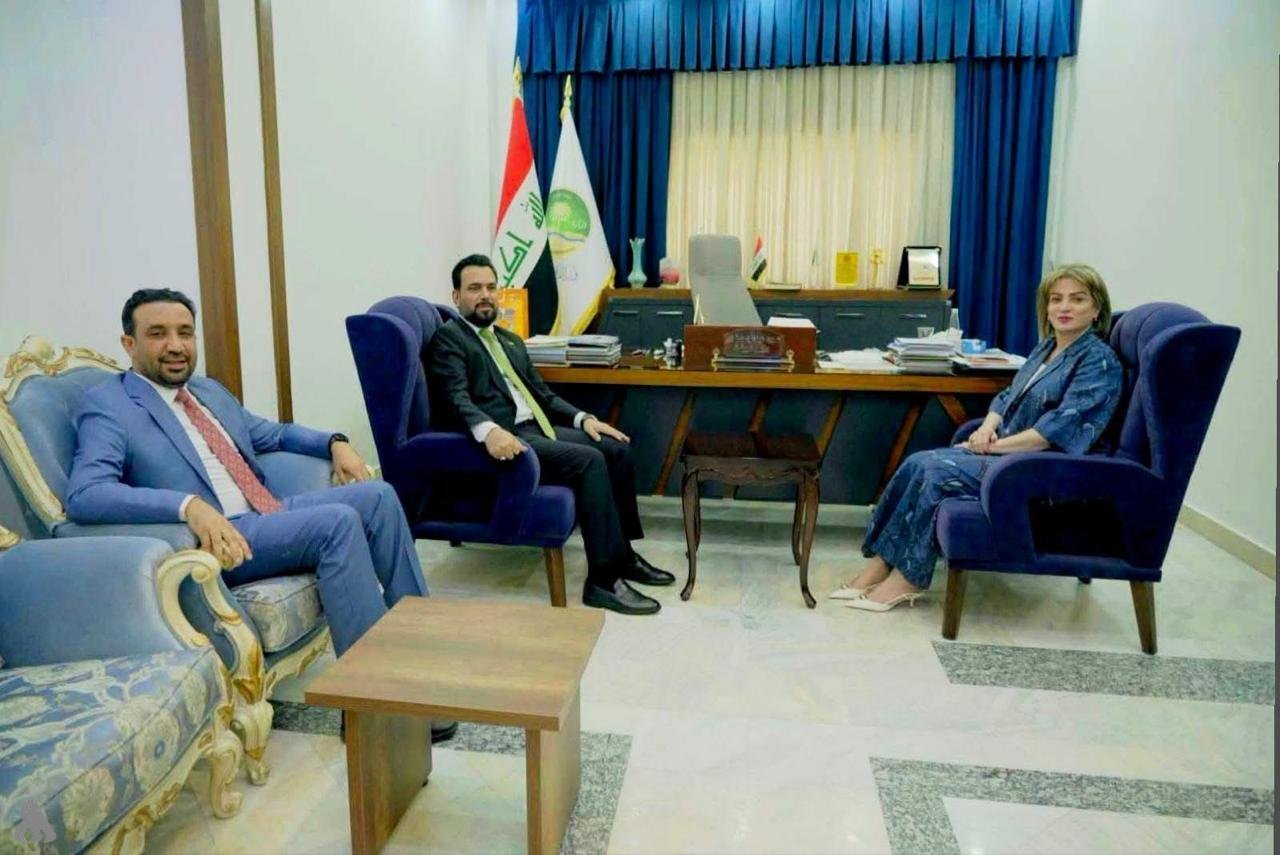
In a strategic move to combat the escalating climate crisis facing Iraq, the Iraqi Media Network (IMN) and the Ministry of Environment have announced a new partnership aimed at mobilizing public opinion through nationwide awareness campaigns. The collaboration was finalized on Monday during a high-level meeting between the Chairman of the Board of Trustees of the IMN, Thaer Al-Ghanimi, and the Minister of Environment, Sarwa Abdul Wahid.
The meeting, which also included the participation of the Advisor to the Speaker of Parliament for Media and Culture Affairs, Jaafar Al-Wannan, focused on bridging the gap between scientific environmental data and public understanding. As Iraq continues to grapple with extreme temperatures, water scarcity, and rising pollution levels, both officials emphasized that the media must transition from passive reporting to becoming a proactive vehicle for environmental advocacy.
For years, Iraq has been identified by the United Nations as one of the countries most vulnerable to the adverse effects of climate change. From the drying of the southern marshes to the increasing frequency of dust storms affecting major urban centers, the ecological pressures on the country are profound. By leveraging the vast reach of the Iraqi Media Network—the country’s primary public broadcaster—the Ministry of Environment aims to ensure that information regarding sustainable practices and national mitigation projects reaches every corner of the nation.
“The Iraqi Media Network has a duty to fulfill its educational role by addressing environmental issues with the professional and moral responsibility they demand,” stated Chairman Al-Ghanimi. He noted that the network is prepared to dedicate airtime and digital resources to highlight national initiatives designed to protect natural resources. By framing environmental protection as a matter of national security and public health, the IMN intends to move climate discourse into the mainstream, encouraging citizens to adopt more sustainable daily habits.
Minister Abdul Wahid underscored that the challenge of climate change is not a problem for the government to solve in isolation; it requires a fundamental shift in community behavior. “Our partnership with media outlets is essential to delivering the urgency of our situation to the public,” she said. “We are committed to enhancing awareness of the risks that directly affect the lives of our citizens today and the future of the generations to come.”
The strategic framework agreed upon during the meeting includes a commitment to streamline the flow of information between technical environmental agencies and media producers. By facilitating this integration, the government hopes to eliminate the complexities that often hinder public understanding of policy. The collaboration will prioritize the creation of educational content that simplifies the impacts of pollution, waste management, and water conservation, making these topics accessible to all demographics.
Beyond immediate public awareness, the initiative aims to foster a culture of environmental stewardship. Both parties agreed that by institutionalizing the relationship between state media and the Ministry of Environment, they could ensure a consistent, long-term focus on sustainability that transcends political cycles.
As the meeting concluded, both sides pledged to maintain ongoing coordination, signaling a new chapter in the Iraqi government’s approach to the climate crisis. By uniting the power of public information with the technical expertise of environmental authorities, Iraq is moving to solidify a comprehensive, national response that aims to protect its heritage, economy, and environment from the growing threats of the 21st century.
Disclaimer: This content is auto-generated for informational purposes only.
Source: Read Original News