









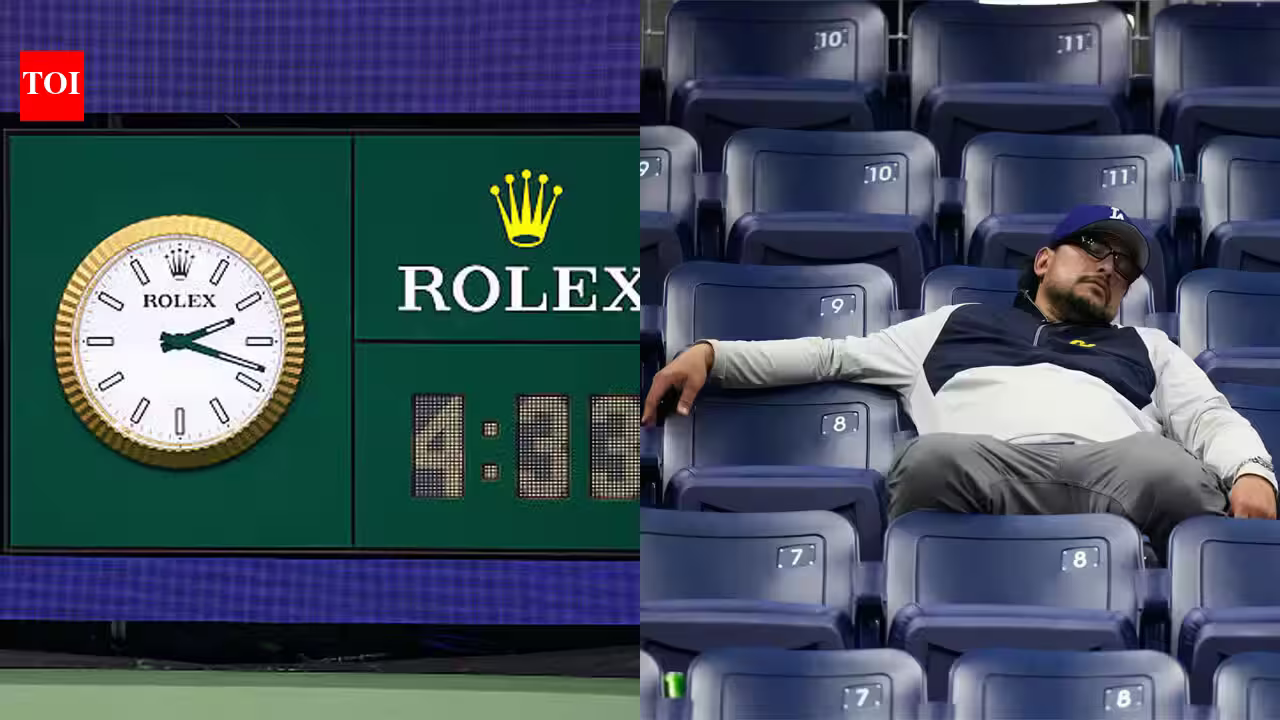
NEW YORK — The “City That Never Sleeps” is currently putting its ethos to the test at the USTA Billie Jean King National Tennis Center, and for the world’s elite tennis players, the experience has become anything but a dream. As the 2026 US Open progresses through its opening week, a troubling trend of post-2 a.m. finishes has ignited a firestorm of controversy, forcing legends of the game and active professionals alike to challenge the sustainability of the tournament’s signature late-night programming.
While the US Open has long cultivated a brand centered on electric, high-octane night sessions beneath the glow of the Arthur Ashe Stadium lights, the 2026 edition has pushed that tradition to a breaking point. With three of the first six night sessions concluding well into the early morning hours, the focus has shifted from the brilliance of the competition to the exhaustion of the competitors.
Legendary Voices Lead the Backlash
The criticism has been sharp and immediate, reaching the ears of the sport’s highest authorities. Martina Navratilova, a four-time US Open champion, took to social media to voice her disapproval as the clock ticked past 2 a.m. for the third time in less than a week. Her assessment was blunt: “This is not sustainable.”
Boris Becker, the 1989 champion, echoed the sentiment, expressing disbelief that modern professional athletes are still being asked to perform at an hour when most of the world is deep in sleep. “That’s simply too late to play tennis anymore,” Becker wrote on X, directly challenging the tournament’s scheduling philosophy. “Tell me another sport like that?”
The Physical and Mental Toll
The human cost of these scheduling decisions is perhaps best exemplified by the grueling journey of German top seed Alexander Zverev. Through the tournament’s opening rounds, Zverev found himself the subject of an historic, albeit exhausting, anomaly. After finishing matches at 1:55 a.m. and 2:15 a.m. respectively, he became the first top-seeded man in the Open era to begin a major with back-to-back five-set matches.
Following his late-night exit from the court, Zverev was visibly drained. “I think everybody’s tired,” he stated during a truncated post-match press conference. “Everybody wants to go to sleep.”
The physiological impact is immense. Beyond the match duration, players must contend with post-match media obligations, physical recovery, nutrition, and the inevitable adrenaline dump that makes immediate rest impossible. For a player finishing at 2 a.m., lights-out often does not happen until well after dawn, effectively sabotaging their preparation for the following round.
Scheduling Priorities Under Scrutiny
Third-ranked Jessica Pegula offered a pragmatic but critical view on the internal tug-of-war between television demands and player welfare. “I know they’re dealing with a lot of different aspects as far as broadcast and TV… but you have to wonder if it’s really the right thing for players to be finishing at 2 a.m.,” Pegula said.
The frustration is shared across the locker room. When Novak Djokovic’s four-hour, 36-minute marathon on opening night pushed the start of the Venus Williams-Sofia Kenin match to 12:13 a.m., it set an unfortunate record for the latest start time in tournament history. For Williams, the event was a poignant reminder of the sport’s disregard for its own rhythm. “It’s not ideal,” the icon noted. “I just don’t know any other sport where you have to start that late.”
A Question of Sustainability
The US Open stands in stark contrast to its Grand Slam peers. Wimbledon famously enforces an 11 p.m. curfew to protect the surrounding community and the athletes, while the French Open generally limits its night session to a single, feature match to avoid the congestion that leads to these “overflow” scenarios.
The data reveals the gravity of the situation: four of the 17 latest finishes in the history of the tournament have occurred within this year’s draw alone. While the tournament record of 2:50 a.m.—set during the 2022 quarterfinal between Carlos Alcaraz and Jannik Sinner—remains standing, the frequency of these late-night events is accelerating.
Top-ranked Aryna Sabalenka highlighted the cascading effect of these delays, noting that such schedules “really mess up” the routine required to compete at a championship level. As the tournament moves into its decisive second week, the pressure on organizers to reform their scheduling practices is mounting.
The US Open has built its identity on being the most vibrant, high-energy event on the tennis calendar. However, as the chorus of voices from legends and current stars grows louder, the tournament finds itself at a crossroads. The spectacle of the night session is undeniable, but if the sport’s biggest stars are being forced to compete in near-empty arenas during the dead of night, the spectacle may eventually come at the cost of the integrity of the competition itself. For the USTA, the message from the locker room is clear: the current path is not one that the players are willing to walk for much longer.
Disclaimer: This content is auto-generated and paraphrased.
Source: Read Original News