






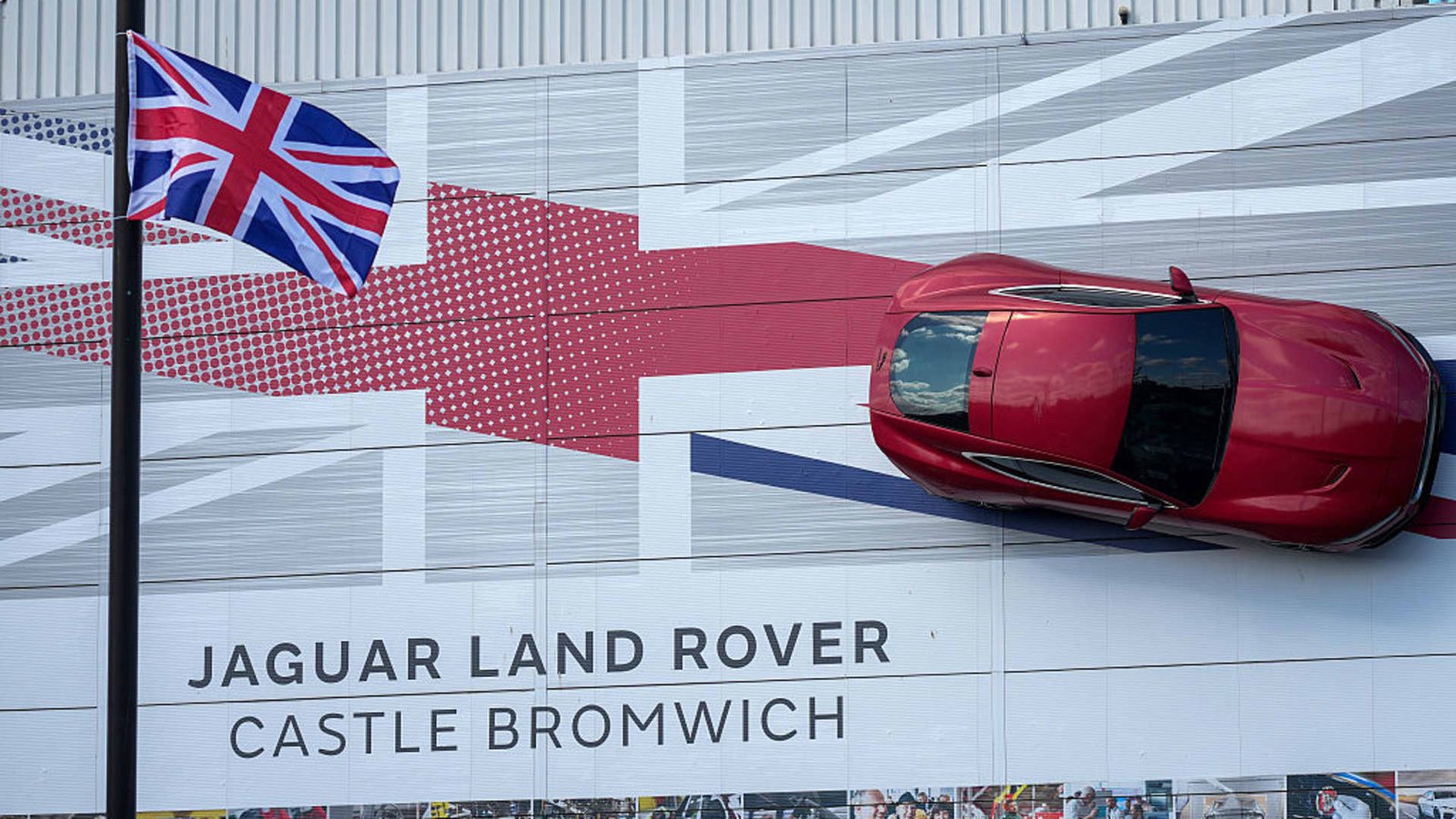
Jaguar Land Rover (JLR) has announced a significant restructuring plan that will see the luxury automaker offer voluntary redundancies to thousands of employees. As the British automotive giant grapples with a perfect storm of geopolitical trade tensions, cyber-security instability, and mounting pressure from low-cost international competitors, the move marks a pivotal moment for the UK’s industrial sector.
While the company has not confirmed the exact headcount, reports indicate that up to 4,000 positions could be eliminated over the next two years. JLR’s leadership is aiming for a drastic £1.7 billion ($2.3 billion) in cost savings, signaling a strategy to shrink its operational footprint and lower its break-even threshold to 300,000 vehicles.
## A Perfect Storm of Economic Pressures
The decision comes as JLR struggles to balance its high-end brand legacy with the modern realities of the global market. The company has faced a grueling year, plagued by a significant cyberattack and the impact of U.S. President Donald Trump’s protectionist trade tariffs, which disrupted shipments and squeezed profit margins.
Beyond these external shocks, the rise of affordable, high-tech Chinese electric vehicles has fundamentally altered the competitive landscape. JLR’s predicament is part of a broader, alarming trend across the European automotive industry. German powerhouse Volkswagen, for instance, recently unveiled plans to cut 50,000 jobs, highlighting that even the most established automotive titans are failing to fend off the twin pressures of aggressive tariff policies and fierce international rivalry.
## The Role of AI and Digital Transformation
As traditional manufacturers like JLR navigate these turbulent waters, the tech industry is simultaneously reshaping the sector. The modern car is increasingly defined by its software stack, from advanced driver-assistance systems (ADAS) to AI-driven battery management.
Google’s automotive ecosystem, particularly the integration of Android Automotive OS, has become a core component of the “digital cockpit” strategy for many premium manufacturers. By leaning into cloud-based AI, companies like JLR are attempting to optimize their supply chains and predictive maintenance cycles. However, these digital pivots require massive capital investment. The current job cuts reflect an urgent need to reallocate resources—shifting funds away from legacy administrative costs and toward the research and development of the software-defined vehicles that dominate the industry’s future.
## Navigating Political and Economic Uncertainty
The UK government, currently under the administration of Prime Minister Andy Burnham, faces a stern test in how it supports domestic manufacturing during this transition. Business and Trade Minister Jonathan Reynolds has officially ruled out a taxpayer-funded bailout, emphasizing instead that the state’s role is to provide a competitive environment for innovation. The government is currently prioritizing support for zero-emission vehicle production, offering billions in R&D funding and electric vehicle grants to stimulate consumer demand.
As JLR prepares to meet with trade union partners and government officials to finalize these redundancy terms, the situation remains precarious for thousands of families. The outcome of these discussions will not only define the future of one of Britain’s most iconic brands but will also serve as a barometer for the health of the broader UK manufacturing sector. In an era where AI-led efficiency is no longer an optional luxury but a survival requirement, JLR’s “resilience plan” is just one chapter in the massive, often painful, transformation of the global automotive world.
Disclaimer: This content is auto-generated for informational purposes only.
Source: Read Original News