









BCCI Maintains Global Supremacy: A Deep Dive into Cricket’s Financial Hierarchy
In the high-stakes world of international cricket, the Board of Control for Cricket in India (BCCI) has once again asserted its absolute financial dominance. Recent financial evaluations confirm that the Indian cricket board occupies an orbit of its own, leaving other major cricketing nations trailing significantly behind. With an estimated net worth of $2.2 billion (approximately ₹18,760 crore), the BCCI remains the undisputed heavyweight of global cricket administration.
The Gap Between the BCCI and Global Peers
To understand the scale of the BCCI’s financial footprint, one must look at the comparative data of the world’s leading cricket boards. While the Indian board sits at the pinnacle with its billion-dollar valuation, the next highest-ranked boards are separated by a massive chasm. Cricket Australia occupies the second spot with a net worth of $79 million, followed closely by the England and Wales Cricket Board (ECB) at $59 million.
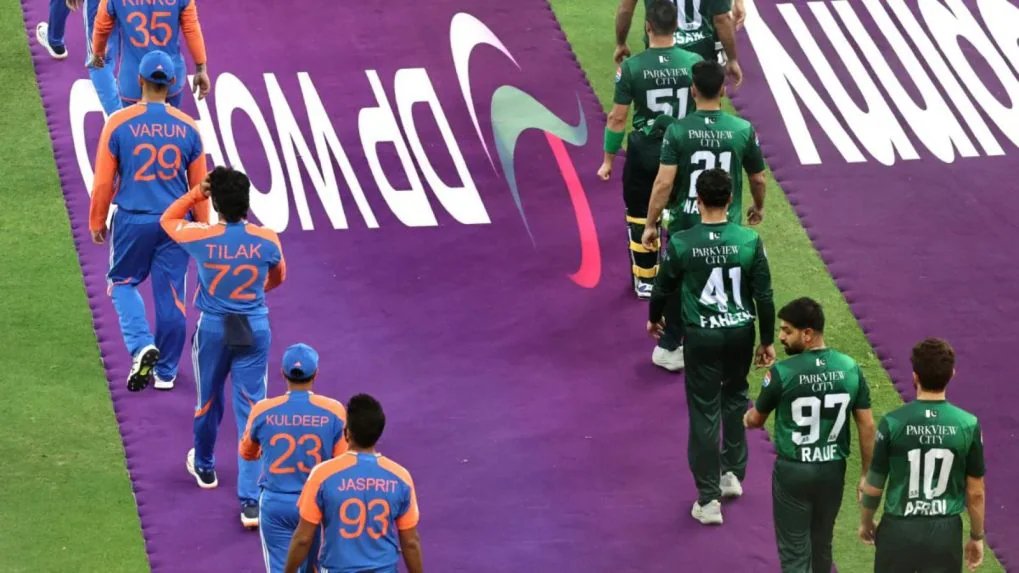
The Pakistan Cricket Board (PCB) currently ranks fourth globally, with a net worth of $55 million (roughly ₹469 crore). This figure highlights the sheer scale of the economic divide; the BCCI’s valuation is roughly 40 times that of its Pakistani counterpart. This disparity serves as a stark illustration of how the Indian cricket ecosystem has evolved into a global commercial juggernaut.
Engines of Growth: The IPL and Beyond
The astronomical valuation of the BCCI is not an overnight success but the result of decades of strategic commercialization. At the heart of this financial engine is the Indian Premier League (IPL). Since its inception, the tournament has transformed from a domestic T20 league into one of the most valuable sporting properties in the world. Astronomical media rights deals, coupled with high-value title sponsorships, have ensured a constant flow of capital.
Beyond the IPL, the BCCI benefits from an unparalleled cricket-loving demographic. The sheer size of India’s viewership ensures that broadcast agreements for bilateral series involving the Indian men’s and women’s teams remain highly lucrative. These commercial deals are further bolstered by deep-pocketed corporate partnerships, ensuring the board’s treasury remains well-replenished.
The Landscape of Global Cricket Finance
While the top tier of cricket is dominated by the BCCI, other nations are fighting to stabilize their own financial positions through similar models. The PCB, for instance, has relied heavily on the success of the Pakistan Super League (PSL) to bolster its revenue. Along with ICC grants, broadcast agreements, and sponsorships, the PSL has become a vital lifeline for sustaining cricket infrastructure in Pakistan.
The remaining entries in the top ten global rankings reveal a fragmented financial landscape. The Bangladesh Cricket Board sits at $51 million, followed by Cricket South Africa ($47 million), Zimbabwe Cricket ($38 million), Sri Lanka Cricket ($20 million), West Indies Cricket Board ($15 million), and New Zealand Cricket ($9 million).
These figures reflect a significant concentration of wealth at the top, a trend that continues to spark discussions regarding the equitable distribution of resources within the sport. However, as it stands, the BCCI’s ability to leverage its massive fan base and the commercial success of the IPL ensures that it remains the ultimate power broker in the cricketing world for the foreseeable future.
Disclaimer: This content is auto-generated and paraphrased.
Source: Read Original News