








The Structural Resilience of India’s Domestic Economy
The Indian economic landscape has demonstrated remarkable durability in the face of significant geopolitical turmoil. Navigating the pressures of the US-Iran conflict, which began in 2026, the Indian economy has maintained a growth rate of 7.8%, cementing its position as one of the fastest-growing major economies globally. This resilience is not accidental; it is the product of a deliberate shift toward a domestic consumption-led growth model, supported by strategic fiscal measures.
A primary pillar of this stability was the fiscal intervention that occurred leading up to the conflict. From April 2025, the implementation of tax-free income thresholds up to Rs 12 lakh increased the disposable income of the middle class, while major GST rate cuts in September 2025 rendered essential household goods more affordable. This dual-pronged fiscal approach insulated the common man from immediate price volatility, ensuring that private final consumption expenditure—the largest component of India’s GDP—remained robust. According to analysts, this domestic demand acts as a persistent cushion, preventing the sharp contraction often seen in import-dependent nations during global crises.
Strategic Energy Security and Diversification
For India, the most significant threat posed by the conflict in the Middle East was the potential for supply chain disruptions, particularly regarding crude oil, LPG, and LNG. Given that a substantial portion of these energy commodities transits through the Strait of Hormuz, the government faced an imminent supply risk. To mitigate this, India executed a rapid diversification of its energy procurement basket.
The government aggressively increased imports from Russia to record highs, while simultaneously securing supplies of LPG and LNG from the United States. This proactive supply management prevented physical shortages. To manage the price shocks—which saw global crude oil prices exceed $120 per barrel—the government reduced excise duties on petrol and diesel. While retail prices eventually rose, the impact was buffered by fiscal moderation. Furthermore, the invocation of the Essential Commodities Act allowed the state to prioritize domestic fuel supplies, ensuring that the industrial and household sectors remained operational despite global market tightening. By the middle of 2026, the strategic sourcing of crude from a wider array of international partners had successfully stabilized the domestic energy price environment, contributing to the limitation of inflationary pressures.
Bolstering Foreign Exchange Reserves
Amidst global instability, the stability of the rupee became a central focus for the Reserve Bank of India (RBI). The start of the conflict pressured the domestic currency and inflated the import bill. To counteract this, the government took steps to discourage non-essential imports, including raising customs duties on gold and silver. Simultaneously, the RBI launched a specialized mechanism to encourage non-resident Indians (NRIs) to maintain foreign-currency deposits.
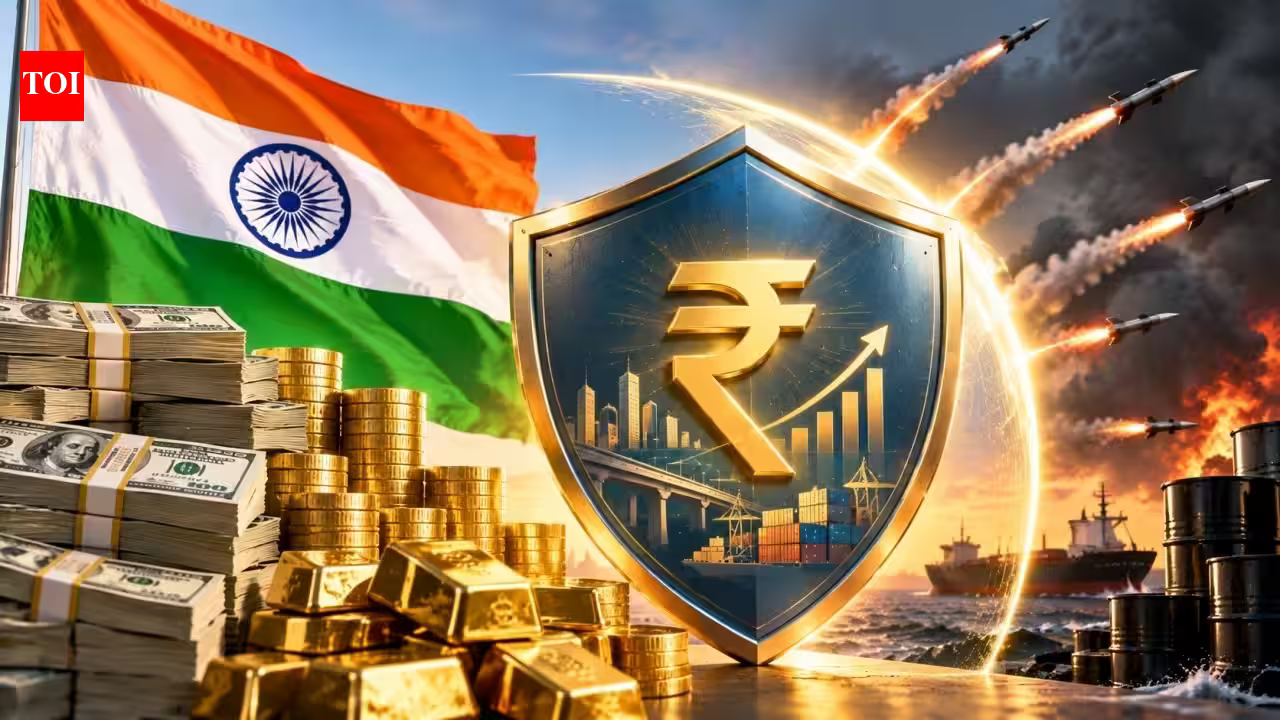
The RBI absorbed currency-hedging costs for banks, enabling them to offer highly competitive returns to NRIs. This move was exceptionally successful, yielding over $136 billion in deposits. By securing long-term foreign currency inflows rather than relying on volatile, short-term portfolio investments, the RBI successfully bolstered India’s forex reserves to a record $740.80 billion. This accumulation provided a crucial buffer, granting India approximately 11 months of import cover. This capital-account strategy effectively neutralized the risk of a disorderly currency devaluation and allowed the economy to weather the heightened cost of energy imports.
Inflation Management and Monetary Policy
Despite rising input costs and the potential for agricultural disruption due to El Niño, India has managed to keep retail inflation within the RBI’s target range of 2% to 6%. While wholesale inflation has shown a tendency toward higher levels, the pass-through of these costs to the end consumer has remained remarkably controlled.
The Monetary Policy Committee (MPC) has focused on supply-side management to counter food-price volatility. Governor Sanjay Malhotra’s recent statements underscore a confident, albeit cautious, outlook, noting that headline inflation has remained lower than many projections. By maintaining a focus on core inflation stability and ensuring adequate food grain stocks, the RBI has successfully prevented the generalization of price pressures. The decision to lower inflationary projections for the current fiscal year reflects a belief that domestic demand is not yet overheating and that supply-side interventions are effectively addressing the bottlenecks created by global logistical hurdles.
The Outlook for Sustainable Momentum
Looking ahead, the question remains whether this growth momentum is sustainable. While current indicators—such as robust GST collections and high industrial output—are positive, analysts warn of a “two-speed economy.” The current recovery appears to be led by urban, asset-linked sectors such as finance, real estate, and professional services, while rural consumption and mass-market demand show signs of sluggishness.
Furthermore, the external environment remains volatile. The potential for prolonged closures of critical shipping lanes and the uncertainty surrounding international trade policies from Washington necessitate continued vigilance. However, the structural transformation of the Indian economy provides a buffer against these external shocks. India’s emergence as a global player in pharmaceuticals, defense exports, and large-scale refining capacity indicates that the country is not merely surviving global headwinds but is actively participating in the global supply chain, making its exports increasingly difficult to displace.
The medium-term outlook remains positive. The continued expansion of the startup and MSME ecosystems, combined with a focus on long-term capital formation, suggests that the Indian economy is maturing. While the government and the RBI have successfully navigated the immediate crisis, the focus must now shift to broadening the base of this growth to ensure that rural and small-scale industries contribute as significantly to the GDP as the urban service sectors. As long as India continues to prioritize internal capacity creation and proactive supply-side management, the foundational trajectory of its economic growth is expected to remain stable, even in an era of geopolitical uncertainty.
Disclaimer: This content is auto-generated for informational purposes only.
Source: Read Original News