








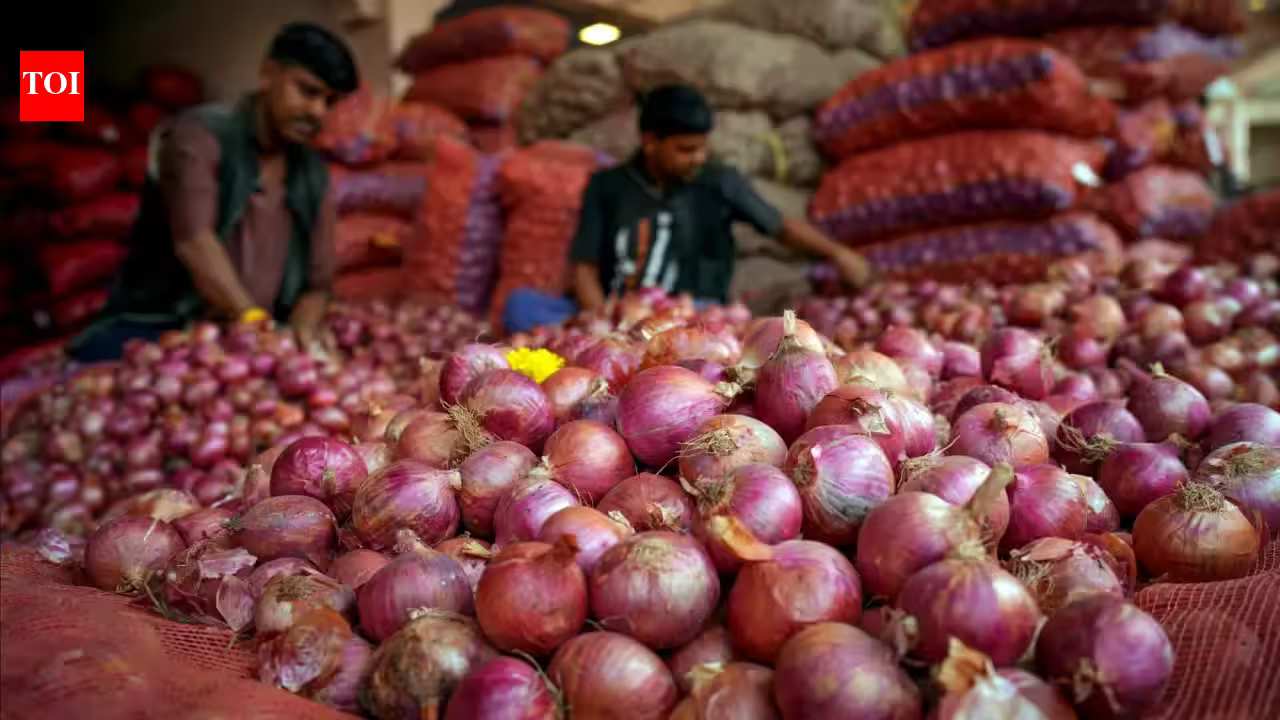
The Economics of Volatility in India’s Onion Market
The onion market in India serves as a barometer for agricultural logistics, supply chain efficiency, and the geopolitical sensitivity of food security. As a staple in the Indian diet, any significant fluctuation in onion prices exerts immediate pressure on the Consumer Price Index (CPI), making it a high-priority item for policymakers. The recent rise in retail prices to over Rs 50 per kg, despite the government’s proactive release of 1.21 lakh tonnes of buffer stock, underscores the structural complexities inherent in managing a perishable commodity with highly fragmented supply chains.
The current intervention, involving the sale of subsidised onions at Rs 35 per kg, highlights the limitations of state-led supply adjustments in a market driven by seasonal output, speculative storage, and complex interstate transport dynamics. While agencies like the National Cooperative Consumers’ Federation (NCCF) and Nafed are executing a logistical mandate to move produce from surplus regions to price-sensitive urban centers, the persistence of elevated retail prices suggests that demand far outstrips the current volume of distributed buffer stock.
Logistical Innovation and the Kanda Express
A critical component of the government’s strategy to mitigate the current price surge is the deployment of dedicated logistics. The introduction of the “Kanda Express,” a specialized railway rake, represents a shift toward more efficient, bulk-transport solutions for perishable goods. In a country where road transport for agricultural products is often beset by delays, poor cold-chain infrastructure, and high fuel costs, rail-based logistics offer a more stable and cost-effective mechanism for ensuring inter-regional parity in supply.
However, the efficacy of the Kanda Express is constrained by the speed of the “last-mile” delivery. Once the produce reaches major hubs like Delhi, Chennai, or Guwahati, it must be rapidly sorted, graded, and distributed to retail points. The involvement of the Central Warehousing Corporation (CWC) in the sorting and packing process is intended to reduce wastage and maintain quality. Despite these efforts, moving 4,000 tonnes over a 10-day period across 17 cities acts more as a psychological and market-stabilizing intervention than a total resolution of supply scarcity. The scale of the intervention—while significant—must be measured against the backdrop of India’s massive national demand, where daily consumption in urban centers creates constant pressure on the market.
The Intersection of Production Shocks and Speculation
The underlying cause of the current price escalation lies in the disruption of the rabi harvest cycle. Untimely rains during the harvesting phase damaged a portion of the stored stock, which was intended to serve as the bridge until the kharif crop arrived. This supply shock created a vacuum, allowing speculative pricing to gain momentum. In agricultural markets, price discovery is often influenced by the anticipation of future shortages; when traders and wholesalers perceive that the government buffer is insufficient or that the next harvest will be delayed, they tend to withhold supply, further tightening the market.
This phenomenon is exacerbated by the geographic concentration of onion cultivation. A significant portion of India’s onion supply originates in Maharashtra and a few other key states. When these regions experience weather-related volatility, the impact is felt nationwide within days. The government’s buffer stock is essentially a tool to prevent hoarding and provide a price ceiling in urban retail markets. By offering onions at Rs 35 per kg, the Centre forces private sellers to compete with a subsidized benchmark, theoretically preventing excessive markups. Nevertheless, the reality of market-based retail remains that transport costs, intermediary margins, and local demand dynamics often keep prices significantly higher than the government-mandated rate.
Institutional Roles and Retail Distribution Challenges
The distribution of buffer stocks relies heavily on the synergy between central agencies and state governments. NCCF has adopted a multi-platform approach, utilizing mobile vans, cooperative stores, and local administrative networks to ensure that the subsidized onions reach the common consumer. This model is essential because it bypasses several layers of the traditional wholesale supply chain, which usually adds substantial costs to the product.
However, the success of this strategy is contingent upon the level of cooperation from individual state governments. While several states have integrated their distribution networks with the NCCF, others remain under-represented, leading to significant price disparities across the country. As of early September, the variance between a retail price of Rs 40 per kg in Ranchi and Rs 63 per kg in Chennai illustrates the lack of a truly unified national market for perishables. Bridging this gap requires not only centralized procurement but also a robust, synchronized effort to standardize retail outlets across all states to ensure that the buffer reaches the intended beneficiary rather than being diverted into the black market by intermediaries.
Market Outlook and the Kharif Expectation
Looking ahead, the market outlook remains cautiously optimistic, predicated on the arrival of the new kharif crop. Agricultural economists and government officials anticipate that the supply pressure will abate by mid-October as the new harvest enters the mandis. In India, the transition between agricultural cycles is a high-risk period, and the government’s ability to manage the next four to six weeks is crucial to maintaining food inflation within manageable bounds.
The primary lesson from this cycle is the urgent need for a permanent improvement in post-harvest management. While the current reliance on buffer stocks and railway rakes is effective as an emergency response, sustainable price stability requires investment in localized cold storage at the farm gate. By reducing the rate of spoilage, farmers can store their produce for longer periods, preventing the necessity of distress sales during harvest and subsequent shortages during the off-season. Until infrastructure catches up with production volatility, the government will continue to function as a necessary, if costly, market balancer. For businesses involved in the retail and agricultural sectors, these price fluctuations underscore the importance of diversified sourcing and the agility to adapt to real-time supply chain disruptions. As the kharif crop arrives, the focus will shift from crisis management to the stabilization of agricultural logistics for the coming year.
Disclaimer: This content is auto-generated for informational purposes only.
Source: Read Original News