








India’s Mega Rail Milestone: Dedicated Freight Corridor to Become Fully Operational
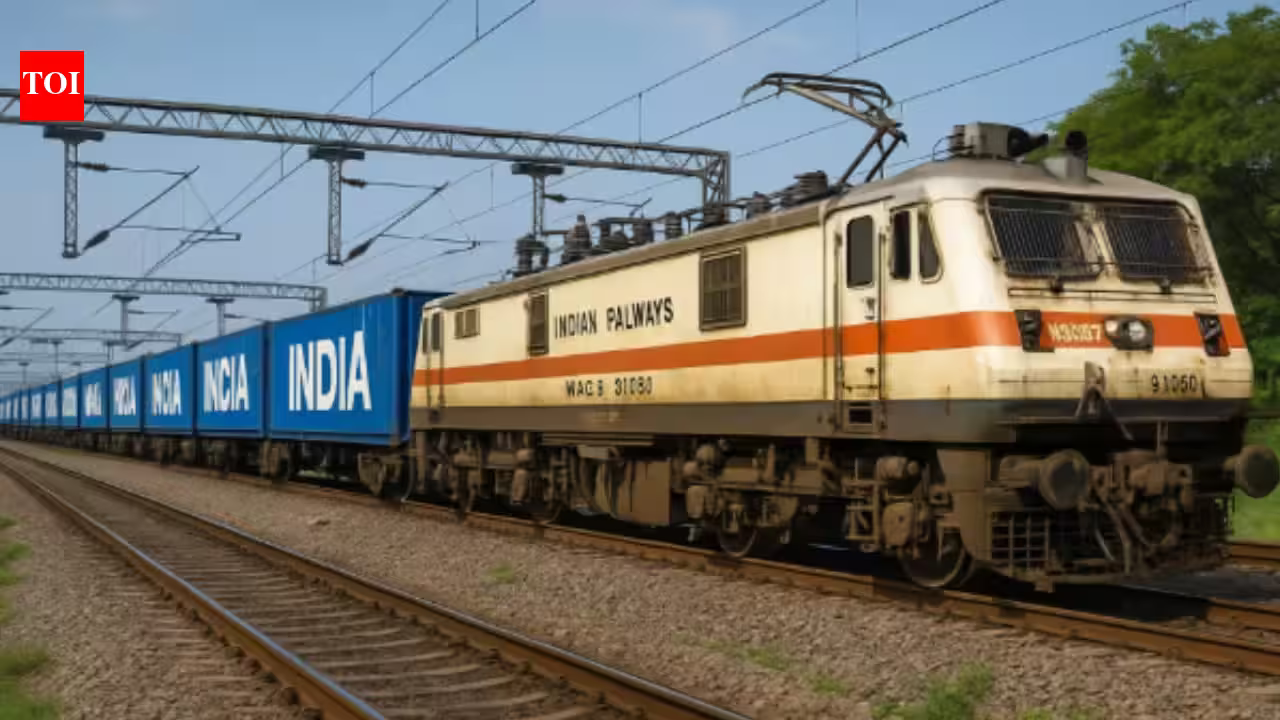
NEW DELHI: Nearly two decades after the ambitious Dedicated Freight Corridor (DFC) project was first sanctioned, India is set to achieve a historic milestone in its logistics and infrastructure journey. Today, Prime Minister Narendra Modi will inaugurate the final three segments of the Western Dedicated Freight Corridor (WDFC), marking the full operationalization of the country’s dedicated freight rail backbone.
The inauguration of these final stretches—spanning 326 route kilometers—completes a vital industrial artery that connects the Jawaharlal Nehru Port (JNPT) in Mumbai to Dadri in Uttar Pradesh. By linking these two critical points, the project creates a seamless corridor that intersects with the Eastern Dedicated Freight Corridor (EDFC), effectively integrating the country’s eastern, northern, and western industrial hubs.
A Significant Infrastructure Boost
The government has invested over Rs 20,700 crore into these final three sections: New Sanand-New Makarpura, New Umbergaon-New Saphale, and New Saphale-New JNPT. With their completion, the total operational length of the combined Western and Eastern corridors will reach 2,843 kilometers.
The operationalization of the WDFC is expected to be a game-changer for India’s export-import (EXIM) trade. By providing direct, high-speed rail connectivity to the JNPT port, the project will expedite the movement of goods, reduce dependency on road logistics, and significantly lower the cost of transportation. Furthermore, the segregation of freight traffic from passenger lines is slated to decongest the overburdened Mumbai railway network, allowing for smoother transit for commuters and faster logistics for industries.
Overcoming Two Decades of Hurdles
The DFC project has been a long-gestating vision for Indian Railways, frequently hampered by land acquisition bottlenecks and logistical challenges. Railway Minister Ashwini Vaishnaw highlighted the contrast between the project’s stagnation and its recent acceleration, noting that prior to 2014, virtually no physical progress had been achieved. Since then, the current administration has focused on resolving structural and site-specific hurdles to bring the massive infrastructure endeavor to fruition.
On the eastern flank, the EDFC is already functional from Sonnagar in West Bengal to Ludhiana in Punjab. While the original plans envisioned the corridor extending all the way to Dankuni, the final stretch is currently being handled through separate railway multi-tracking projects.
Transforming Rail Logistics
The impact of the DFC is already evident in the statistics released by the Ministry of Railways. As of August, the existing operational segments of the corridors had already facilitated approximately 5.2 lakh freight train trips. On average, the network supports 435 trains daily, demonstrating a significant shift in how goods are moved across the Indian heartland.
With 658 billion gross tonne kilometers (GTKM) already recorded, the corridor is proving its efficacy as a primary engine for the nation’s economy. As the final segments open, the DFC stands as a testament to India’s commitment to building world-class infrastructure, signaling a new era of efficiency and connectivity for the Indian logistics sector.
Disclaimer: This content is auto-generated for informational purposes only.
Source: Read Original News