








NAIROBI – The Kenyan government has issued a temporary amnesty for undocumented East African nationals, a strategic pivot following a wave of panic that saw hundreds of Burundian migrants flock to their embassy in Nairobi this week. The move comes in response to rising anxieties sparked by President William Ruto’s recent directive to shut down small-scale businesses operated by foreigners.
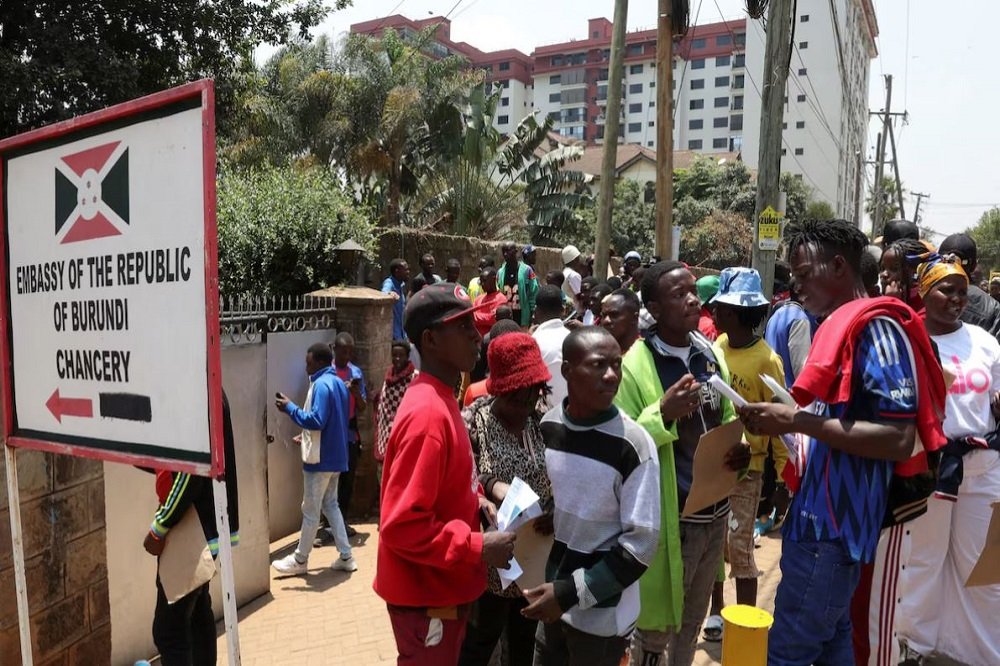
The crisis began last week when President Ruto, responding to intense pressure from local traders protesting recent tax reforms, ordered authorities to close all foreign-owned small-scale enterprises effective Monday. While the trade ministry clarified that the directive specifically targeted individuals lacking valid work permits, the rhetoric ignited immediate fear among the foreign community. Reports of neighbors threatening migrants led to scenes of chaos outside the Burundian embassy on Monday, where desperate individuals were seen clutching suitcases, attempting to secure travel documents to flee the country.
However, as Monday passed without the anticipated state-led crackdown, the administration signaled a cooling of tensions. A government spokesperson issued a formal statement emphasizing that Kenya maintains “absolute zero tolerance toward any form of harassment, intimidation, or xenophobia.”
To address the growing volatility, the government has launched an administrative regularization process. Undocumented nationals, particularly those from Burundi, are being urged to formally register at their respective embassies.
“For the duration of this designated registration period, all individuals undergoing registration will be presumed legally present in the Republic of Kenya,” the spokesperson stated. “This window is designed to bring our brothers and sisters out of the shadows, ensuring they can access health, banking, and legal protections without fear.”
The UN refugee agency estimates that approximately 16,000 Burundian refugees and asylum seekers currently reside in Kenya, many of whom sustain themselves through informal trade, such as selling coffee and used clothing. For many of these individuals, the sudden ultimatum felt like a forced eviction.
“I have lived here for three years without even an ID, and I was planning to go back next year,” said 18-year-old Munezero Farnke, who was among the crowds waiting outside the embassy. “I am not going home by choice. I have been forced to go.”
The government’s shift in tone has done little to silence critics of the administration. Observers and political activists have accused President Ruto of scapegoating foreign nationals to deflect public anger over Kenya’s deteriorating economic climate. With elections approaching next year, some analysts suggest that the anti-foreigner rhetoric is a tactical distraction from domestic policy failures.
“When a state runs out of answers for a collapsing economy, it invariably goes looking for an enemy,” activist Hanifa Adan recently noted in the Daily Nation.
For now, the amnesty offers a temporary reprieve, but the future for thousands of small-scale migrant traders remains precarious as they navigate the complexities of Kenya’s registration process and an increasingly polarized political landscape.
Disclaimer: This content is auto-generated for informational purposes only.
Source: Read Original News