








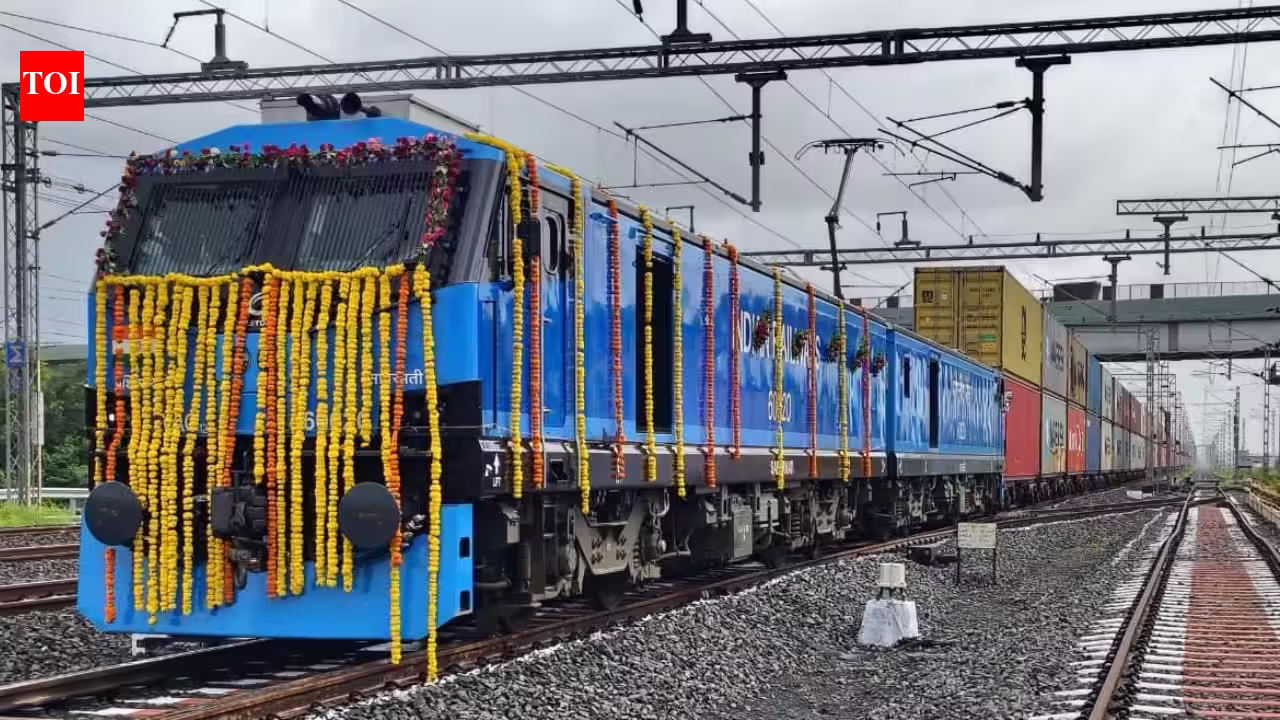
The completion of the Dedicated Freight Corridor (DFC) network marks a watershed moment for the Indian logistics landscape. With the recent inauguration of three critical Western Dedicated Freight Corridor (WDFC) sections—New Sanand to New Makarpura, New Umbergaon to New Saphale, and New Saphale to New JNPT—India has successfully finalized an integrated rail freight backbone. Spanning a combined total of 2,843 kilometers, this monumental infrastructure project, executed at an investment exceeding Rs 20,700 crore for the latest stretches alone, is poised to recalibrate the nation’s supply chain efficiency, lower transit times, and significantly enhance the competitiveness of Indian exports.
Strategic Architecture of the Freight Corridors
The DFC project consists of two primary arteries: the Eastern Dedicated Freight Corridor (EDFC), stretching 1,337 kilometers from Ludhiana to Sonnagar, and the Western Dedicated Freight Corridor (WDFC), covering 1,506 kilometers from Dadri to the Jawaharlal Nehru Port Terminal (JNPT). By segregating freight traffic from passenger trains, the Railways have achieved a dual objective. First, it addresses the long-standing issue of line saturation on the existing network. Second, it allows for the introduction of high-capacity logistics solutions such as Double Stack Container (DSC) trains and heavy-haul freight services.
The completion of the stretch connecting to the Jawaharlal Nehru Port Authority is particularly significant. As India’s largest container port, JNPA serves as the primary gateway for EXIM (Export-Import) cargo. Providing a direct, congestion-free rail link to this hub ensures that cargo transit from the northern industrial hinterland to the western maritime gateways is faster and more reliable. This reduction in the “logistics drag”—the time and cost associated with inefficient transport—is a critical component of the national strategy to drive industrial growth.
Operational Efficiency and Systemic Impact
The operational data underscores the success of this transition. The network currently handles approximately 443 trains daily, a figure that is projected to grow as the systemic benefits of the corridors permeate the industry. The switch to dedicated lines has already translated into higher average speeds, more predictable turnaround times, and increased reliability. For the Indian Railways, the DFCs represent a transformation from a conventional, multipurpose network into a specialized logistics provider capable of meeting the demands of a globalized economy.
The shift of heavy freight traffic to these corridors has also liberated substantial capacity on the legacy passenger railway network. By migrating massive volumes of coal, steel, cement, and containerized goods to the EDFC and WDFC, the Railways can now operate a higher frequency of passenger trains, including high-speed services, without the constraints previously imposed by freight movement. This optimization is a key pillar in the government’s vision to modernize Indian public transport while simultaneously bolstering industrial supply chains.
Growth Trajectory of Indian Rail Freight
The trajectory of freight loading over the past decade reflects a robust upward trend. From 1,098 million tonnes (MT) in 2014-15, the annual freight loading climbed to 1,670 MT in 2025-26. This consistent growth has propelled Indian Railways to become the second-largest freight-carrying system globally. The DFCs are not merely additional tracks; they are technology-integrated assets that enable higher axle loads and double-stack operations, which fundamentally change the economics of rail transportation.
The economic justification for these corridors is clear when analyzed through the lens of cost-efficiency. In a nation where logistics costs have historically been high due to over-reliance on road transport, rail provides a sustainable and more affordable alternative for long-haul movement. With the backbone of the current DFC network now fully functional, the focus is shifting toward future-proofing the system. The announcement of a new corridor linking Dankuni in the East to Surat in the West signals that the government views rail-based freight as the primary engine for future industrial development.
Multi-Pronged Strategy for Logistics Modernization
Beyond the construction of tracks, the Ministry of Railways has adopted a holistic approach to strengthen the logistics ecosystem. The strategy emphasizes “first-and-last-mile” connectivity, acknowledging that the rail network is only as efficient as the terminals that feed it. The Gati Shakti Multi-Modal Cargo Terminal (GCT) policy is at the forefront of this initiative, encouraging private investment in terminals that reduce handling time and labor costs.
Complementing this is a proactive policy toward wagon design and investment. Recognizing the diverse needs of the commodity market, the Railways have opened the door for private players to invest in specialized rolling stock. Wagons tailored for cement, petroleum products, steel, and industrial fly-ash allow for dedicated supply chains that minimize commodity degradation and optimize loading-unloading cycles. This shift away from a “one-size-fits-all” approach to a specialized, customer-centric model is reflective of a more market-driven administration within the railway sector.
Innovating Through Digital and Parcel Solutions
The integration of digital platforms is another critical layer in the modernization effort. The Joint Parcel Product-Rapid Cargo Service (JPP-RCS) scheme serves as a prime example of the Railways’ effort to reclaim market share in the parcel and courier segment. By allowing for online booking through aggregators and leveraging the reach of organizations like CONCOR and India Post, the Railways are digitizing the logistics experience.
The implementation of the Virtual Aggregation Platform (VAP) is particularly noteworthy, as it simplifies the process for smaller shippers to utilize rail infrastructure. By offering door-to-door parcel services on key sectors like Delhi-Kolkata and Mumbai-Kolkata, the Railways are increasingly acting as a logistics partner rather than just a transporter. These initiatives suggest that the success of the physical DFC infrastructure is being supported by a robust digital architecture, ensuring that the capacity created by the multi-billion rupee investment is fully utilized.
In conclusion, the completion of the Dedicated Freight Corridor network is a landmark achievement that changes the fundamental economic calculus of Indian logistics. By combining heavy infrastructure investment with terminal modernization, specialized rolling stock, and digital service integration, India is building a resilient, high-speed, and cost-effective freight network. As the country moves toward a $5 trillion economy, these corridors will act as the vital arteries that carry the lifeblood of Indian industrialization, ensuring that goods move seamlessly from the hinterlands to global markets.
Disclaimer: This content is auto-generated for informational purposes only.
Source: Read Original News