







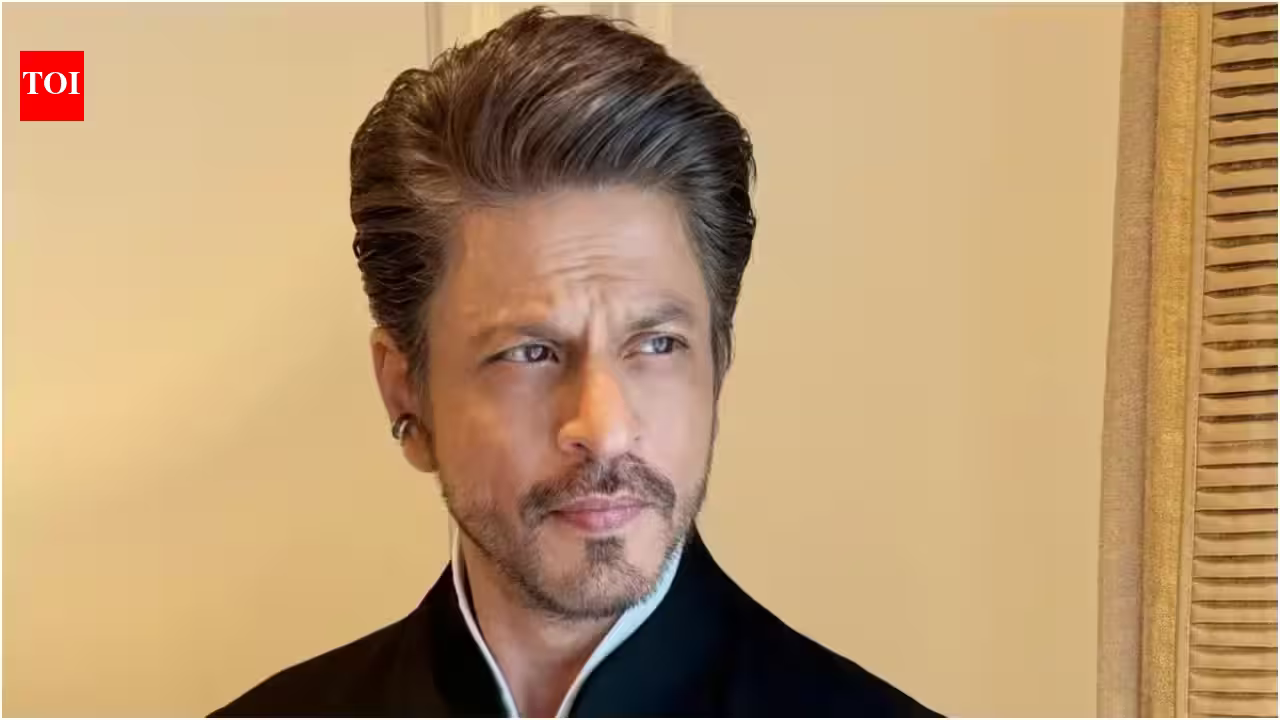
The news that Shah Rukh Khan once politely but firmly declined a lead role in Tigmanshu Dhulia’s upcoming gritty drama Ghamasaan has sent ripples of curiosity through Bollywood corridors. For a director known for the raw, unvarnished storytelling of Haasil and Paan Singh Tomar, the prospect of casting the King of Romance in a grounded, heartland-focused project felt like a masterstroke. However, as the industry often discovers, the path from script to screen is rarely a straight line.
In a candid revelation that offers a fascinating peek into how star power and genre preferences intersect, Dhulia shared that he originally envisioned the superstar as the lead—a role that eventually went to the immensely talented Pratik Gandhi. The reasoning behind the rejection was not a slight against the script, but rather a reflection of the brand identity that has defined Shah Rukh Khan’s career for over three decades.
The King and the “Realistic” Divide
The history between Dhulia and Khan is deep-rooted, stretching back to their collaborative days on the sets of Mani Ratnam’s Dil Se. They reunited more recently in front of the camera in Anand L. Rai’s Zero, where Dhulia played Khan’s father. Given this rapport, it is no surprise that Dhulia felt comfortable approaching the star with a project as unconventional as Ghamasaan.
“He heard the script, and he is Shah Rukh Khan—his heart is like a football field,” Dhulia noted during a recent interaction with Bollywood Hungama. The response he received was quintessentially honest: “Yaar Tishu, mein is tarah ki realistic pictures nahi karta hoon (I don’t do realistic films like these).”
It is a comment that speaks volumes about the “SRK phenomenon.” For the better part of his career, Khan has thrived in the world of the aspirational, the larger-than-life, and the emotionally expansive. While he has dipped his toes into darker or more grounded waters—most notably in Chak De! India or Swades—his refusal of a film like Ghamasaan highlights a clear demarcation. He knows that his audience, and perhaps his own sensibilities, are tethered to the grandeur that only he can provide.
Arshad Warsi’s Take on the Superstar Aura
Interestingly, the decision to walk away from Ghamasaan has found an unlikely champion in the film’s own co-star, Arshad Warsi. Warsi, a master of both comedic timing and nuanced performance, doesn’t just understand the rejection; he supports it.
“I get it. I also want to see him like a Tom Cruise. That’s all. That poor guy, if he does anything realistic then I will have a problem,” Warsi joked. His sentiment reflects a widespread consensus within the industry and among the masses: there is a peculiar hunger for the spectacle that Khan brings to the screen. To see him in a “realistic” setting, devoid of the high-octane charisma he is famous for, might feel like a disservice to the very magic that sustains his stardom. It’s an interesting paradox where a legend is simultaneously expected to challenge himself with reality and remain trapped in the golden cage of superstardom.
Challenging the Current Cinematic Landscape
Beyond the casting trivia, Dhulia’s recent press rounds have sparked a broader conversation about the state of contemporary Hindi cinema. The filmmaker, never one to shy away from critique, has been vocal about the decline of substance in favor of spectacle. His recent comments regarding films like Dhurandhar—where he questioned the narrative logic of hyper-nationalist, action-heavy tropes—highlight a frustration with the industry’s current direction.
“If someone asks you about the story of Dhurandhar, you can’t tell it. There is a guy who goes to Pakistan aur vaha tabahi macha deta hai. Is this a story?” Dhulia asked. It is a biting critique of a trend where the “vibe” of a movie has replaced the architecture of a good story. For a filmmaker like Dhulia, who has built his legacy on the dusty, complicated, and deeply human tales of the Hindi heartland, the shift towards these one-note narratives is a worrying trend that he feels is stifling creative risk-taking.
A New Chapter with ‘Ghamasaan’
While the “what if” of a Shah Rukh Khan-led Ghamasaan remains a tantalizing footnote, the film itself seems poised to be a visceral experience. Set in the rugged terrains of the heartland, the story is described as a complex cat-and-mouse drama that delves into the intricacies of male friendships, the weight of the law, and the unspoken tension—both psychological and homoerotic—that brews between men in confined, high-pressure environments.
By casting Pratik Gandhi and Arshad Warsi, Dhulia has pivoted to a dynamic that favors grit over glamour. Pratik Gandhi, who achieved national acclaim for his portrayal of Harshad Mehta, brings a grounded intensity that fits perfectly with the aesthetic Dhulia is known for. The chemistry between him and Warsi, playing characters on opposing sides of the legal fence, promises a narrative that relies on performance rather than pyrotechnics.
As we look forward to the ZEE5 premiere on September 11, Ghamasaan stands as a testament to the fact that while some stars might shy away from the “realistic” path, the films themselves remain a vital, necessary mirror to our society. Shah Rukh Khan may be our Tom Cruise, but Tigmanshu Dhulia remains our gritty cartographer of the Indian reality. Both have their place in the industry, and perhaps, by going their separate ways on this project, both have maintained the integrity of their own unique crafts.
As the release date approaches, the curiosity isn’t just about whether the film will succeed, but whether it will start a conversation that goes beyond the casting rumors—a conversation about why we love our stars to be larger than life, and why we need our cinema to keep its feet firmly on the ground.
Disclaimer: This content is auto-generated for informational purposes only.
Source: Read Original News