







The audio technology landscape is shifting as Sonos officially rolls out its “Sonos 27” software platform. This update represents a significant architectural pivot for the company, aligning its naming conventions with modern industry standards while introducing long-requested functionality. Designed to work across the ecosystem of existing Sonos S2 products, the update balances hardware utility with sophisticated software-driven intelligence.
Redefining Hardware Utility with Portable Surrounds
One of the most practical additions in the Sonos 27 update is the introduction of Portable Surrounds. This feature addresses a common pain point for users who want a home theater experience without the commitment of a permanent, wired speaker installation. By allowing two identical portable speakers—such as the Move 2 or compatible legacy hardware—to function as rear surround channels when paired with a Sonos soundbar, the company is effectively increasing the return on investment for its portable product line.
The system is designed for fluidity; once the media session concludes, these speakers can be unlinked from the home theater configuration and returned to their independent status. This capability provides a level of modularity that was previously unavailable, allowing users to leverage their existing equipment for different purposes depending on the time of day or the specific media being consumed.
Streamlined App Navigation and User Control
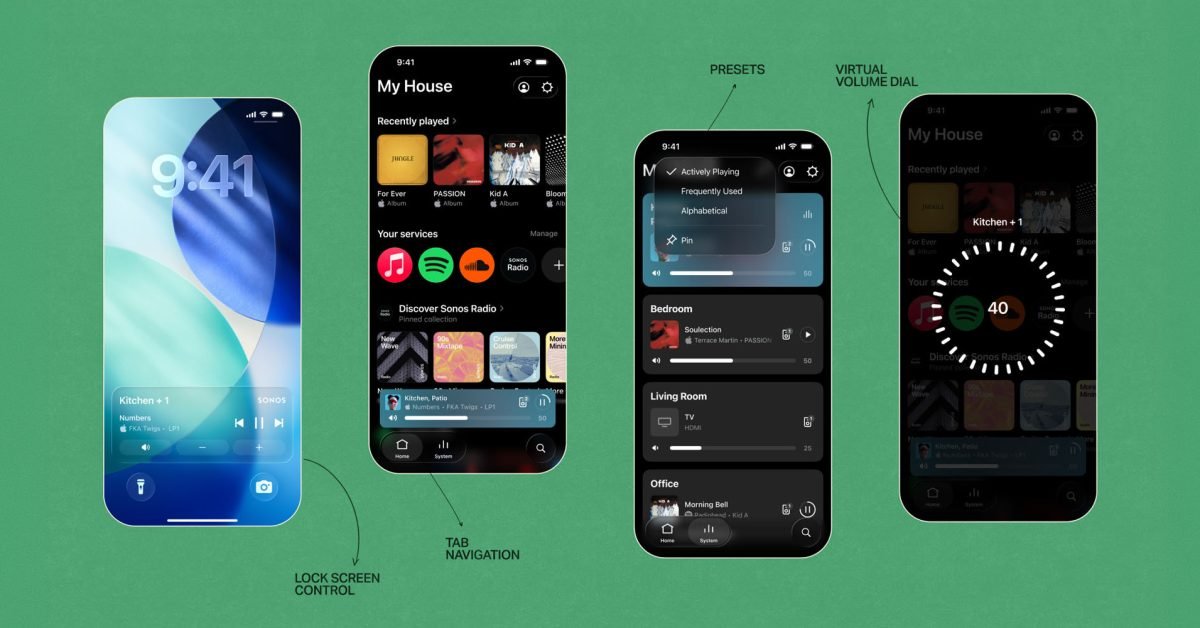
Sonos has overhauled its application interface to improve usability. The new navigation structure prioritizes speed and efficiency, moving away from complex sub-menus in favor of a flatter hierarchy. Users can now employ swipe gestures to move between playback controls and room management, reducing the number of taps required to execute common tasks.
A key highlight of this redesign is the introduction of “pinned rooms.” By allowing users to anchor their most frequently accessed zones at the top of the interface, the app ensures that volume control and source switching are always within reach. This adjustment reflects a commitment to the foundational user experience, focusing on reducing latency in the human-machine interface.
Direct Device Linking and AI Integration
A major leap in the Sonos 27 suite is the introduction of Headphone Linking, currently in early access. For owners of the Ace Ultra headphones, this feature allows for the direct transfer of audio between the headphones and nearby Sonos speakers. Crucially, this process functions without a smartphone intermediary, simplifying the transition from personal listening to room-filling sound. By utilizing local network protocols to handle this “push and pull” mechanism, Sonos has removed the technical friction that often accompanies multi-device environments.
Furthermore, the integration of advanced language models under the “Sonos 27mcp” initiative marks a departure from proprietary, singular assistant ecosystems. Users can now interface their systems with external platforms including ChatGPT and Claude. This expansion provides a neutral ground for AI interaction, allowing the audio system to act as a bridge between the user and various intelligence models rather than forcing a reliance on a single, platform-locked provider.
Future-Proofing Through Custom Agents
Looking toward the remainder of the year and into 2027, the Sonos roadmap includes the introduction of specialized voice assistants and custom agents. The upcoming Sonos 27voice is designed to focus specifically on music curation and playback management, reinforcing the company’s commitment to prioritizing audio-centric tasks over general-purpose computing.
Perhaps more ambitious is the projected arrival of “Sonos Custom Agents” in 2027. This framework will allow individuals to build, define, and deploy personalized agents within their home network. Each agent can be configured with specific personas, voices, and internal models, transforming the speaker system into a highly personalized interface. This development moves beyond simple voice commands, suggesting a future where the home audio system acts as a personalized assistant tailored to the unique habits and preferences of the household.
Architectural Impact and Ecosystem Longevity
The transition to the Sonos 27 platform serves a dual purpose. It provides immediate functional upgrades for the current user base while establishing a scalable framework for future hardware iterations. By decoupling the intelligent control layer—the AI assistants and agents—from the playback hardware, Sonos is positioning its audio equipment as a persistent platform that can evolve through software updates.
As the company moves forward, the success of these features will depend on the stability of the wireless handshakes and the latency of the AI responses. For now, the combination of hardware modularity and open-platform AI integration positions Sonos as a central hub in the modern smart home. Whether through the temporary repurposing of portable speakers or the customizability of future AI agents, the Sonos 27 update demonstrates an evolution toward a more responsive and user-defined listening environment.
Disclaimer: This content is auto-generated for informational purposes only.
Source: Read Original News