









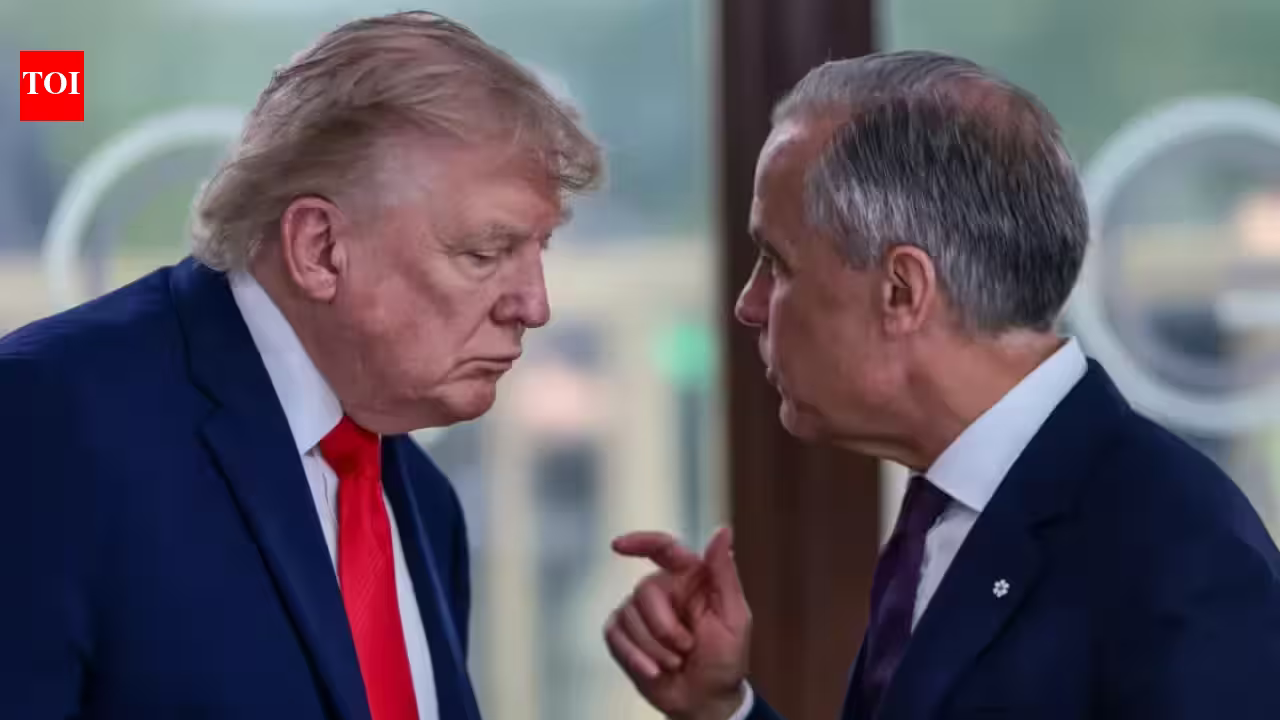
The current escalation in trade tensions between the United States and Canada represents a significant shift in North American economic diplomacy. What was once considered an unbreakable alliance grounded in geographical proximity and integrated supply chains has entered a period of volatility. As Washington imposes fresh restrictions on Canadian dairy, alcohol, and automotive components, and Ottawa responds with retaliatory tariffs targeting $20 billion worth of American goods, both nations are navigating a profound realignment of their economic priorities. This development carries global implications, particularly for nations looking to hedge against concentrated trade dependency.
The Mechanics of a North American Trade Schism
The breakdown in trade negotiations has triggered a rapid cycle of protectionist measures. The US administration’s decision to limit Canadian access to large-scale government contracts serves as a strategic move to enforce “reciprocity,” effectively weaponizing procurement policy to pressure Ottawa. Conversely, Canada’s retaliation—targeting sectors such as steel, aluminum, and high-value consumer goods—is calibrated to inflict economic pressure on specific American industrial heartlands.
From an analytical standpoint, this is not merely a dispute over specific commodity prices but a contest over regulatory sovereignty. The US has signaled a desire to reshape the terms of trade to favor domestic dependency, while the Canadian government views these demands as an existential threat to its autonomous policy-making capacity. By moving to block Canadian products from government tenders, the US is attempting to leverage its massive purchasing power, a tactic that forces Canadian firms to reconsider their reliance on the American market.
Strategic Diversification and the Post-US Economic Outlook
A central theme in this conflict is Canada’s shift toward a “less-is-more” approach regarding its reliance on the US economy. Prime Minister Mark Carney has framed this period of turbulence as a catalyst for diversification. With over 70 percent of Canada’s exports currently destined for the US, the structural vulnerability of the Canadian economy has been exposed. The government’s stated intent to double trade with non-US partners over the next decade is a clear signal that the era of unquestioned economic integration is closing.
This strategy includes exploring deeper institutional ties with the European Union. While full integration remains unlikely, the potential for expanded treaty frameworks and sectoral cooperation suggests that Canada is aggressively seeking to insulate its economy from US political shifts. For global observers, this pivot is instructive; it demonstrates that even highly developed, deeply integrated economies can—and will—seek alternatives when bilateral partnerships become conduits for external pressure.
Indian Business Context and Global Market Repercussions
For India, the US-Canada trade standoff presents a complex set of indirect pressures and possibilities. India has historically navigated a careful path in its trade relations with North America, balancing significant defense and technology partnerships with the US against a growing economic rapport with Canada.
Indian exporters, particularly in the steel, aluminum, and pharmaceutical sectors, should monitor these developments closely. As North American supply chains face disruption, there may be temporary windows for Indian manufacturers to fill demand gaps in the Canadian market. However, a broader risk exists: if the global trade environment continues to fragment into regional, protected blocs, the cost of raw materials and the complexity of global compliance will rise for emerging markets like India. Furthermore, as Canada intensifies its search for trade partners outside the US orbit, India may find an opening to accelerate negotiations for a comprehensive economic partnership agreement, potentially securing long-term access to North American markets that were previously shielded by the US-Canada dominance.
The Intersection of Nationalism and Economic Policy
The current impasse is as much about national identity as it is about balance sheets. The political discourse in both countries has turned inward. In Canada, public sentiment has coalesced around a narrative of resistance, evidenced by the high approval ratings for the current administration’s firm stance. Symbols of defiance, such as the rejection of the “51st state” rhetoric, have galvanized public support, making it politically difficult for leaders on either side to return to the negotiating table without appearing to concede defeat.
This polarization makes a quick resolution unlikely. When trade policy becomes a proxy for national sovereignty, economic logic often takes a backseat to political posturing. The imposition of boycotts and the introduction of regional trade barriers demonstrate that the damage to the bilateral relationship may be moving beyond the professional realm into the cultural and social spheres, which are notoriously difficult to repair once trust is eroded.
Future Trajectories: Assessing the Path to Stability
As the September 29 deadline for new US restrictions approaches, the global market remains in a state of uncertainty. While representatives from both sides have held “constructive conversations,” the lack of a clear framework for de-escalation suggests that the current instability could persist for the medium term.
For international business stakeholders, the takeaway is clear: the era of predictable North American trade policy has ended. Companies that have organized their supply chains around the assumption of duty-free, friction-less movement between the US and Canada must now stress-test their models for higher tariffs and potential border delays. The move toward “onshoring” and “friend-shoring” is being tested by this dispute, as Canada’s efforts to build domestic capacity signify that the global trend toward trade protectionism is not limited to any single region.
Ultimately, the US-Canada dispute will likely be remembered as a turning point where one of the world’s most stable trading relationships began a long-term transition toward greater separation. Whether this results in a more resilient, diversified Canadian economy or a prolonged period of economic stagnation remains to be seen. For observers in India and other emerging economies, the conflict serves as a stark reminder that in an era of shifting alliances, economic autonomy is the ultimate hedge against geopolitical volatility. Investors and policymakers should prepare for a future where trade agreements are not permanent, but rather subject to the shifting tides of national political agendas.
Disclaimer: This content is auto-generated for informational purposes only.
Source: Read Original News