








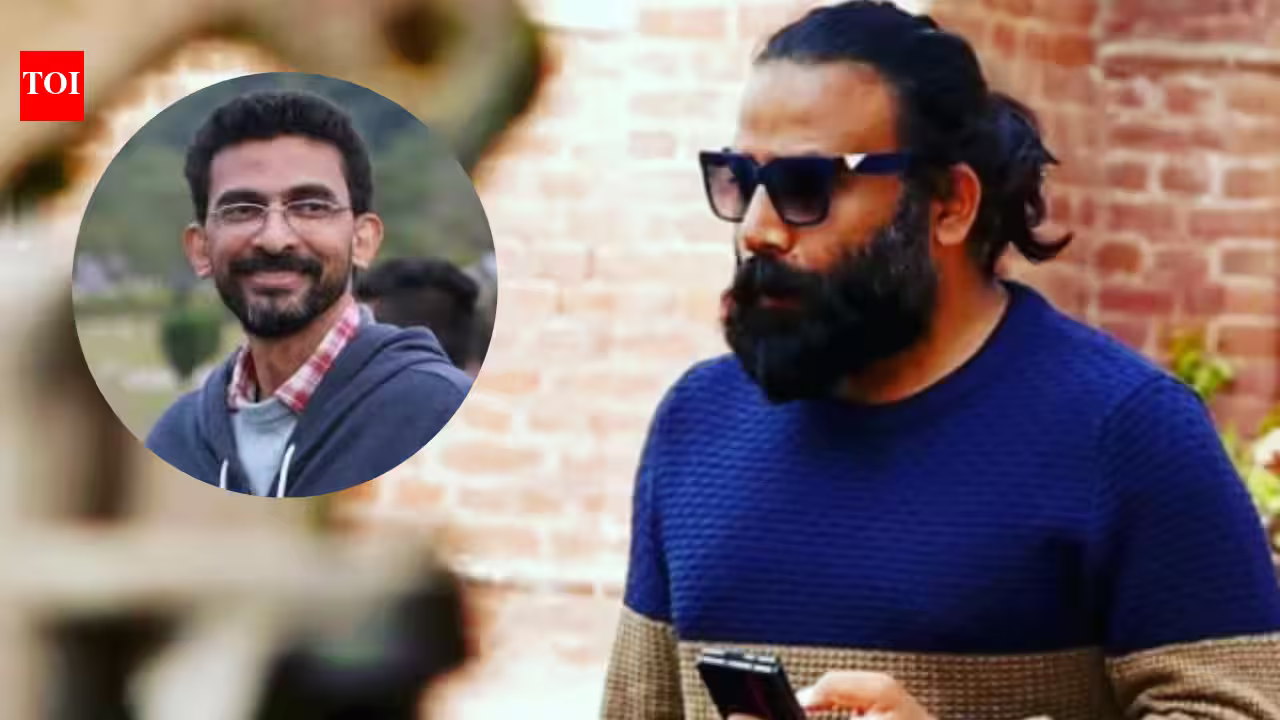
In the high-stakes, hyper-vocal world of Telugu cinema, few names trigger as much immediate discourse as Sandeep Reddy Vanga. The filmmaker, whose meteoric rise to fame was paved with the polarized reception of Arjun Reddy and later cemented by the box-office juggernaut Animal, has never been one to shy away from a hot take. His latest target? The quiet, grounded sensibility of Sekhar Kammula.
During a recent promotional event for the film Epic, Vanga found himself engaged in an off-the-cuff exchange with host Suma. The conversation took a turn when the hosts used the two directors as shorthand for character archetypes: the boy was compared to a “Sekhar Kammula hero,” while the girl was likened to a “Sandeep Reddy Vanga hero.” Without hesitation, Vanga interjected, “I don’t like Sekhar Kammula’s heroes.” It was a blunt, unfiltered sentiment that has since set the internet ablaze, proving once again that in the world of modern Indian cinema, there is no such thing as a “neutral” opinion.
The Philosophical Divide: Vanga vs. Kammula
To understand the friction behind Vanga’s comments, one must look at the diametrically opposed universes these two directors inhabit. Sekhar Kammula is the undisputed architect of the “sensitive male” in Tollywood. From the soft-spoken idealism of Anand to the grounded vulnerability seen in Godavari and Leader, Kammula’s protagonists are often defined by their emotional intelligence, their respect for women, and their capacity for introspection. They are the “boy next door” figures who negotiate life’s complexities without needing to resort to explosive displays of dominance.
Conversely, Vanga operates in a landscape of heightened reality, where protagonists like Arjun Reddy or Ranvijay Singh in Animal thrive on volatility, obsession, and raw, often toxic, masculinity. For Vanga, these characters are explorations of human darkness—figures who defy social convention to follow their own primal urges. When Vanga says he dislikes Kammula’s heroes, he is arguably expressing a creative frustration with a style of character that rejects the “madness” and intensity he so meticulously crafts in his own films.
The “Heroine” Remark and the Backlash
Vanga didn’t stop at dismissing Kammula’s heroes; he doubled down by praising his heroines. “I like his heroines more,” Vanga noted, adding that he enjoyed the comparison of a female character to his own style of hero—implying he favors a female character who possesses the grit, edge, or unpredictability usually reserved for the male leads in his own filmography.
While Vanga might have intended this as a compliment to Kammula’s writing or even as a clever bit of self-promotion, the internet largely saw it as a backhanded gesture. The sentiment sparked a wildfire on social media platforms, with fans of Kammula quickly rising to the defense of his filmography. Critics pointed out that while Vanga’s heroes are frequently trapped in a repetitive cycle of rage and obsession, Kammula’s protagonists represent a refreshing diversity—ranging from political aspirants and struggling students to common men grappling with everyday survival.
Social Media’s Verdict: A Clash of Perspectives
The reaction on X (formerly Twitter) was both swift and scathing. One user articulated the common grievance, stating, “Vanga’s heroes have a kind of madness that real people don’t have. Kammula’s film heroes are a little closer to ordinary people. They feel more realistic and relatable to the current generation.”
The critique didn’t stop at character analysis; it quickly turned personal. Many users pointed out that Vanga’s brand of “hero” feels increasingly one-note compared to the range displayed by Kammula. As one particularly vocal user remarked, “At least Sekhar’s heroes are diverse. Your hero’s archetype is the same in both your films.” Another commenter took a more aggressive stance, suggesting that Vanga’s distaste for Kammula’s characters stems from an inability to understand a hero who doesn’t rely on violence or toxic dominance to drive the narrative forward.
The Legacy of the “Arjun Reddy” Effect
The controversy is a reminder that Sandeep Reddy Vanga stands as a polarizing figure who has permanently altered the conversation around film authorship in India. By doubling down on his love for Arjun Reddy during the same event, Vanga signaled that he has no intention of pivoting toward the “gentle” storytelling that Kammula champions.
For Vanga, film is a space for the extreme, the visceral, and the unapologetic. For Kammula, film is a mirror held up to the human experience in its more mundane, ethical, and vulnerable forms. Both directors have carved out massive, loyal fanbases, but they represent two very different definitions of what a “hero” should look like on the silver screen.
What’s Next for the Two Titans?
As the dust settles on this brief, heated exchange, both directors continue their respective journeys. Sekhar Kammula has been keeping busy with Kuberaa, a project starring Dhanush, Nagarjuna, and Rashmika Mandanna, which promises yet another exploration of complex, multifaceted characters. Meanwhile, Vanga is knee-deep in the pre-production and hype cycle for Spirit, his highly anticipated collaboration with Prabhas.
Ultimately, Vanga’s “beef” with Kammula’s heroes is less about a professional rivalry and more about a fundamental divergence in creative DNA. Whether or not one agrees with Vanga’s preference, the online reaction serves as a fascinating snapshot of the current audience’s psyche. In a time where cinema is being increasingly scrutinized for its representation of gender and morality, the debate between the “aggressive hero” and the “sensitive hero” is far from over—and it’s clear that neither Vanga nor his critics are going to back down anytime soon.
Disclaimer: This content is auto-generated for informational purposes only.
Source: Read Original News