







The technology landscape has shifted with Apple’s recent unveiling of the iPhone Duo, marking the company’s formal entry into the foldable smartphone market. As the hardware hits the consumer stage this October, Apple has provided a comprehensive framework for how developers must adapt their applications to suit the expansive, folding screen geometry. By utilizing a tiered compatibility strategy across iOS 26, iOS 27.0, and iOS 27.1, Apple aims to maintain a consistent standard of quality for this new display form factor.
Understanding the Tiered Compatibility Framework
Apple has introduced three distinct compatibility modes designed to manage how existing and future applications occupy the iPhone Duo’s display. This transition is intended to provide a seamless user experience, regardless of whether a developer has already optimized their application for the new hardware.
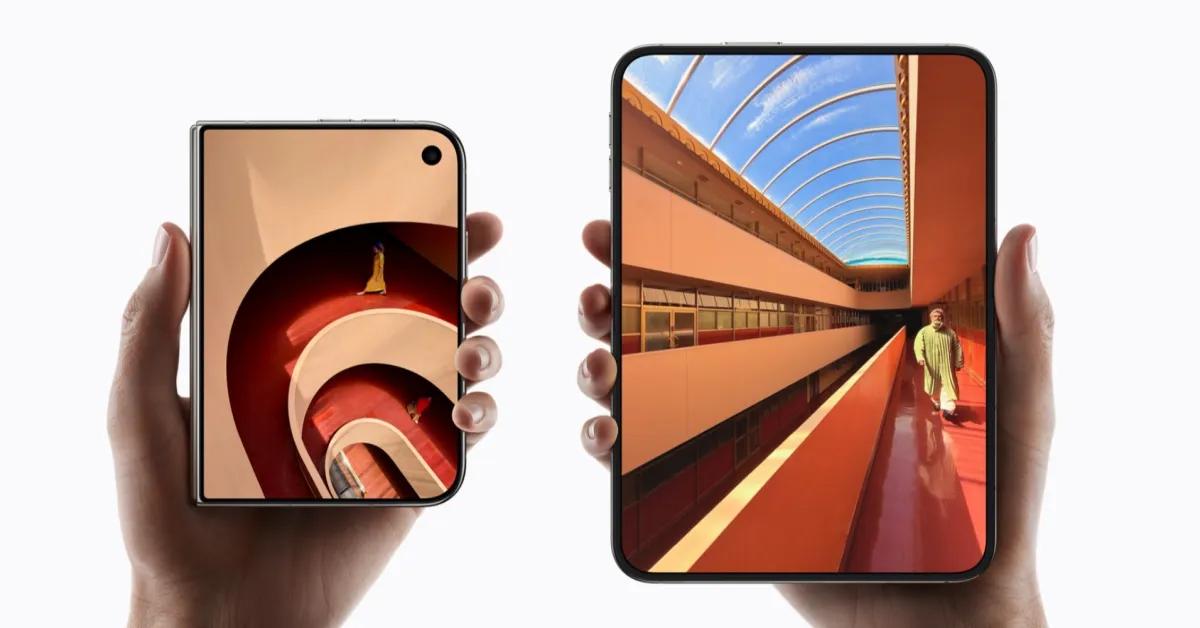
The first tier is the default compatibility mode. This is the fallback state for any application that has not yet been updated for iOS 27.0. In this mode, the system constrains the application within a single, fixed-size view centered on the display, surrounded by a black background. This prevents layout breakage or scaling errors on the larger, unconventional screen, ensuring the software remains functional even if it does not yet support the Duo’s native aspect ratios.
The second tier activates when developers update their applications to support iOS 27.0. This mode allows the software to expand significantly, claiming more screen real estate than the initial compatibility mode. While it may not fully utilize the entirety of the folding screen, it minimizes the negative space and provides a more immersive presentation, effectively bridging the gap between standard phone interfaces and the new foldable canvas.
Full Optimization with iOS 27.1
The final and most advanced tier is the full compatibility mode, which will be supported starting with the release of iOS 27.1. This is the gold standard for iPhone Duo development, allowing applications to take complete advantage of the primary display.
In this mode, developers can implement multi-pane layouts, responsive design patterns, and dynamic content resizing that fills the entire surface area of the open device. Apple’s own software, along with premium third-party applications, will rely on this tier to deliver high-fidelity experiences that justify the hardware’s complexity. By targeting iOS 27.1, developers can ensure that elements like navigation menus, data grids, and media players dynamically reposition themselves when the device transitions from its closed, single-screen orientation to its fully expanded, foldable state.
Technical Implications for Developers
For the developer community, this tiered system serves as a roadmap for architectural adjustments. Moving an application from the default compatibility mode to full iOS 27.1 support requires more than just a simple scaling adjustment; it necessitates a fundamental rethink of view controllers and layout constraints.
Apple has documented these requirements in its latest developer technical talks, emphasizing that responsiveness is critical. The system must handle state preservation during the folding and unfolding process, ensuring that the app remains in the same context even as the display dimensions shift instantaneously. Using the provided tools in the latest software development kits (SDKs), creators can define how their UI components grow or reorganize to utilize the increased pixels effectively without sacrificing touch-target accessibility.
Impact on User Experience and Utility
The shift toward a foldable screen creates new use cases that were previously impossible on standard smartphones. A device that can expand its display area allows for enhanced multitasking, such as side-by-side app usage or the ability to view complex documents, spreadsheets, and high-resolution images in greater detail.
By enforcing these compatibility modes, Apple is preventing the fragmented app experience seen on some other foldable platforms. Users will not encounter applications that appear stretched or distorted. Instead, they will experience a progression where every application remains stable in its base state, while optimized applications progressively unlock more utility. As the ecosystem matures following the October launch, the transition from basic functionality to fully immersive display utilization will define the long-term viability of the iPhone Duo.
The strategy highlights a methodical approach to hardware iteration. By prioritizing stable, backward-compatible software deployment, Apple intends for the iPhone Duo to feel like a natural evolution of the platform rather than a sudden, jarring change in mobile interaction. Whether users are utilizing the device for professional productivity or media consumption, the tiered approach ensures that the display’s potential is unlocked in a measured and reliable fashion.
Disclaimer: This content is auto-generated for informational purposes only.
Source: Read Original News